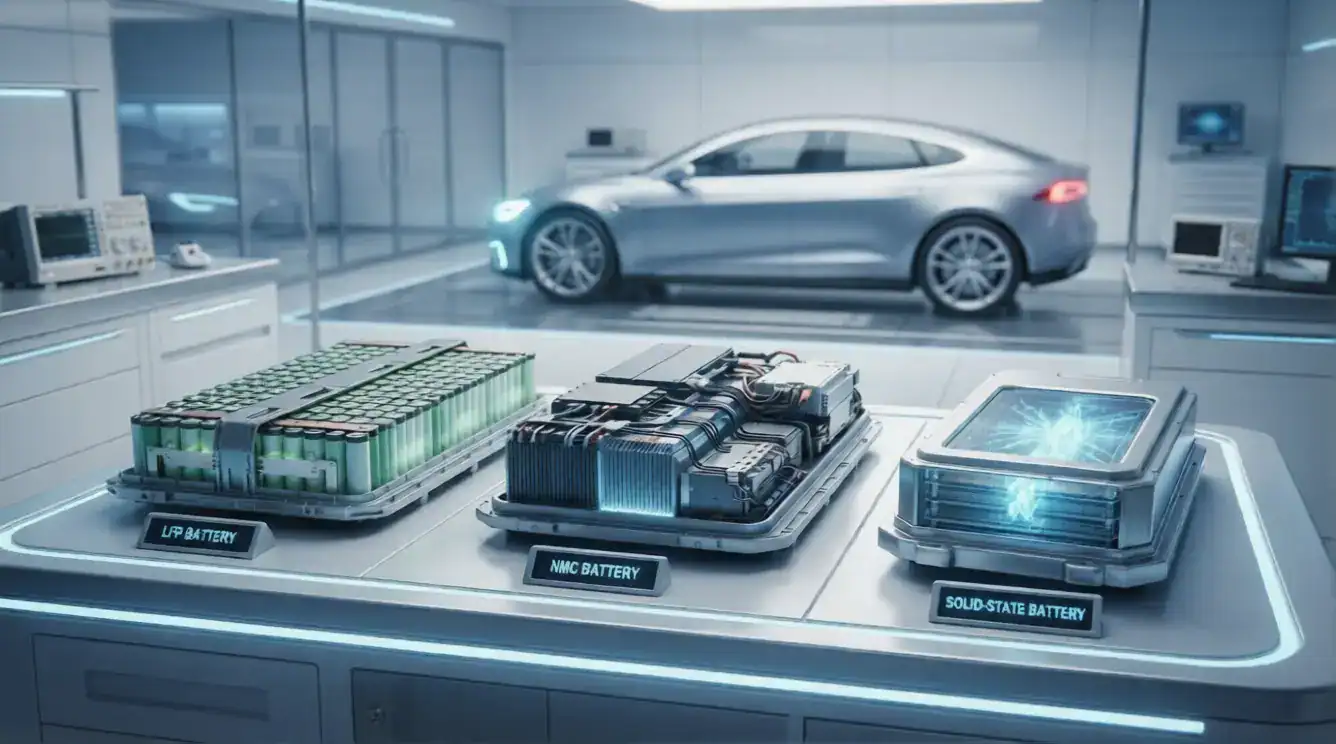
Electric vehicles don’t all use the same battery technology. If you’re comparing new EVs, one of the biggest differences you’ll find is the battery chemistry inside the vehicle. Understanding EV battery types can help you choose an electric car with the right balance of range, charging speed, lifespan, safety, and long-term ownership costs.
Featured Snippet
The three most common EV battery types are LFP (Lithium Iron Phosphate), NMC (Nickel Manganese Cobalt), and emerging solid-state batteries. LFP batteries are known for long life and safety, NMC batteries provide higher energy density and longer driving range, while solid-state batteries promise major improvements but are not yet widely available in production electric vehicles.
Modern electric vehicles from manufacturers such as Tesla, BYD, Hyundai, Kia, BMW, Mercedes-Benz, Ford, Rivian, Volvo, and many others use different battery chemistries depending on the vehicle’s purpose and target market. Some prioritize maximum driving range, while others focus on affordability, durability, or faster charging.
If you’re planning to buy an electric vehicle, understanding battery chemistry is just as important as comparing range or horsepower. The battery is the most valuable component of an EV and has a direct impact on daily driving, charging habits, maintenance, resale value, and long-term ownership.
Why EV Battery Types Matter
Two electric cars may look similar on paper, yet perform quite differently because of the batteries they use.
Battery chemistry affects:
- Driving range
- Charging speed
- Battery lifespan
- Cold-weather performance
- Heat resistance
- Vehicle price
- Long-term durability
- Safety
- Environmental impact
For example, an urban commuter who charges at home every night may benefit from a different battery than someone who regularly drives hundreds of miles on highways.
Instead of asking only, “How far can this EV travel?”, it’s worth asking, “Which battery technology is inside?”
Common EV Battery Types
Today’s passenger electric vehicles mainly use three battery technologies.
| Battery Type | Current Availability | Best For |
|---|---|---|
| LFP (Lithium Iron Phosphate) | Widely available | Daily commuting, long battery life, affordability |
| NMC (Nickel Manganese Cobalt) | Widely available | Long-distance driving, higher performance |
| Solid-State Battery | Limited development and pilot production | Future EVs with higher energy density and faster charging |
Each technology has advantages and trade-offs rather than one being universally better.
What Is an LFP Battery?
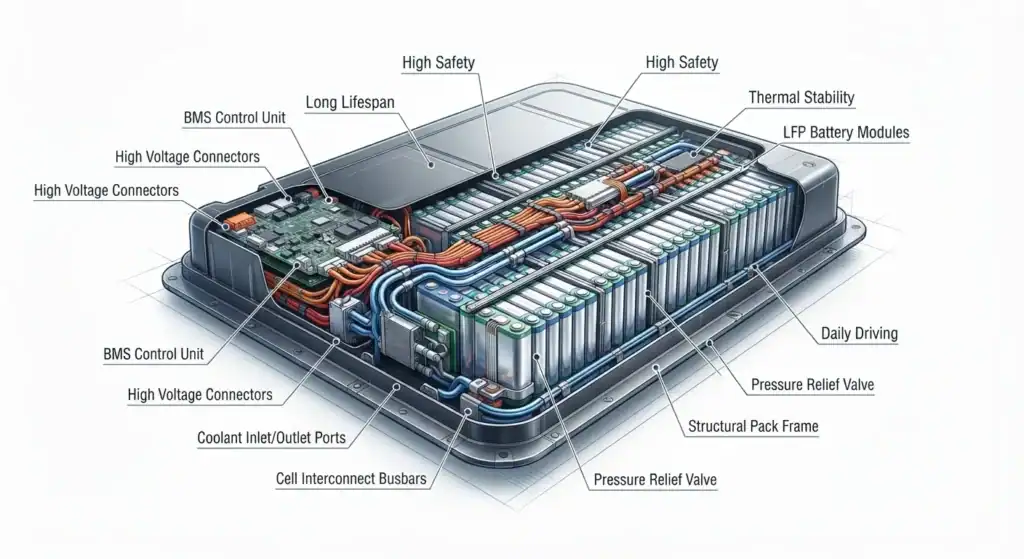
An LFP battery uses lithium iron phosphate as its cathode material.
Over the last few years, LFP batteries have become increasingly common, especially in entry-level and standard-range electric vehicles. Several manufacturers have adopted this chemistry because it offers excellent durability and improved thermal stability.
Some versions of Tesla’s standard-range models and many BYD vehicles use LFP batteries.
Advantages of LFP Batteries
- Excellent safety characteristics
- Long cycle life
- Lower degradation over time
- Can frequently be charged to 100% (manufacturer guidance still applies)
- Lower manufacturing cost
- Reduced reliance on nickel and cobalt
These qualities make LFP batteries attractive for drivers who mainly use their vehicles for commuting, city driving, and predictable daily travel.
Disadvantages
LFP batteries also have limitations.
They generally:
- Store less energy per kilogram than NMC batteries
- May require a larger battery pack to achieve similar range
- Can experience reduced charging performance in very cold weather
- Are less common in high-performance EVs
Even with these trade-offs, LFP technology continues to gain market share because of its durability and lower production cost.
What Is an NMC Battery?
An NMC battery uses a cathode containing nickel, manganese, and cobalt in different proportions.
This chemistry has been one of the most widely adopted battery technologies across the global EV market because it provides an excellent balance between energy density, driving range, and performance.
Many premium electric vehicles from manufacturers such as Hyundai, Kia, BMW, Mercedes-Benz, Ford, Volvo, Rivian, and others use NMC batteries in various configurations.
Benefits of NMC Batteries
- Higher energy density
- Longer driving range from a similar-sized battery
- Better acceleration potential
- Strong highway performance
- Common in premium electric vehicles
Drivers who regularly travel long distances often benefit from the additional range that NMC batteries can provide.
Drawbacks
Compared with LFP batteries, NMC batteries:
- Cost more to manufacture
- Depend more heavily on nickel and cobalt
- May show faster long-term degradation depending on charging habits and operating conditions
- Usually require more careful battery management
Vehicle manufacturers use advanced battery management systems (BMS) to help protect these batteries and maximize their lifespan.
What Are Solid-State Batteries?
Solid-state batteries replace the liquid electrolyte found in today’s lithium-ion batteries with a solid electrolyte.
Many automotive manufacturers and battery developers are actively researching this technology because it could significantly improve electric vehicle performance.
Potential advantages include:
- Higher energy density
- Faster charging
- Improved safety
- Reduced fire risk
- Lower battery weight
- Longer driving range
However, it’s important to separate expectations from reality.
Although several manufacturers—including Toyota, Nissan, Honda, BMW, Mercedes-Benz, Volkswagen Group, Hyundai, and others—have announced ongoing research or development programs, solid-state batteries are not yet widely available in mass-produced passenger EVs. Commercial rollout timelines continue to evolve, and final specifications remain subject to change.
Therefore, buyers shopping for a new EV today will almost certainly choose between LFP and NMC battery technologies rather than solid-state systems.
LFP vs NMC vs Solid-State Batteries: Side-by-Side Comparison
Choosing between battery chemistries is easier when you compare the characteristics that affect real-world ownership.
| Feature | LFP Battery | NMC Battery | Solid-State Battery* |
|---|---|---|---|
| Energy Density | Moderate | High | Expected to be very high |
| Driving Range | Good | Excellent | Expected to be excellent |
| Safety | Excellent | Very Good | Expected to improve further |
| Battery Lifespan | Excellent | Very Good | Still being validated |
| Fast Charging | Good | Very Good | Expected to improve |
| Cold Weather Performance | Moderate | Better | Still under development |
| Cost | Lower | Higher | Expected to be expensive initially |
| Commercial Availability | Widely available | Widely available | Limited development and pilot projects |
*Commercial specifications for solid-state batteries have not yet been finalized across the industry.
This comparison shows that there isn’t a universally “best” battery. The right choice depends on how you drive and what matters most to you.
Which EV Battery Type Is Best for Different Drivers?
Rather than focusing only on the battery chemistry, think about your driving habits.
LFP Batteries Are Best If You:
- Mostly drive in cities or suburbs
- Charge your EV at home regularly
- Want the longest possible battery lifespan
- Plan to keep the vehicle for many years
- Prefer a lower purchase price
Many standard-range EVs are excellent choices for daily commuting because LFP batteries can handle frequent charging while maintaining long-term durability.
NMC Batteries Are Best If You:
- Frequently travel long distances
- Want maximum driving range
- Drive on highways regularly
- Prefer premium or performance-focused EVs
- Need stronger acceleration
Because NMC batteries store more energy in a similar amount of space, manufacturers often use them in vehicles designed for extended travel.
Solid-State Batteries May Be Best If:
Once they become widely available, solid-state batteries could appeal to drivers looking for:
- Longer driving range
- Faster charging
- Lower battery weight
- Improved efficiency
- Enhanced safety
For now, most buyers should focus on comparing today’s proven LFP and NMC battery technologies.
Battery Lifespan: Which Chemistry Lasts Longer?
Battery lifespan is one of the biggest concerns for first-time EV buyers.
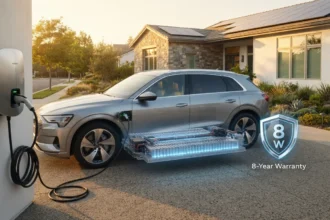
Modern electric vehicle batteries are designed to last many years, and manufacturers typically include battery warranties that cover defects or excessive capacity loss for a specified period or mileage. Warranty terms vary by manufacturer and market.
Generally speaking:
- LFP batteries are known for excellent cycle life and durability.
- NMC batteries also last a long time but may experience capacity loss sooner if repeatedly exposed to frequent fast charging, very high states of charge, or extreme temperatures.
- Solid-state batteries are still under evaluation, so long-term real-world durability has not yet been established.
Battery degradation happens gradually rather than suddenly. Most owners notice a slow reduction in available driving range over many years instead of an abrupt battery failure.
For a deeper explanation, see How EV Batteries Are Recycled: Battery Recycling and Second Life Explained.
Charging Performance Across Different Battery Types
Charging speed depends on more than battery chemistry.
Other important factors include:
- Vehicle charging system
- Battery temperature
- State of charge
- DC fast charging capability
- Charging station output
That said, battery chemistry still plays an important role.
LFP Batteries
- Handle regular charging well
- Often tolerate frequent charging to high levels when recommended by the manufacturer
- May charge more slowly in very cold climates
NMC Batteries
- Excellent fast-charging capability
- Strong highway travel performance
- Manufacturers may recommend limiting routine charging to a lower state of charge for daily use, depending on the vehicle
Solid-State Batteries
Manufacturers hope solid-state technology will reduce charging times significantly.
However, until production vehicles become widely available, actual charging performance remains unconfirmed.
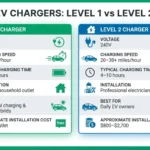
If you’re learning about charging equipment, also read Best Home EV Chargers and Level 2 vs DC Fast Charging
Safety Comparison
Battery safety is another area where chemistry matters.
LFP Batteries
LFP chemistry is well known for its strong thermal stability.
This means it is generally more resistant to overheating under normal operating conditions compared with some other lithium-ion chemistries.
NMC Batteries
NMC batteries also include extensive safety systems.
Modern EVs continuously monitor:
- Temperature
- Voltage
- Charging rate
- Cell balance
These protections significantly reduce safety risks during everyday driving.
Solid-State Batteries
One reason manufacturers continue investing in solid-state technology is the potential for improved thermal stability by replacing liquid electrolytes with solid materials.
Even so, production-scale validation is still ongoing.
Environmental Considerations
Battery chemistry also influences sustainability.
LFP Batteries
Advantages include:
- Lower reliance on nickel
- No cobalt requirement in the cathode
- Lower material cost
NMC Batteries
Advantages include:
- Higher energy density
- Longer driving range
Challenges include:
- Greater reliance on nickel and cobalt supply chains
Solid-State Batteries
Environmental impacts will depend on the final materials and manufacturing methods used once commercial production expands.
Real-World Examples of EV Battery Types
Several major automakers use different battery strategies.
Examples include:
- Tesla uses both LFP and NMC batteries depending on the model and market.
- BYD is widely known for its LFP-based Blade Battery technology.
- Hyundai offers EVs using lithium-ion battery technologies in different vehicle platforms.
- BMW, Mercedes-Benz, Ford, Volvo, and Rivian also use lithium-ion battery systems, though battery suppliers and chemistries vary by model and region.
Because manufacturers frequently update suppliers and battery configurations, it’s always worth checking the specifications of the exact vehicle you’re considering.
LFP vs NMC vs Solid-State Batteries: What’s the Difference?
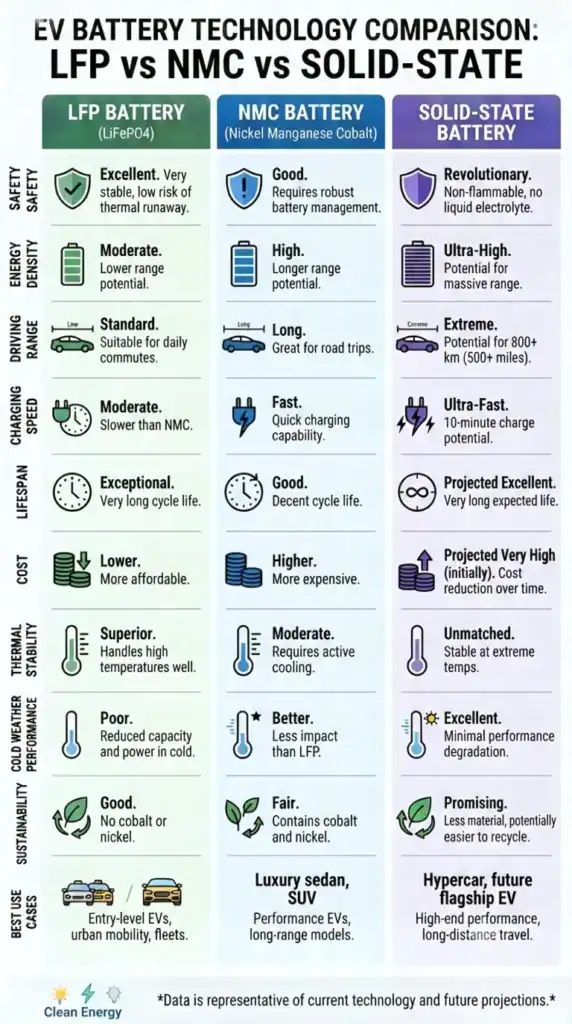
If you’ve been researching EVs, you’ve probably come across terms like LFP, NMC, and solid-state batteries. These aren’t different brands—they’re different battery chemistries. Each has its own strengths, weaknesses, and ideal use cases.
The right battery depends on how you drive, where you live, how often you charge, and how long you plan to keep your vehicle.
| Feature | LFP Battery | NMC Battery | Solid-State Battery |
|---|---|---|---|
| Full Name | Lithium Iron Phosphate | Nickel Manganese Cobalt | Solid-State Lithium Battery |
| Energy Density | Moderate | High | Very High (expected) |
| Driving Range | Good | Excellent | Expected to be Excellent |
| Charging Speed | Good | Very Good | Expected to be Faster |
| Battery Lifespan | Excellent | Very Good | Still under development |
| Safety | Excellent | Very Good | Expected to be Outstanding |
| Cold Weather Performance | Lower | Better | Expected to Improve |
| Cost | Lower | Higher | Currently Very Expensive |
| Commercial Availability | Widely Available | Widely Available | Limited Pilot Production |
What Is an LFP Battery?
An LFP battery (Lithium Iron Phosphate) uses lithium, iron, and phosphate in its cathode. Over the last few years, it has become one of the fastest-growing EV battery types, especially in affordable electric vehicles.
Manufacturers such as Tesla, BYD, Ford, and several Chinese EV brands use LFP batteries in selected models because they are durable, safe, and relatively inexpensive.
Advantages of LFP Batteries
- Long cycle life with minimal degradation
- Excellent thermal stability
- Lower risk of overheating
- No cobalt content
- Generally lower manufacturing cost
- Can often be charged to 100% more regularly than many NMC packs (subject to the manufacturer’s recommendations)
Disadvantages of LFP Batteries
- Lower energy density than NMC
- Slightly shorter driving range for the same battery size
- Reduced efficiency in very cold climates
- Heavier battery pack for comparable range
Best For
- Daily commuting
- City driving
- Fleet vehicles
- Ride-sharing services
- Budget-conscious buyers
- Drivers planning long-term ownership
What Is an NMC Battery?
An NMC battery (Nickel Manganese Cobalt) is currently one of the most common battery chemistries used in premium and long-range electric vehicles.
Its higher energy density allows manufacturers to fit more usable energy into the same amount of space, making it ideal for vehicles that prioritize longer driving range.
Many EV brands—including Hyundai, Kia, BMW, Mercedes-Benz, Rivian, Volvo, and several Tesla models—use NMC batteries in at least part of their lineup.
Advantages of NMC Batteries
- Higher energy density
- Longer driving range
- Strong acceleration performance
- Better cold-weather capability
- Suitable for larger SUVs and performance EVs
- Proven technology with widespread adoption
Disadvantages of NMC Batteries
- Higher production cost
- Uses nickel and cobalt, which are more expensive materials
- Generally more sensitive to heat than LFP batteries
- Battery management systems require careful thermal control
Best For
- Long-distance drivers
- Highway travel
- Premium EV buyers
- Families needing maximum range
- Performance-oriented electric vehicles
What Is a Solid-State Battery?
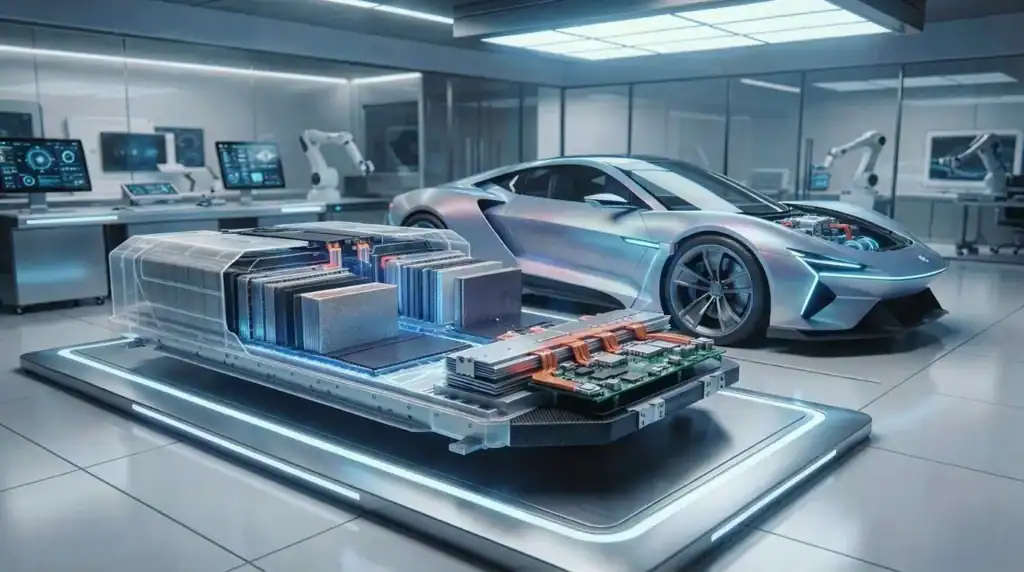
A solid-state battery replaces the liquid electrolyte found in today’s lithium-ion batteries with a solid electrolyte.
This technology has attracted significant attention because it could deliver:
- Longer driving range
- Faster charging
- Improved safety
- Higher energy density
- Reduced fire risk
However, despite years of development, solid-state batteries are not yet widely available in mass-market electric cars.
Several manufacturers—including Toyota, Honda, Nissan, BMW, Mercedes-Benz, and Volkswagen Group—have announced research programs or pilot projects, but commercial timelines continue to evolve.
Potential Advantages
- Much higher energy density
- Faster charging capability
- Improved thermal stability
- Lower weight
- Potentially longer battery life
- Better packaging flexibility
Current Challenges
- Extremely expensive manufacturing
- Complex large-scale production
- Durability challenges
- Limited commercial availability
- Ongoing testing before mass production
For now, buyers shopping for a new EV are almost always choosing between LFP and NMC batteries rather than solid-state technology.
Which EV Battery Type Lasts the Longest?
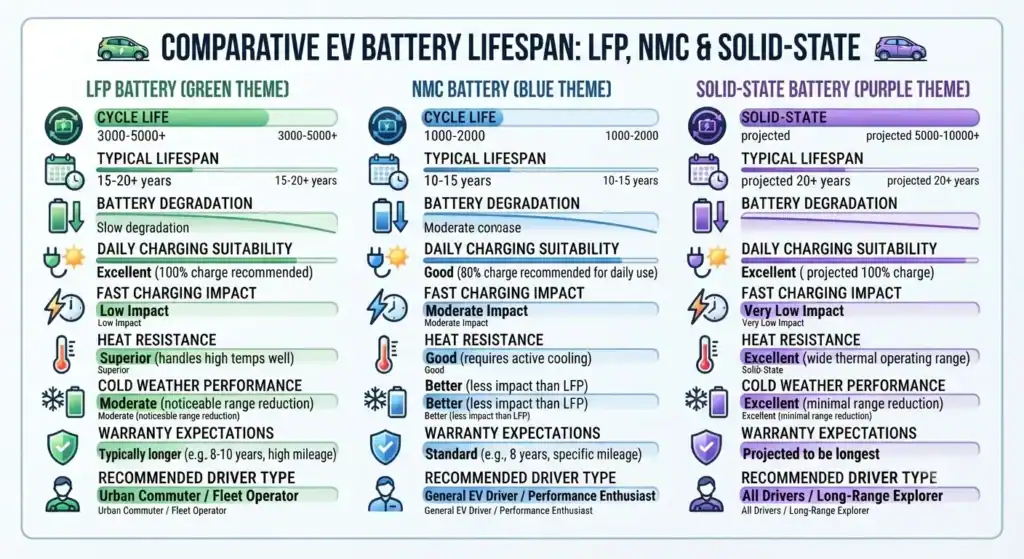
Battery lifespan is measured in charge cycles rather than years alone. One charge cycle represents using the equivalent of a full battery charge, whether in a single session or across multiple partial charges.
While real-world lifespan depends on climate, charging habits, and battery management, the general trend is:
- LFP — typically offers the longest cycle life.
- NMC — also lasts many years with proper care but generally has fewer cycles than LFP.
- Solid-state — expected to be highly durable, though large-scale real-world data is still limited.
For most drivers, both LFP and NMC batteries are designed to provide many years of normal use before significant capacity loss becomes a concern.