If you’re thinking about buying an electric vehicle, one question almost always comes up first: how long do EV batteries last?
The short answer is that most modern EV batteries are designed to last well over a decade under normal driving conditions. Many manufacturers provide battery warranties of 8 years, while real-world experience shows that many electric vehicle batteries continue performing well far beyond the warranty period with gradual, rather than sudden, capacity loss.
Battery technology has improved rapidly over the last decade. Better battery management systems, improved thermal control, and advances in lithium-ion chemistry have made today’s EV batteries far more durable than early-generation electric vehicles.
This guide explains how long electric car batteries last, what battery degradation actually means, how warranties work, what affects battery lifespan, and what you can do to maximize your battery’s health.
Featured Answer
Most electric vehicle batteries are expected to last 10–20 years, depending on battery chemistry, climate, charging habits, and driving conditions. Rather than failing suddenly, they gradually lose capacity over time. Most manufacturers back their batteries with an 8-year warranty, although warranty mileage limits vary by brand and market.
Why Do EV Batteries Last So Long?
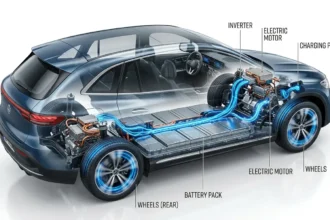
Unlike the small 12-volt battery found in conventional vehicles, an EV battery pack is built from hundreds or even thousands of individual lithium-ion cells.
These cells work together through sophisticated software known as the Battery Management System (BMS), which constantly monitors:
- Battery temperature
- Voltage
- Charging speed
- Cell balance
- State of Charge (SOC)
- Battery State of Health (SOH)
Instead of allowing the battery to operate at damaging extremes, the BMS protects it by limiting charging and discharging when necessary.
This intelligent management is one of the biggest reasons why modern EV batteries have become remarkably durable.
Related reading:
What Is the Typical EV Battery Lifespan?
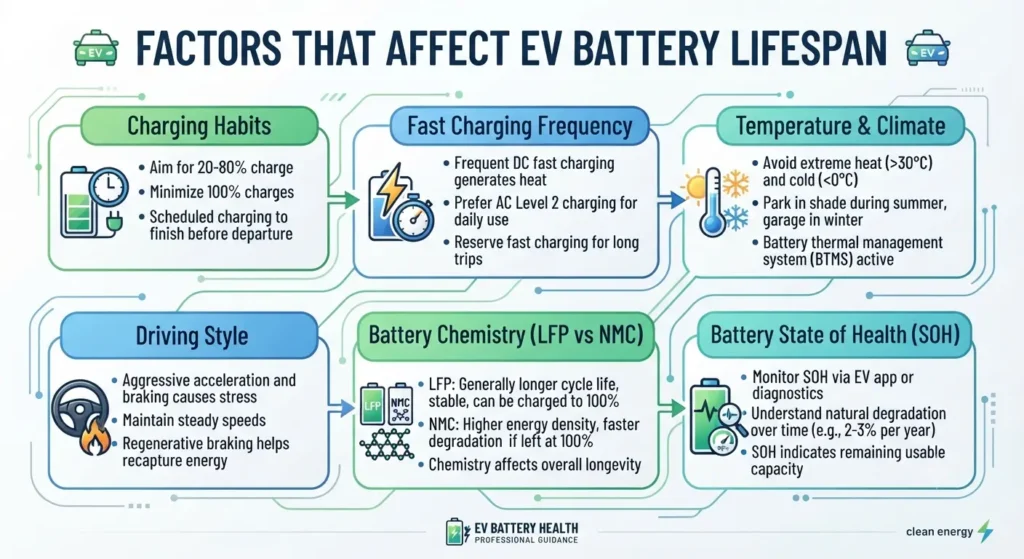
There isn’t a single answer because battery lifespan depends on many variables.
Some vehicles travel relatively few miles each year in mild climates, while others experience daily fast charging, heavy highway driving, or extreme temperatures.
Generally speaking, modern EV batteries are designed for many years of normal use before noticeable capacity loss becomes significant.
Several factors influence lifespan, including:
- Battery chemistry
- Climate
- Charging habits
- Driving style
- Thermal management
- Vehicle software updates
- Average battery charge level
A well-maintained battery typically loses capacity gradually rather than suddenly stopping working.
What Causes EV Battery Degradation?
One of the biggest misunderstandings about electric vehicles is the belief that batteries suddenly “die.”
That isn’t how lithium-ion batteries behave.
Instead, batteries slowly lose usable capacity over time. This process is called battery degradation.
As degradation increases, the vehicle still operates normally, but maximum driving range gradually decreases.
For example:
- A new EV capable of 300 miles may eventually provide around 285 miles after some capacity loss.
- Continued aging may reduce available range further over many years.
The battery remains usable—it simply stores less energy than when it was new.
Main Causes of Battery Degradation
Heat
High temperatures accelerate chemical aging.
Vehicles with advanced liquid thermal management generally protect batteries more effectively than systems relying only on passive cooling.
Frequent DC Fast Charging
Fast charging is extremely convenient.
However, using high-power DC charging for nearly every charging session can increase battery stress compared with regular AC charging.
For most owners, occasional fast charging isn’t a problem.
Keeping the Battery at 100%
Lithium-ion batteries generally experience more stress when stored fully charged for extended periods.
Many manufacturers recommend charging to 100% only when maximum range is needed.
Deep Discharges
Frequently driving until the battery reaches extremely low charge can also contribute to additional wear.
Most manufacturers recommend avoiding repeated deep discharges unless necessary.
Battery Age
Even if a vehicle isn’t driven much, batteries naturally age over time because of ongoing chemical reactions.
Age-related degradation occurs much more slowly in well-managed battery systems.
LFP vs NMC Battery Lifespan
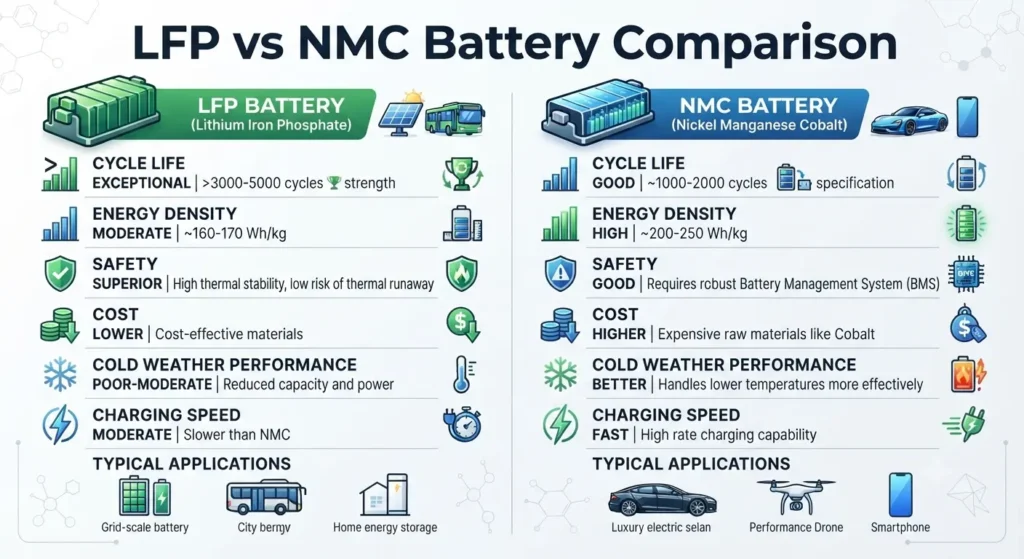
Not all EV batteries are built the same.
Today’s electric vehicles primarily use two lithium-ion chemistries.
| Feature | LFP Battery | NMC Battery |
|---|---|---|
| Typical longevity | Excellent | Very good |
| Energy density | Lower | Higher |
| Cold weather performance | Moderate | Better |
| Daily charging to 100% | Often more suitable (manufacturer guidance varies) | Usually not recommended for daily use |
| Common use | Affordable EVs | Long-range EVs |
LFP batteries are widely recognized for their durability and long cycle life.
NMC batteries generally offer higher energy density and longer driving range for a given battery size but may require different charging recommendations depending on the manufacturer.
More details:
EV Battery Types Explained
Does Driving Style Affect Electric Car Battery Life?
Yes.
Driving habits influence battery health over many years.
Aggressive acceleration, repeated high-speed driving, and frequent rapid charging can place additional stress on battery cells.
By comparison, smoother driving generally produces less heat and lower battery stress.
Fortunately, regenerative braking helps reduce wear while improving overall efficiency.
How Does Climate Affect EV Battery Lifespan?
Climate plays a significant role in electric vehicle battery lifespan.
Hot Climates
Persistent high temperatures can accelerate battery aging.
Modern EVs with active liquid cooling help reduce this effect.
Cold Climates
Cold weather mainly reduces temporary driving range.
Although charging may be slower until the battery warms up, cold conditions usually have less long-term impact than prolonged exposure to excessive heat.
What Does EV Battery Warranty Cover
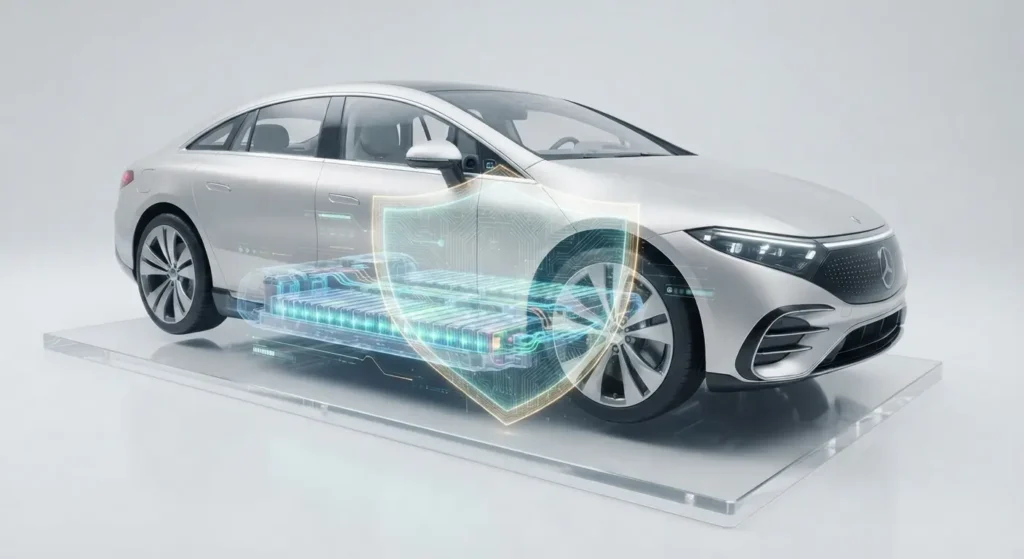
Most manufacturers provide a separate warranty for the high-voltage battery.
While details differ by manufacturer and country, battery warranties commonly cover:
- Manufacturing defects
- Unexpected battery failure
- Excessive capacity loss (where applicable)
- Battery components specified by the manufacturer
Warranty terms vary, so owners should always review the official warranty documentation for their specific vehicle and market.
Many warranties include:
- Time limit
- Mileage limit
- Minimum battery capacity threshold (if applicable)
Coverage differs between manufacturers, so it’s important not to assume all warranties are identical.
Related:
Electric Car Battery Replacement Cost
What Is Battery State of Health (SOH)?
Battery State of Health (SOH) measures how much usable capacity remains compared with when the battery was new.
For example:
- 100% SOH = like new
- 95% SOH = small capacity reduction
- 90% SOH = moderate degradation
- Lower SOH = less available driving range
SOH is different from State of Charge (SOC).
- SOC shows how full the battery currently is.
- SOH reflects long-term battery condition.
Understanding this difference helps owners evaluate battery performance more accurately.
Can an EV Battery Be Replaced?
Yes.
If necessary, EV battery packs can be repaired or replaced.
Depending on the manufacturer and battery design:
- Individual modules may be replaceable.
- In other cases, the complete battery pack may require replacement.
Replacement decisions depend on vehicle age, warranty status, repair availability, and manufacturer procedures.
Fortunately, complete battery replacement remains uncommon for most modern EV owners during normal ownership.
Comparison Table: Factors That Affect EV Battery Lifespan
| Factor | Effect on Battery Life | Can You Control It? |
|---|---|---|
| High temperatures | Higher degradation | Partly |
| Frequent DC fast charging | Moderate increase in wear | Yes |
| Daily charging to 100% | Depends on battery chemistry | Yes |
| Deep discharges | Can increase stress | Yes |
| Smooth driving | Helps reduce stress | Yes |
| Battery chemistry | Major influence | No |
| Thermal management | Major influence | No |
| Vehicle age | Natural aging | No |
Practical Tips to Extend EV Battery Life
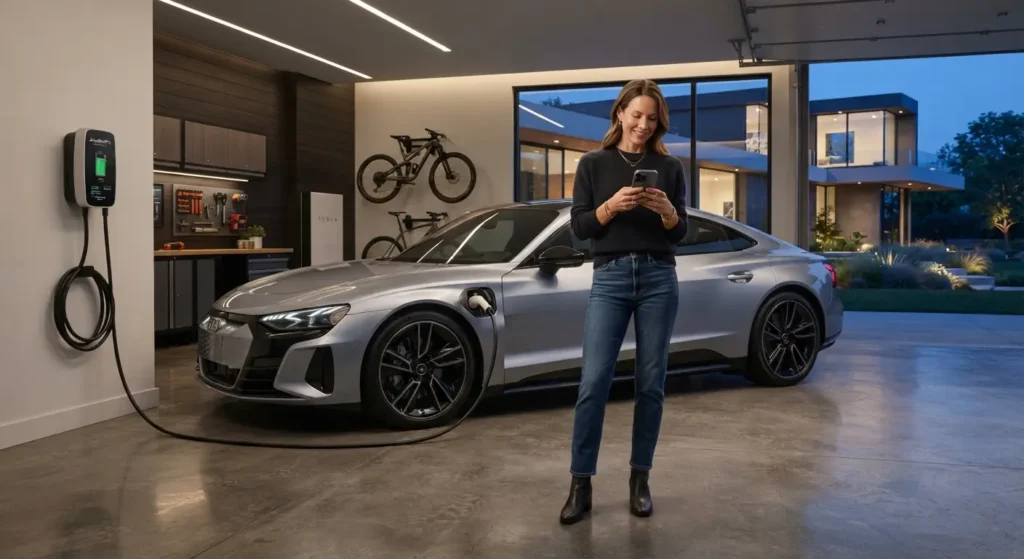
Following a few simple habits can help maintain battery health over the long term.
- Use AC charging for everyday charging whenever practical.
- Reserve DC fast charging mainly for long trips.
- Follow the manufacturer’s recommended charging limits.
- Avoid leaving the battery at extremely high or very low charge for extended periods.
- Park in shaded or covered areas during very hot weather when possible.
- Install software updates provided by the manufacturer.
- Use battery preconditioning if your vehicle supports it before fast charging.
- Follow the maintenance recommendations in your owner’s manual.
Related:
Common Mistakes to Avoid
Many concerns about EV batteries come from outdated information or misunderstandings.
Avoid these common mistakes:
- Assuming the battery will suddenly fail after the warranty expires.
- Believing every EV battery degrades at the same rate.
- Ignoring the manufacturer’s charging recommendations.
- Using DC fast charging for every charging session when home charging is available.
- Confusing temporary cold-weather range loss with permanent battery degradation.
- Comparing older EV technology with today’s significantly improved battery systems.
Frequently Asked Questions
How long do EV batteries last?
Most modern EV batteries are expected to last well over 10 years under normal driving conditions. Actual lifespan depends on battery chemistry, climate, charging habits, and vehicle design.
How long do electric car batteries last before replacement?
Many owners never need a battery replacement during their normal ownership period. Battery replacement depends on battery health rather than age alone.
Do EV batteries lose capacity every year?
Yes. Lithium-ion batteries gradually lose capacity over time. The process is normally slow and becomes noticeable only after years of use.
Which battery lasts longer: LFP or NMC?
LFP batteries are generally known for excellent cycle life, while NMC batteries typically offer higher energy density and longer range. Each chemistry has different strengths.
Does fast charging damage EV batteries?
Occasional DC fast charging is expected and supported by manufacturers. However, relying on fast charging almost exclusively may increase battery wear compared with regular AC charging.
Can battery degradation be reversed?
No. Battery degradation is a natural chemical process and cannot currently be reversed. Good charging habits can help slow future degradation.
Conclusion
Modern electric vehicles are built with batteries that are designed to last for many years of everyday driving. While every lithium-ion battery gradually loses capacity over time, today’s EV battery packs are far more durable than many people assume.
The biggest influences on battery lifespan are battery chemistry, temperature, charging habits, and overall vehicle design. By following the manufacturer’s charging recommendations and avoiding unnecessary battery stress, most owners can expect reliable performance for well beyond the standard warranty period.
Understanding how long do EV batteries last helps buyers make informed decisions and feel more confident about long-term EV ownership.