Introduction
One of the first questions people ask before buying an electric vehicle is: how long does it take to charge an electric car?
The simple answer is: it can take anywhere from less than 30 minutes to more than a day, depending on the charger type, battery size, vehicle model, and available charging power.
A small EV connected to a powerful DC fast charger may recover a large amount of range in a short stop, while the same vehicle plugged into a standard household outlet may need many hours or even overnight charging.
For most electric car owners, charging is not as complicated as it first appears. Unlike filling a gasoline tank, EV charging usually happens while the vehicle is parked — at home overnight, while shopping, or during work hours.
The actual charging time depends mainly on:
- Battery capacity
- Charger power
- Vehicle charging capability
- Current battery level
- Temperature conditions
- Charging speed limits
Understanding these factors helps you choose the right charging setup and avoid unrealistic expectations about electric vehicle ownership.
In this guide, we will explain electric car charging time in detail, including home charging, Level 1, Level 2, DC fast charging, Tesla charging times, and practical tips to charge your EV more efficiently.
How Long Does It Usually Take to Charge an Electric Car?
There is no single charging time that applies to every electric vehicle.
A typical charging range looks like this:
| Charging Method | Typical Charging Time |
|---|---|
| Standard household outlet (Level 1) | 20–60+ hours |
| Home Level 2 charger | 4–12 hours |
| Public AC charger | 2–8 hours |
| DC fast charger | Around 20–60 minutes for a significant charge |
These are general estimates. The actual time depends on the specific EV and charger.
A vehicle with a small battery may charge much faster than a large electric SUV with a bigger battery pack.
Understanding EV Charging Speed
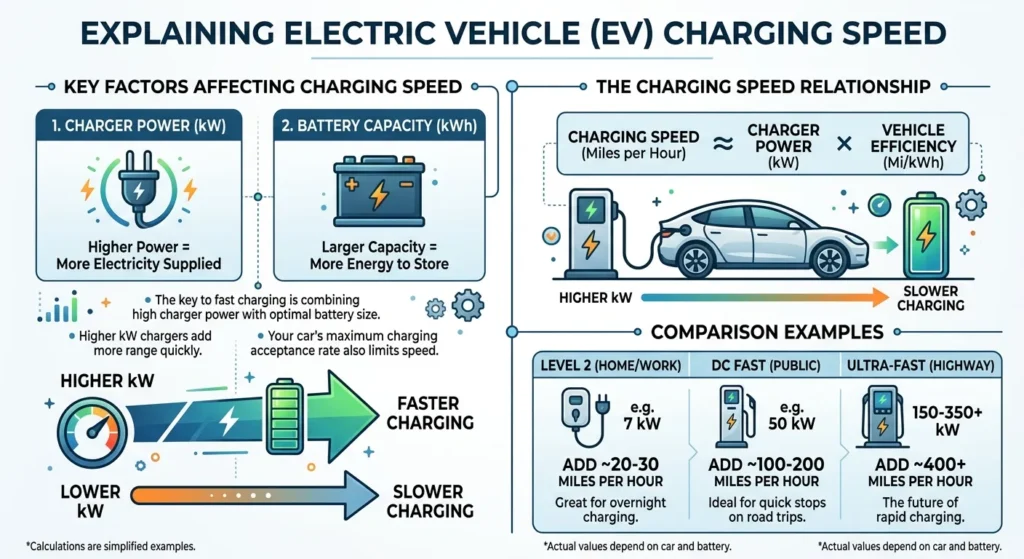
To understand charging time, you first need to understand how electric vehicle charging works.
EV charging speed is measured in kilowatts (kW).
A charger with a higher kW output can usually deliver energy faster.
For example:
- A 7 kW home charger charges slower than a 150 kW fast charger.
- A 250 kW charger can deliver energy much faster than a basic home outlet.
However, the charger is only one part of the system.
The vehicle itself also has a maximum charging limit.
A car that accepts only 100 kW cannot charge at 250 kW, even if it is connected to a more powerful charger.
Battery Size and Charging Time Explained
Battery size is one of the biggest factors affecting charging duration.
Electric vehicle batteries are measured in:
kilowatt-hours (kWh)
A larger battery stores more energy.
This usually means:
- More driving range
- Longer charging time
- Higher energy requirement
For example:
A small city EV may have:
- 40 kWh battery
A large electric SUV may have:
- 100 kWh battery
Even with the same charger, the larger battery will generally take longer to charge.
Charging Time Formula
A basic estimate can be calculated using:
Battery capacity ÷ Charger power = Charging time
Example:
Battery:
60 kWh
Charger:
7 kW
Calculation:
60 ÷ 7 = around 8.5 hours
Real-world charging may take longer because charging speed changes depending on battery conditions and charging stage.
Why Charging Slows Down Near Full Battery
Many people expect EV charging to work like filling a fuel tank, where the speed stays constant until the tank is full.
Electric vehicles work differently.
Charging usually happens faster when the battery level is low.
As the battery approaches higher percentages, especially near 80–100%, the vehicle reduces charging speed to protect battery health.
This process is called:
charging taper
For example:
- 10% to 50% may charge quickly
- 80% to 100% may take much longer
This is why many fast charging stations advertise charging from:
10% to 80%
rather than:
0% to 100%
Level 1 Charging: The Slowest EV Charging Option
Level 1 charging uses a standard household electrical outlet.
It is the simplest charging method because it usually does not require special equipment.
Many homes already have compatible outlets, making Level 1 charging the easiest option for new EV owners.
How Long Does Level 1 Charging Take?
Level 1 charging is slow.
Depending on the vehicle, it may provide only a small amount of driving range per hour.
A complete charge can take:
- 20 hours
- 40 hours
- More than 60 hours
depending on battery size.
Who Should Use Level 1 Charging?
Level 1 can work well for:
- Drivers with short daily commutes
- People who drive only a few miles per day
- Plug-in hybrid owners
- Drivers who can leave their vehicle connected for long periods
For example:
Someone who drives 20–30 miles daily may recover enough range overnight with Level 1 charging.
Advantages of Level 1 Charging
Benefits include:
- No expensive installation
- Simple setup
- Works almost anywhere with a suitable outlet
- Useful as backup charging
Disadvantages of Level 1 Charging
The main drawback is speed.
It may not be practical for:
- High-mileage drivers
- Large battery EVs
- Families with multiple EVs
Many full EV owners eventually upgrade to Level 2 charging for convenience.
Best Electric Car Charger for Home 2026
Level 2 Charging: The Most Popular Home Charging Solution
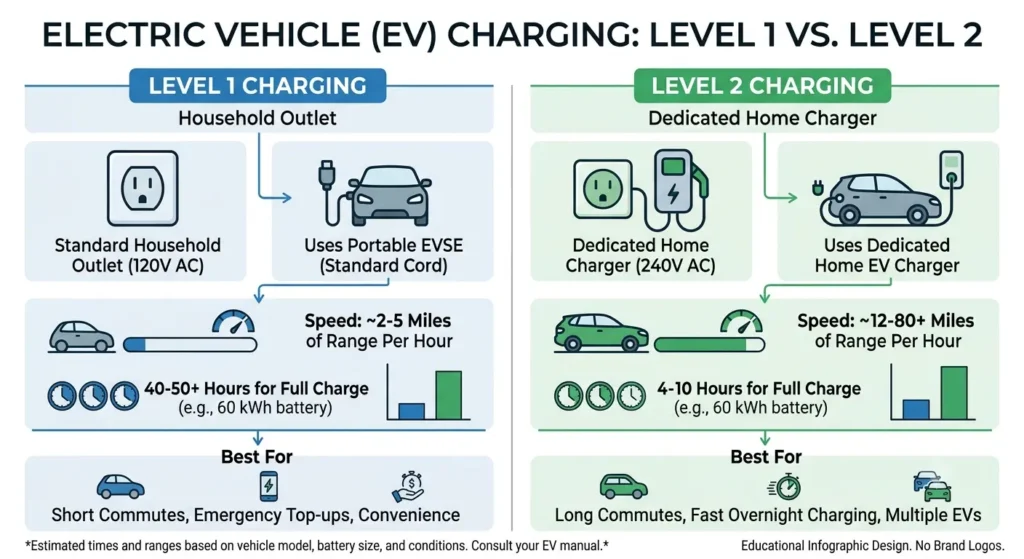
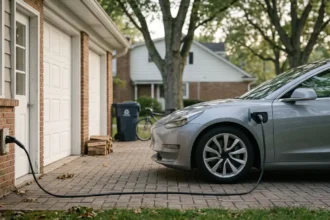
Level 2 charging is the most common choice for EV owners who want faster home charging.
Unlike Level 1, Level 2 chargers require a dedicated electrical connection.
They are often installed in:
- Garages
- Driveways
- Apartment parking areas
- Workplaces
How Long Does Level 2 Charging Take?
Level 2 charging commonly takes:
Around 4–12 hours
depending on:
- Battery size
- Charger power
- Vehicle efficiency
For many drivers, this means:
Plug in at night → Fully charged by morning
Why Level 2 Charging Is Popular
Level 2 chargers offer a practical balance between:
- Speed
- Cost
- Convenience
They are fast enough for daily driving but much cheaper and simpler than public fast charging.
Example:
A driver finishes work with:
30% battery remaining
They plug into a Level 2 charger overnight.
By morning:
- Battery is full
- Vehicle is ready
- No charging stop required
This is why many EV owners consider home Level 2 charging the ideal setup.
DC Fast Charging: The Fastest Way to Charge an Electric Car
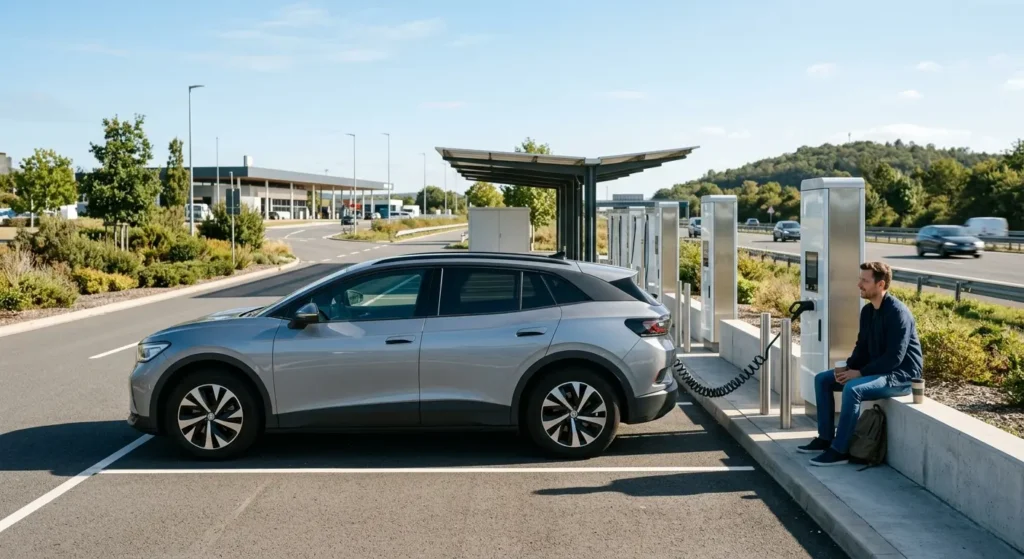
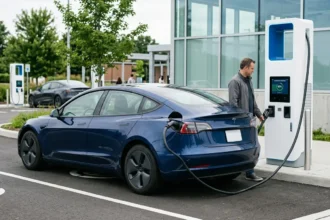
DC fast charging is the quickest charging method available for most electric vehicles today.
Unlike Level 1 and Level 2 chargers, which convert electricity through the vehicle’s onboard charger, DC fast chargers deliver electricity directly to the vehicle battery.
This allows much higher charging speeds.
DC fast chargers are commonly found at:
- Highway charging stations
- Shopping centers
- Rest areas
- Public charging networks
- Travel stops
They are designed mainly for drivers who need to add range quickly during longer journeys.
How Long Does DC Fast Charging Take?
The charging time depends on:
- Charger power output
- EV battery size
- Vehicle charging capability
- Battery temperature
- Current battery percentage
A typical DC fast charging session may take:
- Around 20–60 minutes for a significant charge increase
Many manufacturers advertise charging times based on:
10% to 80% battery level
because charging slows down after 80%.
Why DC Fast Charging Is Faster
A DC fast charger can provide much more power compared with home chargers.
Comparison:
| Charger Type | Power Range | Typical Use |
|---|---|---|
| Level 1 | About 1–2 kW | Emergency/home backup |
| Level 2 | About 3–22 kW | Daily home charging |
| DC Fast Charging | 50–350+ kW | Road trips and quick charging |
Higher power means more energy can enter the battery in less time.
However, the EV must also support that charging speed.
Home Charging vs Fast Charging: Which Is Better?Many new EV owners assume fast charging is always better because it saves time.
However, the best charging method depends on your situation.
Home Charging
Best for:
- Daily driving
- Overnight charging
- Lower costs
- Convenience
Advantages:
- Wake up with a charged vehicle
- No waiting at charging stations
- Usually cheaper electricity rates
DC Fast Charging
Best for:
- Long-distance travel
- Road trips
- Emergency charging
Advantages:
- Very quick range recovery
- Available on highways
- Useful when time matters
Home Charging vs Public Charging Time Comparison
| Charging Method | Average Time | Best Use |
|---|---|---|
| Level 1 Home Charging | 20–60+ hours | Low daily mileage |
| Level 2 Home Charging | 4–12 hours | Everyday charging |
| Public AC Charging | 2–8 hours | Shopping/work charging |
| DC Fast Charging | 20–60 minutes | Road trips |
How Long Does It Take to Charge a Tesla?
A common question among EV buyers is:
How long does it take to charge a Tesla?
The answer depends on:
- Tesla model
- Battery size
- Charger type
- Charging percentage
- Temperature
Tesla vehicles can charge using:
- Home chargers
- Destination chargers
- Tesla Superchargers
Tesla Home Charging Time
Charging a Tesla at home usually depends on the charger installed.
Standard Household Outlet
Using a regular outlet:
- Charging is slow
- Suitable mainly for low daily driving
A Tesla with a large battery may require many hours or even multiple days for a full charge.
Home Wall Connector
A dedicated home charger provides much faster charging.
For many Tesla owners:
- Overnight charging is enough
- Daily driving needs are easily covered
This is why home charging remains the preferred option for most Tesla drivers.
Tesla Supercharger Charging Time
Tesla Superchargers are designed for fast charging.
Charging time depends on:
- Supercharger version
- Vehicle model
- Battery condition
- Starting battery percentage
A driver may add significant range during a short break, making long-distance travel easier.
However, Supercharging is usually more expensive than charging at home.
How Much Does It Cost to Charge an Electric Car?
Factors That Affect Electric Car Charging Time
Charging time is not determined only by the charger.
Several other factors influence how quickly an EV charges.
1. Battery Size
A larger battery stores more energy.
For example:
A vehicle with:
- 40 kWh battery
will usually charge faster than:
- 100 kWh battery
when using the same charger.
However, the larger battery provides more driving range.
2. Battery Starting Percentage
The battery level when charging begins matters.
Charging from:
10% to 80%
is usually much faster than:
80% to 100%
because charging slows as the battery fills.
3. Vehicle Charging Capability
Every EV has a maximum charging limit.
For example:
A charger may provide:
150 kW
but the vehicle may only accept:
100 kW
In this case, the car controls the charging speed.
4. Temperature Conditions
Battery temperature affects charging performance.
Very cold or very hot conditions can reduce charging speed.
Modern EVs use battery management systems to maintain better performance, but extreme weather can still have an impact.
5. Charger Availability
Public charging stations may not always provide maximum speed.
Factors include:
- Charger condition
- Network limitations
- Shared power between charging stalls
- Location restrictions
EV Charging Time by Vehicle Type
Different electric vehicles have different charging requirements.
A small electric car and a large electric SUV will not charge at the same speed.
| EV Type | Battery Size | Typical Charging Consideration |
|---|---|---|
| Small city EV | 35–50 kWh | Faster charging due to smaller battery |
| Compact EV | 50–75 kWh | Common daily charging range |
| Electric sedan | 70–100 kWh | Longer range but more energy needed |
| Electric SUV | 80–120+ kWh | Larger battery requires more charging time |
How Long Does It Take to Charge an EV from 0% to 100%?
A complete 0% to 100% charge is not always the most practical comparison.
Most EV owners rarely wait until the battery is completely empty.
A more realistic situation is:
- Arrive home with 20–30% battery
- Plug in overnight
- Start the next day with 80–100%
This makes charging feel very different from filling a gasoline vehicle.
Instead of visiting a station every time energy runs low, your car charges while parked.
Charging From 20% to 80%: Why It Matters
Many EV drivers focus on the 20% to 80% range because:
- Charging is faster
- Battery stress is reduced
- It is more practical for daily use
During road trips, drivers often stop charging around 80% because the final part of charging takes longer.
Real-World Charging Examples
Example 1: Small Electric Vehicle
Vehicle:
- Smaller battery
- Home Level 2 charger
Charging situation:
Arrive home at 30%
Overnight charging:
Battery ready by morning
Example 2: Electric SUV
Vehicle:
- Larger battery
- Longer range
Charging situation:
May require more time on home charging
A higher-power home charger can improve convenience.
Example 3: Road Trip Charging
Driver:
Long-distance travel
Solution:
DC fast charger
Charging strategy:
Short stops to add enough range before continuing.
Electric Car Charging Time Comparison Guide
Understanding charging times becomes much easier when you compare different charging methods side by side.
The charging method you choose depends on your lifestyle, driving distance, and access to charging infrastructure.
A person who drives short distances every day may be completely satisfied with slow overnight charging, while someone who frequently travels long distances may prefer access to fast charging networks.
EV Charging Time Comparison Table
| Charging Type | Approximate Power | Typical Charging Time | Best For |
|---|---|---|---|
| Level 1 Home Charger | 1–2 kW | 20–60+ hours | Low-mileage drivers |
| Level 2 Home Charger | 3–22 kW | 4–12 hours | Daily EV charging |
| Public AC Charger | 7–22 kW | 2–8 hours | Shopping and workplace charging |
| DC Fast Charger | 50–350+ kW | 20–60 minutes | Road trips and quick charging |
Charging times vary depending on vehicle model, battery size, charger output, and environmental conditions.
How to Make Your Electric Car Charge Faster
While you cannot always control the charging speed, there are several ways to improve your charging experience.
1. Install a Level 2 Home Charger
For most EV owners, upgrading from Level 1 to Level 2 charging is the biggest improvement.
A Level 2 charger allows you to:
- Add more range overnight
- Spend less time waiting
- Start each day with a charged battery
It is especially useful for:
- Daily commuters
- Families with larger EVs
- Drivers who travel frequently
Best Electric Car Charger for Home 2026
2. Choose the Right Charging Time
Many EV owners charge overnight because:
- The vehicle is parked
- Electricity rates may be lower
- Charging does not interrupt daily routines
Some energy providers offer special tariffs designed for EV charging.
Smart charging systems can automatically schedule charging during cheaper periods.
3. Avoid Waiting Until the Battery Is Almost Empty
Many drivers assume they should completely drain the battery before charging.
This is unnecessary.
Charging regularly from a moderate battery level is often more convenient.
For example:
Instead of waiting until:
5% battery
you can charge when:
20–40% battery
This keeps charging predictable and reduces stress during daily driving.
4. Precondition Your Vehicle Before Charging
Some EVs can warm or cool the battery before charging.
This helps because batteries perform best within a certain temperature range.
Battery preconditioning can be especially useful before using DC fast chargers in colder weather.
5. Use the Correct Charger for Your Needs
Not every driver needs the fastest charger available.
A common mistake is choosing equipment based only on maximum charging speed.
Instead, consider:
- Daily driving distance
- Vehicle battery size
- Home electrical capacity
- Budget
A practical charging setup is usually better than the most expensive option.
Charging Time in Cold and Hot Weather
Temperature can have a noticeable effect on EV charging performance.
Electric vehicle batteries work best within a controlled temperature range.
Cold Weather Charging
In colder conditions:
- Charging may slow down
- Battery efficiency can decrease
- Range may reduce
Modern EVs include battery management systems that help maintain performance, but extremely cold temperatures can still affect charging speed.
Hot Weather Charging
High temperatures can also affect charging.
The vehicle may reduce charging speed to protect battery health.
Battery cooling systems help manage heat, especially during fast charging.
How Long Does It Take to Charge an Electric Car on a Road Trip?
Road trips are one of the biggest concerns for people considering an EV.
The good news is that charging infrastructure has improved significantly in many regions.
For long-distance travel, most drivers use:
- DC fast chargers
- Navigation systems
- Charging apps
A typical road trip charging strategy is:
- Start with a high battery level
- Drive until the battery reaches a lower percentage
- Stop at a fast charger
- Add enough range to continue
Many drivers do not need to fully charge at every stop.
Charging Time vs Driving Range
Charging speed is only one part of the experience.
A vehicle with a larger range may require fewer charging stops even if charging takes slightly longer.
For example:
A long-range EV may travel hundreds of miles before needing another charge.
A shorter-range EV may require more frequent stops.
This is why EV buyers should consider:
- Range
- Battery size
- Charging speed
together.
How Long Does It Take to Charge an Electric Car at Home Overnight?
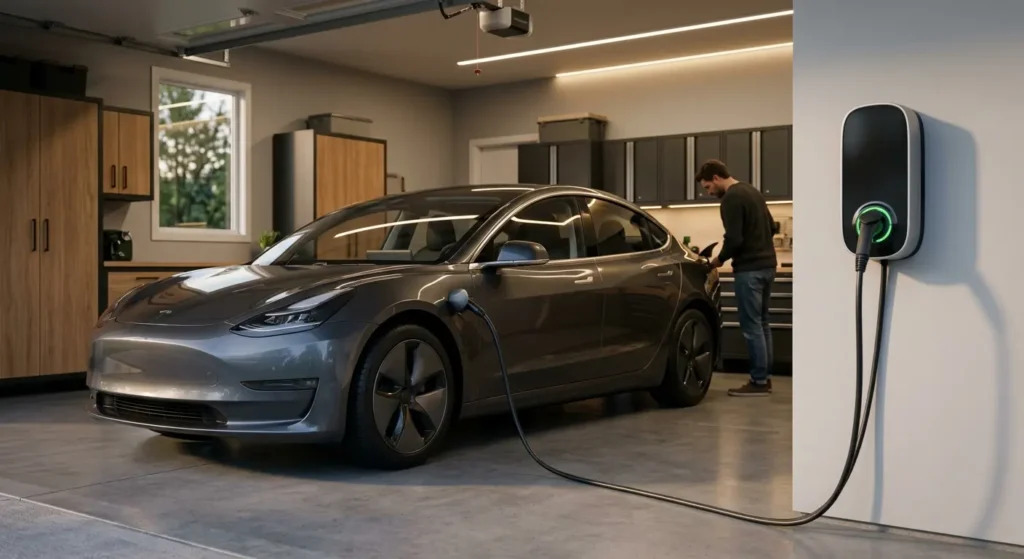
For many EV owners, overnight charging is the most convenient option.
A typical routine:
Evening:
- Park the vehicle
- Plug in charger
Morning:
- Vehicle is ready
This works especially well because most vehicles remain parked for many hours at home.
A Level 2 charger can often restore a significant amount of driving range overnight.
Do You Need to Charge an EV Every Day?
No.
Charging frequency depends on:
- Daily driving distance
- Vehicle range
- Battery size
Many EV owners charge:
- Every night
- Every few days
- Once or twice per week
There is no universal schedule.
A driver with a long-range EV may not need daily charging.
Practical Tips to Improve EV Charging Experience
1. Understand Your Daily Driving Needs
Before choosing a charger, consider:
- How many miles you drive daily
- Where you park
- Whether home charging is available
This helps you avoid unnecessary spending.
2. Keep Charging Between Comfortable Battery Levels
For everyday driving:
- Avoid unnecessary deep discharges
- Avoid charging to maximum capacity when not needed
Follow your vehicle manufacturer’s recommendations.
3. Use Charging Apps
EV charging apps can help you:
- Find nearby chargers
- Check availability
- Compare charging options
- Plan road trips
They are especially useful for drivers who travel frequently.
4. Plan Long Trips Before Leaving
Before a road trip:
Check:
- Charging locations
- Charger compatibility
- Expected charging stops
- Weather conditions
Good planning reduces unnecessary waiting.
Common Mistakes to Avoid When Charging an Electric Car
Many first-time EV owners make simple mistakes that create unnecessary frustration.
Avoiding these problems makes ownership much easier.
Mistake 1: Assuming Every Charger Charges at the Same Speed
A common misunderstanding is thinking any charger will provide the same charging speed.
A vehicle connected to:
- A slow charger
will not suddenly charge quickly.
Charging speed depends on:
- Charger output
- Vehicle capability
- Battery condition
Mistake 2: Buying the Wrong Home Charger
Some people install the most powerful charger available without considering their actual needs.
A better approach:
Choose a charger based on:
- Vehicle requirements
- Home electrical system
- Daily driving habits
Mistake 3: Always Charging to 100%
A full charge is useful before
- Long trips
- Extended driving
But daily charging habits should follow manufacturer guidance.
Many EV drivers do not need a completely full battery every day.
Mistake 4: Ignoring Charging Location
Where you charge affects:
- Cost
- Convenience
- Time
Home charging, workplace charging, and public charging each serve different purposes.
Mistake 5: Not Considering Charging During Trips
Long-distance EV travel requires planning.
Before traveling:
- Check available chargers
- Understand your vehicle range
- Allow extra time if needed
Frequently Asked Questions About Electric Car Charging Time
How long does it take to charge an electric car?
The charging time depends on the vehicle battery size, charger type, and available charging power.
A standard household outlet may take more than a day for some EVs, while a Level 2 home charger can often charge an electric vehicle overnight. DC fast chargers can add a significant amount of range in around 20–60 minutes depending on the vehicle and charging conditions.
How long does it take to charge an EV at home?
Most EV owners charge at home because it is convenient and usually more affordable.
Charging time depends on the home charger:
- Level 1 charger: Around 20–60+ hours for a full charge
- Level 2 charger: Around 4–12 hours for many vehicles
The exact time depends on battery capacity, charger power, and vehicle efficiency.
How long does it take to charge a Tesla?
Tesla charging time depends on:
- Tesla model
- Battery size
- Charging method
- Battery percentage
Using a home charger, many Tesla owners charge overnight.
Using a Tesla Supercharger, charging can be much faster, especially when charging from a lower battery percentage.
The fastest charging usually happens when the battery is not close to full.
How long does it take to charge an electric car at a fast charger?
DC fast chargers can significantly reduce charging time compared with home chargers.
Many EVs can receive a large amount of charge within approximately 20–60 minutes.
However, charging speed depends on:
- EV model
- Charger power
- Battery temperature
- Starting battery percentage
Is it faster to charge an EV from 0% to 100%?
Not usually.
Electric vehicles charge fastest when the battery level is lower.
Charging often slows down as the battery approaches full capacity.
For road trips, many drivers prefer charging from around 10% to 80% because it provides a better balance between speed and usable range.
Can I charge my electric car every night?
Yes, many EV owners charge their vehicles overnight.
However, daily charging depends on:
- How far you drive
- Battery size
- Charging setup
Some drivers charge every night, while others only charge a few times per week.
Expert Tips for Choosing the Right Charging Setup
Choosing the correct charging solution depends on your lifestyle, not just the vehicle.
Before installing a charger or relying on public charging, consider these questions:
How Many Miles Do You Drive Daily?
Your daily driving distance is one of the most important factors.
Example:
A person driving:
20 miles per day
may not need the fastest charging setup.
Someone driving:
100+ miles daily
may benefit from a Level 2 charger.
Do You Have Access to Home Charging?
Home charging changes the EV ownership experience.
If you have:
- A garage
- Private driveway
- Dedicated parking space
then installing a home charger may provide the best convenience.
If you live in an apartment, public or workplace charging may become more important.
Do You Frequently Travel Long Distances?
Drivers who regularly take road trips should consider:
- Fast charging availability
- Charging network coverage
- Vehicle charging speed
A vehicle with good range and fast charging capability can make long-distance EV travel easier.
Conclusion
The answer to how long does it take to charge an electric car depends on several factors, including battery size, charger type, vehicle capability, and charging conditions.
A basic household outlet may take many hours or even days for some electric vehicles, while a Level 2 home charger can make overnight charging practical for most drivers. DC fast chargers provide the quickest option when time matters, especially during road trips.
For most EV owners, the ideal charging routine is simple:
- Charge at home whenever possible
- Use Level 2 charging for daily convenience
- Use fast chargers for longer journeys
- Plan charging around your driving habits
Electric vehicle charging is becoming faster and more accessible every year. As charging technology improves and infrastructure expands, owning an EV continues to become easier for drivers around the world.
Understanding charging time helps you choose the right vehicle, install the right charging setup, and enjoy the benefits of electric driving with confidence.