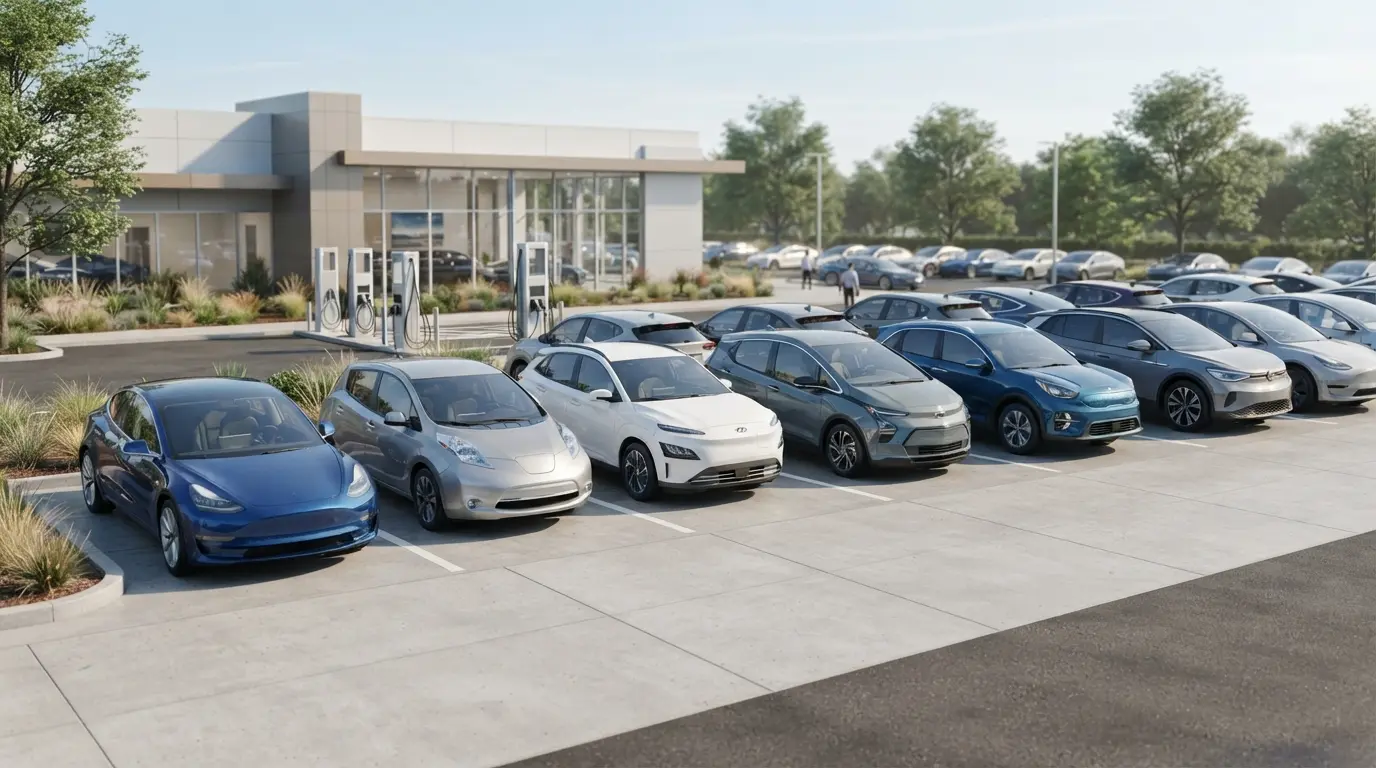
Buying a used electric car in 2026 can save thousands compared to new models, with most EV batteries retaining 85–90% of capacity after 5–8 years. Top picks include Tesla Model 3, Nissan Leaf, Chevy Bolt, Hyundai Kona, and others that proved reliable over hundreds of thousands of miles. Key checks are battery health (using tools or onboard reports), warranty status (most come with 8 yrs/100k mi coverage), and a full vehicle history. This guide covers everything you need: market trends, best used models, battery longevity, buying checklist, and regional tips.
Why Consider a Used Electric Car?
Used EVs offer big savings and a gentle learning curve. Many early EVs are 5–10 years old by 2026, so depreciation has stabilized. Buyers now have a wide choice beyond “cheap Leaf” or “old Tesla” – sedans, SUVs, even trucks are available on the used market. These cars often have modern safety gear and still get software updates. The caveat is higher mileage: EV batteries degrade slowly but inevitably (roughly 2–3% capacity per year). Even so, research shows a 5‑year-old EV typically retains 85–90% of its original range. For many drivers, this means range is still ample for daily needs.
Furthermore, driving a used EV means skipping the peak new-car prices. For example, early Tesla Model 3s sometimes sold at above MSRP, but today you can find older Model 3s in the low $20–30k range in the US. Many buyers find this a compelling value: strong range, quick charging network (for some brands), and proven battery performance. Even luxury EVs like the Model S or Jaguar I-Pace can be bargains used, as depreciation on high-end models has been steep. Overall, the used EV market is maturing: battery prices have fallen, and reliability is better understood. As one expert notes, “battery failure is very rare,” and many used EVs now “perform well beyond early expectations”.
Key benefit: Lower purchase price and insurance, with most major components (motor, drivetrain) still under battery warranty.
Key trade-off: Shorter remaining warranty (especially on battery for very old EVs) and possibly higher financing rates.
The Used EV Market in 2026
Global used EV sales are growing fast. In 2025, over 3 million used EVs were sold across China, Europe and the US – up ~35% from 2024. Used EVs are still a small slice of total used-car sales (about 4–6% in most markets), but rising quickly as more first‑owners trade in their cars. For example, Europe saw used EV sales reach roughly 4% of all used car transactions in 2025 (versus only 1% in 2021). Germany led Europe with ~400,000 used EVs sold in 2025 (~6% of its used market). The US market is still smaller by comparison – under 400,000 used EV transactions in 2025 (about 2.5% of US used car sales) – but it’s expanding as well.
Price trends: New EV incentives peaked earlier in the decade, so by 2026 the new-car market has settled and used prices have stabilized. In the U.S., the federal used EV tax credit expired Sept. 30, 2025, meaning buyers must now consider full price. Europe has fewer used EV-specific grants, though some countries (Belgium, Sweden, etc.) have offered small incentives for used EV purchases. In any case, be sure to check local programs – some regions like California now require battery warranties to cover 70% capacity for 10 years, which is good news for buyers.
Depreciation: Expect EVs to hold roughly 35–50% of their value after 3 years (varies by model). China’s new EV models have recently pressured older EV resale values, but as a buyer, that means bargains. Worldwide, battery aging and tech leaps (such as newer cells with more range) have caused many used EVs to sell at deep discounts – often 50–60% off the new price if 4–6 years old. Always check guides like Kelley Blue Book or regional listings to see current market prices.
Top Used Electric Cars and SUVs (2020–2025 Models)
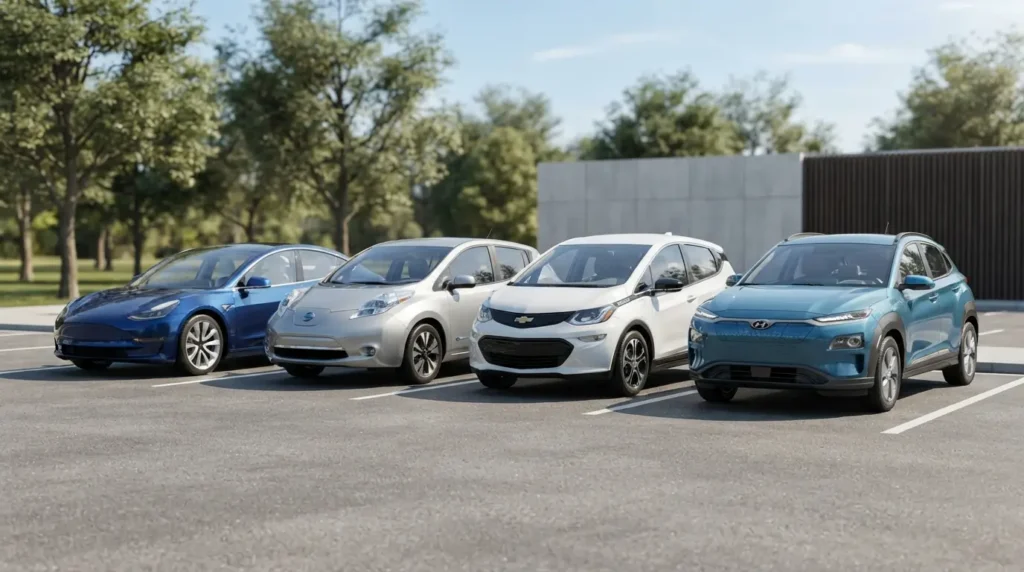
When shopping, focus on models known for durability and available service history. Popular used EVs tend to be mainstream models that sold well new. Below are some standout choices – all have widespread parts availability and data on longevity:
- Tesla Model 3 (2017–2023): A perennial used-EV favorite. Even early Model 3s have impressive range (220–353 mi depending on trim) and a robust Supercharger network. Real-world data shows Model 3 batteries lose only ~15% capacity by 200,000 miles. Most 2020+ Model 3s still have remaining battery warranty, and many used ones go for $15k–$35k depending on age and trim. Inspect older Highland models carefully (look for wear in panels, electronics), but overall it’s a strong all-rounder..
- Nissan Leaf (2011–2021): The Leaf is often the cheapest used EV around, especially first-gen (2011–2017) models that may sell for under $10k. Newer Leafs (2018–2022) have more range (150–226 mi) and better thermal management. Note that early Leafs had no liquid cooling, so they fared worse in heat – check climate history and battery health closely on older Leafs. Still, for commuting and local use, an e-NV200 or older Leaf can be a great bargain if the price is right. Just ensure any recalls (like the battery capacity loss issue) were addressed.
- Chevrolet Bolt EV/Bolt EUV (2017–2022): Once an affordable new EV, used Bolts are now very cheap ($8k–$20k) for 2017–2022 models. They offer around 200–259 mi EPA range (depending on model year) and hatchback practicality. However, Bolts have a battery recall history (2017–2019 models), where GM replaced packs in 2020–2021. Only buy a Bolt if the VIN shows all recall fixes done and the battery warranty/health is confirmed. (Newer 2022+ Bolts use safer chemistry and have fixed the issue.)
- Hyundai Kona Electric (2019–2021): Kona EVs were one of the first 200‑mi+ small SUVs. A used Kona EV (150–202 mi range) can be a smart commuter car. Early Kona EVs had a limited-run battery chemistry, but Hyundai also issued recalls on them. Verify any recalls are done, and check how much warranty remains. If clean, a 2018–2020 Kona EV (around $15k–$28k used) gives much more range than an older Leaf for similar money.
- Kia Niro EV (2019–2022): A cousin to the Kona, the Niro EV offers similar range (~239–253 mi EPA) and a crossover body for more cargo. It’s not flashy but provides reliable range (~200 mi in older versions) and good efficiency. Used Niro EVs often sell in the $18k–$30k range for 2019–2021 models. The main thing is verifying warranty/service history and recalls, but otherwise it’s a no-frills practical choice.
- Hyundai Ioniq 5 / Kia EV6 (2022–2024): Newer entries to watch for. These share the same platform with ~250–310 mi ranges, ultra-fast 800V charging, and modern features. Used prices are still high (often $40k+), but they may come down toward late 2026. They have LFP battery options (more durable) as well as NMC. If you can stretch budget, they offer future-proof tech and strong performance. Otherwise, consider them on your shortlist.
- Tesla Model Y (2020–2023): The Model Y compact SUV quickly became the US’s best-selling EV. Used prices began high, but recent depreciation has made late 2021–2022 models more reachable ($35k–50k). They offer 300–330 mi range (Long Range AWD), lots of cargo space, and a refined Autopilot. Key check: some early Y’s had build finish issues (paint, trim gaps). Battery-wise, Model Ys behave like 3s (Longevity ~15% loss by 200k mi). For the right buyer, it’s probably the all-around best used electric SUV for value – just verify any software/hardware updates.
- Volkswagen ID.4 (2021–2024): A more conventional electric crossover. Early ID.4s offer
209–275 mi range. They depreciated heavily, so used prices can be attractive ($18k–$30k for 2021–2022 models). The ID.4 has a roomy cabin and comfortable ride. Downsides: some software glitches and slower software updates, and charger networks less ubiquitous. Before buying, check that the software is up to date, and that local VW dealers are experienced with EV service. If well-maintained, it’s a solid non-Tesla option. - Ford Mustang Mach-E (2021–2023): Sporty crossover with 230–312 mi range (RWD vs AWD). Initial Mach-Es sold well, so there are many used units now. Early depreciation makes used prices reasonable. It’s a good match for Model Y or ID.4 shoppers. The Mach-E’s build quality has improved over time. Key checks: warranty (Ford’s battery warranty is similar to 8-yr/100k), and proper software updates. Mechanically, it’s robust; EV-specific Q&A is simpler (see the Official Mach-E manual on charging connectors and regenerative braking).
- Others to watch: Jaguar I-Pace (luxury SUV, rare on used market but can be had cheaply), Audi e-tron (early e-trons also depreciated a lot), Nissan Ariya (newer, so fewer used yet), BMW i3 (old tech but quirky and efficient for city use), and plug-in hybrids like Prius Prime or RAV4 Prime if you want some gas backup (though not pure EVs, they often show up in EV discussions). Each of these has its own quirks, so focus on those with strong dealer/service support.
You might also see mentions of Renault Zoe, VW e-Golf, or other regional models (especially in Europe/UK markets). The key is volume: models that sold in decent numbers (and had good reliability) will have more data and parts supply.
Comparison Table (sample models): It can help to compare EPA range and typical used prices. For example, the 2020–2022 models below:
| Model (Years) | Range (EPA, mi) | Typical Used Price (USD, approx.) |
|---|---|---|
| Tesla Model 3 (2018-21) | 220–353 | $15,000–45,000+ (varies by trim) |
| Nissan Leaf (2018-21) | 150–226 | $8,000–25,000 |
| Chevy Bolt EV (2019-22) | 238–259 | $12,000–25,000 |
| Hyundai Kona EV (2019-21) | 200–258 | $15,000–30,000 |
| Kia Niro EV (2019-21) | 239–253 | $18,000–32,000 |
| Volkswagen ID.4 (2021-23) | 209–275 | $18,000–35,000 |
| Ford Mach-E (2021-22) | 230–312 | $20,000–40,000 |
| Tesla Model Y (2020-22) | 244–330 | $30,000–55,000+ |
(Prices and ranges are approximate; check local listings and EPA data for precise figures. Prices vary by condition, mileage, incentives, and region.)
Battery Health: What to Check
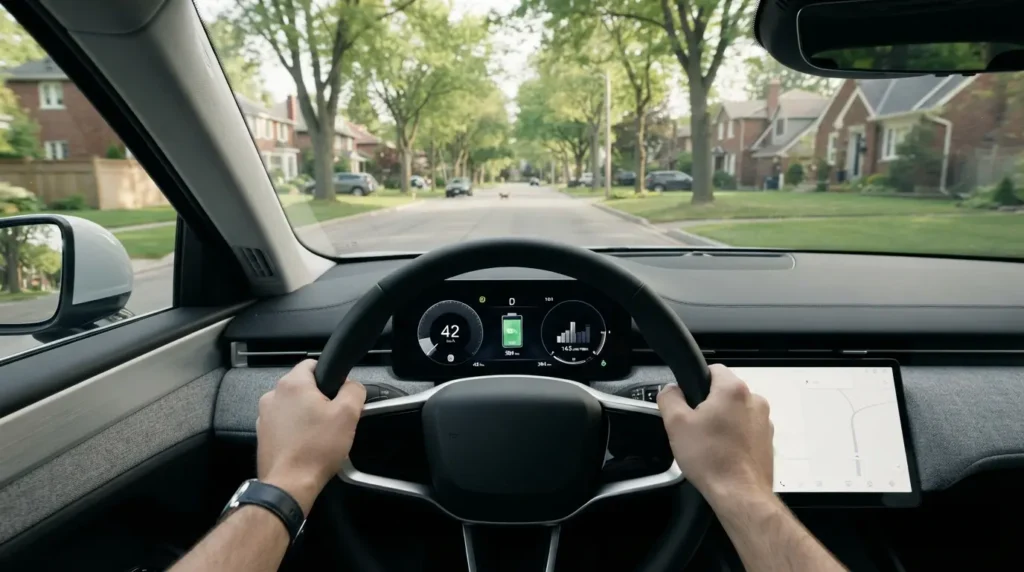
The EV battery is the most important (and expensive) part. But it’s also durable and often less prone to sudden failure than many expect. Here’s how to assess it:
- Battery health report: Many used EV listings (and dealers) now provide a battery health or capacity report. This often shows remaining capacity as a percentage of new. For example, Kelley Blue Book includes an estimated battery health score on its listings. You can also ask for an independent scan (some shops offer EV battery diagnostics). This gives an objective read of how much charge the battery can hold now.
- Range test: One simple test is to fully charge the car and compare the range displayed to the original EPA rating. Keep conditions comparable (cool weather and driving style). If the car shows a range close to EPA (minus a bit for aging), the battery is healthy. For instance, a used EV at 85% capacity would still show 85% of EPA range, which most buyers find acceptable.
- Drive and observe State of Charge (SOC): On a test drive, note how quickly the battery level drops. If you start at 100% and the SOC plummets much faster than expected for the miles driven, it could indicate an issue. A drop of 1–2% per mile (depending on speed, climate, etc.) is normal; more than that may be a red flag.
- Check charging behavior: Try a partial charge at a DC fast charger if possible. Notice the charging rate (kW). Newer EVs usually slow the rate past 80%. If the car charges much slower than specs say, or overheats, battery health might be declining. (For older EVs, also ensure the charging port is original type – e.g. many early Leaf/Kona used CHAdeMO, which is rare in some regions.)
- Manufacturer warranty: Almost all EVs come with an 8‑year/100,000+ mile battery warranty (longer in some states). Find out how much of that warranty is left. In the US, federal law mandates 8yr/100k for EV batteries. California (from 2026) will require 10yr/150k with 70% retention. Major brands (Tesla, Nissan, VW) typically replace the battery if its capacity falls below
70–75% under warranty. Ask the seller if any battery repair was done under warranty. If the car is out of warranty, factor battery replacement cost ($5k–$15k depending on model) into your purchase budget. - Battery chemistry: Some EVs use LFP (lithium iron phosphate) chemistry (e.g., many recent Tesla/SBYD models), which tends to degrade more slowly than NMC batteries. If possible, find out the cell type – an LFP pack from China or the later Tesla nickel-cobalt-aluminum ones can outlast older NMC packs. But either way, most EV batteries last far longer than early fears predicted, especially when treated well.
- Software updates: Check if the car’s software/firmware is up to date. Many manufacturers release updates that improve battery management. A well-maintained car should have all critical updates applied. Dealers can usually check this.
- History and usage: Ask about charging habits. Frequent DC fast charging (especially to 100%) can speed up wear, as can exposure to extreme heat. A vehicle that mostly topped up at 80–90% on Level-2 (home) charging will likely have healthier cells. If the seller knows the prior use (e.g., lease car, demo, high-mileage taxi), that context helps gauge battery stress.
In short, treat battery health like reviewing an engine’s compression: essential, but measurable. A thorough battery test (via app or dealer) and comparing current range to EPA rating are two of the most reliable methods. With proper checks, battery concerns should not scare you away – data shows most EV batteries still have lots of life left even after 100,000 miles.
What to Inspect: Used EV Buying Checklist
When inspecting any used EV, cover these key points:
- Vehicle history report: As with any used car, get a full history (AutoCheck or Carfax). Look for accidents, title issues (salvage/flood titles), and service records. For EVs, specifically check for any recalls (especially battery recalls – e.g., Chevy Bolt and some BMW i3 had safety recalls). Avoid cars with unknown backgrounds or unaddressed recalls.
- Charging hardware: Ensure the vehicle has the proper charging cable or adapter. Many EVs come with a J1772 Level-2 charger, but some older models (Nissan Leaf, Kona EV) use CHAdeMO adapters for DC charging. Verify that all hardware (both Level 2 and DC connectors, if included) is present and in good condition.
- Battery and charging test: (Refer to Battery Health section.) In addition, check the charge indicator on a Level-2 charger and on a fast charger. It should behave normally (charging slows past 80% on DC fast, etc.) and not give error codes.
- Brakes and regen: Test drive and pay attention to regenerative braking and pedal feel. EVs often have strong regen; make sure it’s not causing jolts. Test all drive modes (Eco, Sport, etc.) and regenerative levels to ensure they function.
- Cooling and heating: Run heating/cooling systems. A malfunctioning thermal management system (common in older Leafs/Kona) can reduce range. Feel if the car heats up the battery or cabin fast and if performance suffers in extreme temperatures.
- Interior and tech features: Check infotainment, navigation, displays. EVs have many electronics that can glitch. Test the key fobs, remote start (if available), and any apps or Bluetooth. Interior wear (seats, trim, dashboard) should match the age. Unlike ICE cars, EVs lack engine noise, so cabin insulation varies by model – listen for excessive road noise or rattles.
- Drivetrain and suspension: Even though EVs have fewer moving parts, suspension and steering components still wear. Listen for unusual noises over bumps. Check wheel alignment and that tires are wearing evenly (uneven wear can hint at alignment issues).
- Tires: Many EVs are heavy, so they wear tires faster. Look for high-quality tires and remaining tread. Upgrading older tires to low-rolling-resistance ones can improve efficiency later.
- Warranty & paperwork: Verify remaining warranty, and ask for original manual and all keys. In the US and Canada, EV battery/drive-unit warranties are generally transferable to the new owner. In some regions (like Canada), all major brands transfer the full battery warranty. Still, always get a copy of the original window sticker or manufacturer warranty booklet if possible.
- Service history: Check if the EV had regular service (even though oil changes aren’t needed, items like brake fluid or cabin filters may have been changed). Consistent records suggest a well-cared-for car.
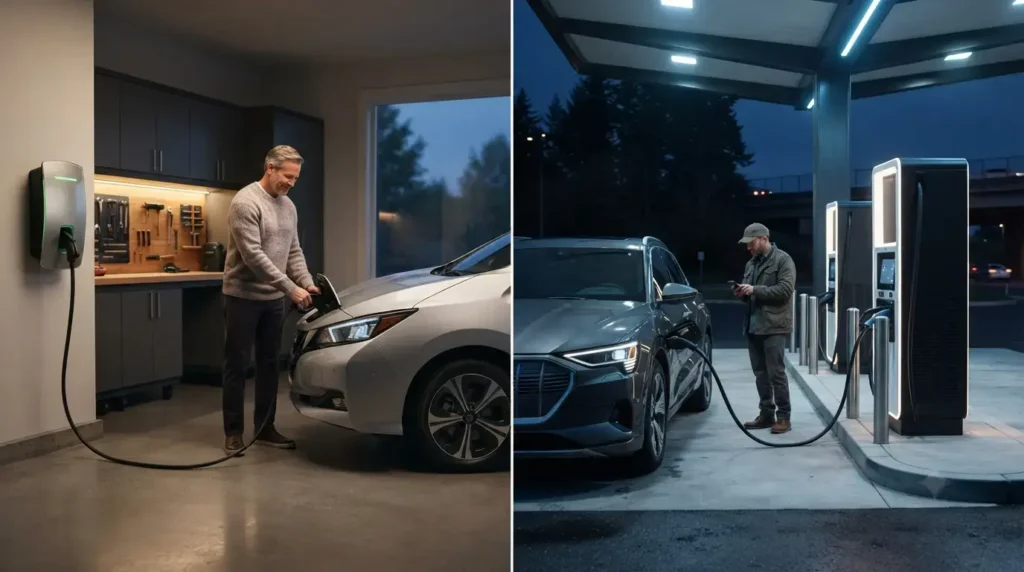
- Home charger (if buying private): If you’re buying privately, see if the home Level-2 charger (wallbox) can be transferred or included – it adds value. Also ask what amperage/circuit it’s on; some older homes need upgrades for EV chargers.
Throughout the process, keep your needs in mind. If you mostly do city driving, an older EV with 100+ miles range might suffice. If you plan road trips, aim for one with 200+ range and Supercharger/fast-charger access.
Pro Tip: Take pictures during the test drive. As Recurrent advises, snap the dash at 100% charge (showing range, outside temp, efficiency) and again after driving. This documents how the SOC changed and gives a real-world range estimate on that day.
Regional Notes: USA, UK, Europe, Canada, Australia
- United States: As noted, the federal used-EV tax credit ended in 2025, so now treat used EVs like any used car for purchase cost. However, many states still offer rebates or HOV-lane privileges for EVs regardless of age (e.g. California’s Clean Vehicle Rebate Project allows used BEVs from 2018+ a smaller rebate). Always check your local state/utility incentives for used EV buyers. Popular models like Tesla (Model 3/Y), Chevy Bolt, Ford Mach-E, Nissan Leaf, and Hyundai/Kia EVs are widely available. Remember climate: avoid older Leaf/Kona from very hot regions (Texas, Arizona) as heat worsens battery wear. Out-of-state deals can save money (EVs are plentiful in California, less so in colder states), but ensure you consider shipping costs and warranty transfer processes when buying across state lines.
- United Kingdom / Europe: Used EVs are plentiful but may have higher mileage (European buyers drive more). Look for EU-market models (e.g. Renault Zoe, Opel/Vauxhall Mokka-E, Peugeot e-2008) that rarely appear in the US. The UK now offers a new “scrappage” style grant: £3,000 off when you scrap an old car for a used EV (launched 2026). Germany and Scandinavia have deep used inventories; just note they drove in colder climates so battery ageing might be less. The AVILOO battery warranty (UK) is a new option: dealers can now offer a 12-month battery warranty that pays out if capacity drops too much, giving extra peace of mind. Always verify EU battery warranties (many brands offer 8 yr/100k, and most transfer to new owners).
- Canada: Federal incentives include up to $5,000 rebate on new EVs, but used EVs have no national credit (some provinces have separate EV incentives, but mostly for new cars). Canada’s climate can be hard on batteries, so check winter usage. Many Canadian buyers stick to all-weather EVs like Kona, Ioniq5, or AWD models. One advantage: all major brands in Canada do transfer battery warranty to second owner (thinkev.ca notes 8 yr/160k km, transferable). Quebec and BC have extra tax rebates that can indirectly benefit used EV affordability in those provinces.
- Australia: Used EVs are far scarcer (only a few hundred sold used per year), so options are limited. Popular choices are imports like used Nissan Leaf or Kona from Japan. Note right-hand drive. Aus states have no single national used EV grant. Battery health is a big concern, so consider getting a professional battery test. Aussies also often install home chargers (Type 2 connector common, CCS for fast charge).
Across all regions, the core advice is similar: check the battery and the paperwork. Many countries have websites for EV history or dealerships that can read VIN data. Take advantage of them.
Practical Tips for Buyers
- Expand your search radius: Used EVs can be rare in some areas. Check listings nationwide (or across EU borders) and be open to a bit of travel. The car can often be shipped cheaper than you’d expect, and you might find a much better price. (Just factor shipping and tax differences in.)
- Get a pre-purchase inspection: Ideally by a shop experienced with EVs. They can do a thorough battery and electrical system check. For a few hundred dollars, this could uncover hidden issues.
- Look for a transferable charger: If buying through a dealer, ask if they will include a charging station (Wallbox) or adapters as part of the deal. Installing a new home charger runs $1,000+ in many countries, so having one ready can save money.
- Check accessories and manuals: Make sure you get all keys/keycards, any portable chargers, J1772 adapters, and the owner’s manual. Also check if a mobile app (like MyTesla or MyHyundai) is still linked to the car or can be transferred.
- Negotiate on age/mileage: If a used EV is over 5 years old or has 100k+ miles, its value drops, but battery wear is often still moderate. Use this to your advantage in price talks. For example, if a 2018 Kona EV shows 85% battery health, you might negotiate accordingly.
- Test out regenerative braking and modes: EVs often allow you to adjust regenerative braking strength. What feels comfortable to one person can be annoying to another. Make sure the modes work and are to your liking.
- Mind high-voltage loads: If you use roof racks, cargo boxes, or tow (on an EV that can tow), realize these all reduce range. Test with your intended usage.
- Keep an eye on recalls: If the model had any battery or airbag recalls, ensure they’ve been done. Even if the car seems fine, an unresolved recall can be costly or unsafe.
- Be wary of scams: Some sellers exaggerate battery health or range. Cross-check claims with independent reports. If a deal sounds too good (e.g. “like new battery, $10k only!”), do extra diligence.
- Consider certified pre-owned (CPO): Many brands now offer CPO programs for EVs, with extended warranty and inspection. They cost more up-front but give extra peace of mind.
Common Mistakes to Avoid
- Skipping the battery check: Never assume an 8-year warranty means “no worries.” Always get a battery health report or test. Batteries degrade differently based on use. For example, a car mostly charged to 100% daily may have more wear. Always compare its actual range to EPA range on a full charge.
- Ignoring warranty transferability: Don’t buy an EV assuming you inherit the battery warranty. In many cases you do, but some smaller brands or imports might have non-transferable policies. Verify in the owner’s manual or with the dealer.
- Overlooking climate effects: A common mistake is buying an EV used in an extreme climate without realizing it. Hot climate (Texas, Middle East) or cold (Scandinavia) both stress batteries. If possible, get data on the EV’s life history. E.g., early Leafs from very hot areas are more prone to degradation.
- Forgetting charging network: Know how you’ll charge the car. If it’s a Tesla Model 3/Y, Superchargers are an advantage. For others, check if they support your local fast-charge standards (CCS, CCS1 vs CCS2, CHAdeMO) and if your area has chargers. Buying an EV without verifying charging availability can lead to range anxiety.
- Not test-driving in daily conditions: Some buyers test on a cool day or highway and then struggle in winter city traffic. Test the car as you’d actually use it: if you live in a winter climate, drive in cold weather; if you have a long commute, do a mix of highway and local driving to check efficiency.
- Focusing only on price: The cheapest EV may come with hidden costs: imminent battery replacement, missing charger, or no warranty. Consider total cost of ownership: sometimes a slightly higher-priced CPO (with warranty) is better than the cheapest “as-is” sale.
- Neglecting updates: Failing to update software can leave bugs unresolved. For instance, early Tesla users often needed OTA updates to improve charging rates. Ensure the car can connect to the internet or dealer for updates.
- Overestimating old range claims: Don’t assume a 2015 EV still has 100% of its original range. Base your decision on the current range and capacity, not what it was new.
By avoiding these missteps, you’ll have a much smoother used-EV purchase.
FAQs
Q: Are used electric cars reliable?
Generally, yes. EVs have fewer moving parts than gas cars (no oil, spark plugs, transmission). Major components like motors and inverters are very durable. Battery degradation is the main concern, but most modern EV batteries last well beyond 100,000 miles with slow fading. As Recurrent notes, battery failures are very rare if the car has been maintained properly. Sticking to reputable models with good support (Tesla, Nissan, Chevy, Hyundai, etc.) further improves reliability.
Q: How many miles can a used EV battery still go?
It varies. A well-kept 5–8 year old EV might still deliver 80–90% of its original range (e.g. 160–180 miles of 200 originally). Many factors (age, temperature history, charging habits) affect this. Use the battery capacity report to estimate. Anything above ~75–80% of original is usually acceptable. Note that seasonal conditions (cold weather, heavy AC) will temporarily reduce range further.
Q: What does an EV battery replacement cost?
Battery costs have fallen, but they’re still significant. In 2026, expect a full replacement to run roughly $5,000–$15,000 USD in the U.S., depending on size and brand. For example, a Nissan Leaf pack in 2017 was quoted at ~$6,200. Batteries from luxury EVs can be much higher (some Teslas exceed $10k). Many owners opt for refurbished batteries or modules to save money. This is why warranty (and battery health) is important.
Q: Can I use a normal dealership warranty on a used EV?
Used EVs bought from franchised dealers might come with a certified pre-owned (CPO) warranty, which can add up to 3 years or similar. This is separate from the manufacturer’s original battery warranty. Always clarify with the seller: some dealers will provide CPO coverage for the remaining battery warranty period. A private sale typically has no additional warranty, so you rely only on any transferable original warranties (battery, chassis).
Q: Do used EV tax credits exist?
In the U.S., the federal tax credit for used EVs expired on September 30, 2025. Before that date, some buyers got up to $4,000 back, but it’s no longer available. Check local incentives (some states and Canadian provinces still offer used EV rebates or reduced fees, but these change often). In Europe, some countries offer point-of-sale discounts for used EVs or trade-in bonuses, but they vary by country and year.
Q: What’s the difference between LFP and NMC batteries?
LFP (lithium iron phosphate) and NMC (nickel-manganese-cobalt) are two chemistries. LFP packs (used in some Tesla/Chinese EVs) generally last longer with less degradation, but have lower energy density (meaning heavier or more cells for the same range). NMC packs (used in most older EVs) provide more range per weight but often degrade slightly faster. For buyers, LFP often means a more robust older battery, but both types are widely used and fine if maintained. This topic is covered in detail in How EV Batteries Work.
Q: Is it hard to charge a used EV at home?
Not really. All EVs come with a standard AC Level-2 charging connector (J1772 in the US/Canada, Type2 in the EU). You may need to buy or install a home charging station (wall connector) if you don’t have one. Installation typically costs $500–$1,500. In the meantime, EVs can charge from a standard 120V outlet (very slow) or any public charger you have access to. The biggest consideration is if your house’s electrical panel can handle a Level-2 charger; if not, budget for an upgrade. Once set up, home charging is usually the cheapest and most convenient option – see Best Home EV Chargers for recommendations.