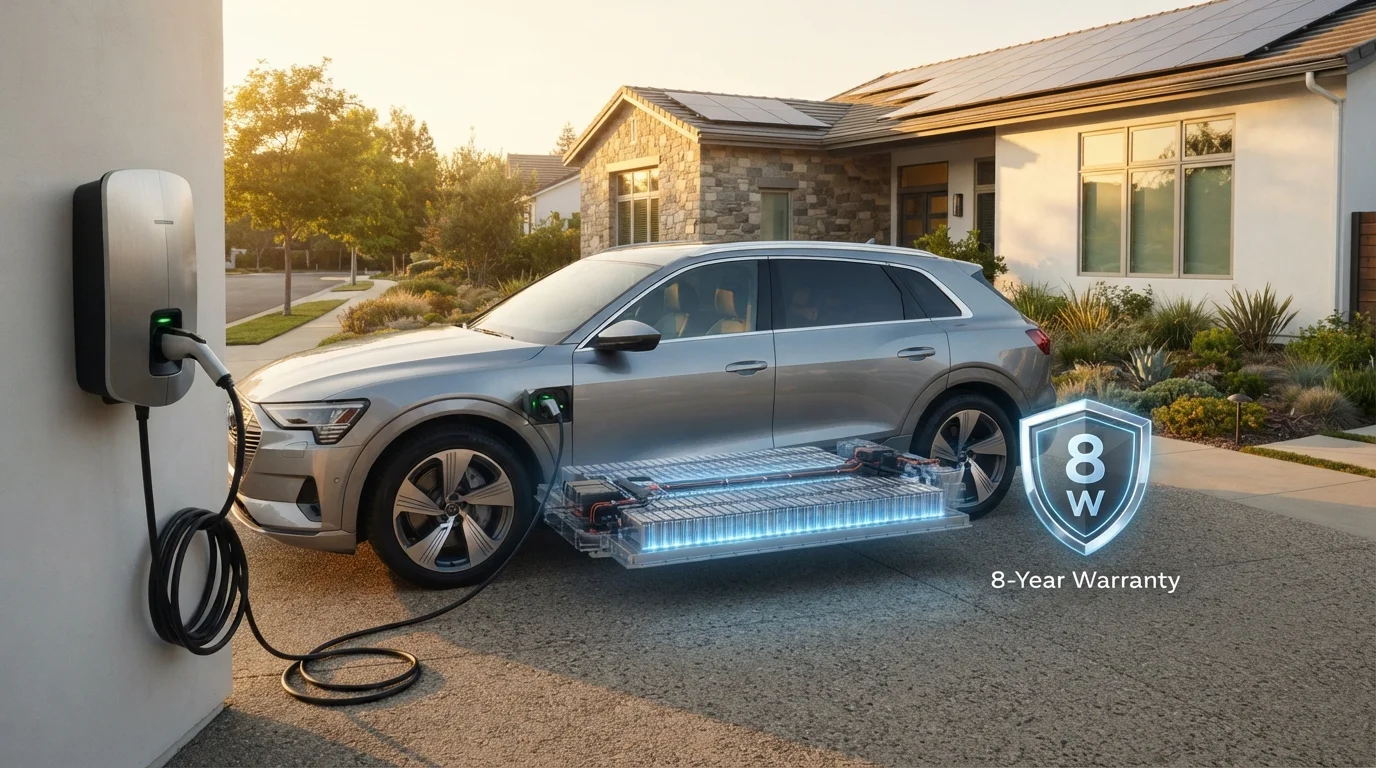
Buying an electric vehicle is a long-term investment, and the battery is its most valuable component. That’s why understanding an EV battery warranty is just as important as comparing driving range, charging speed, or purchase price.
Most modern EVs come with generous battery warranties, but many drivers aren’t sure what those warranties actually cover. Does normal battery degradation qualify for a free replacement? What happens if battery capacity drops over time? Are repairs covered after an accident? The answers depend on the manufacturer, the warranty terms, and the condition of the battery.
If you’re planning to buy an electric car or already own one, this guide explains everything you need to know about electric vehicle battery warranty coverage, common exclusions, battery health, degradation limits, and what to expect throughout your ownership.
Quick Answer
Most manufacturers provide an EV battery warranty of 8 years or around 100,000 miles (160,000 km), although coverage varies by model and region. These warranties generally protect against manufacturing defects and excessive battery capacity loss beyond the manufacturer’s specified limit. Normal battery aging is expected and usually isn’t covered unless it exceeds the warranty threshold.
Why EV Battery Warranty Matters
For many buyers, battery replacement is the biggest concern when switching to an electric vehicle.
Unlike engine repairs in gasoline vehicles, replacing an EV battery can be expensive once the warranty expires. Fortunately, battery failures are relatively uncommon, and manufacturers back their batteries with long warranty periods because they expect them to remain reliable for years.
A good warranty offers confidence that you’re protected against unexpected defects while also preserving the vehicle’s resale value.
An electric vehicle battery warranty can protect you from:
- Manufacturing defects
- Internal battery failures
- Unexpected loss of usable capacity (within warranty limits)
- Faulty battery modules
- Battery management system defects in many cases
Understanding these protections helps you make better buying decisions and avoid unpleasant surprises later.
What Does an EV Battery Warranty Usually Cover?
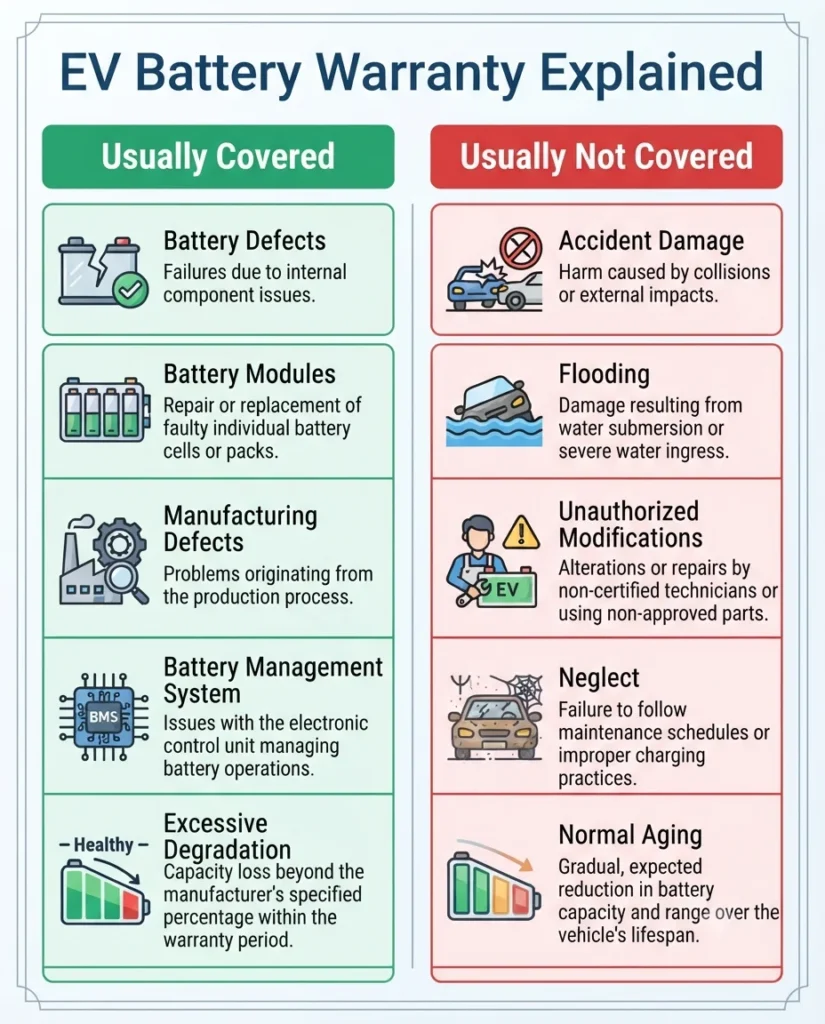
Although every manufacturer has its own warranty policy, most warranties cover similar components.
Typical EV battery warranty coverage includes:
- Defects in battery materials
- Manufacturing defects
- Battery module failures
- Battery pack failure
- High-voltage battery assembly
- Battery management system (when included by the manufacturer)
- Unexpected battery capacity loss beyond the specified warranty threshold
If a covered defect occurs during the warranty period, the manufacturer may:
- Repair the battery
- Replace defective modules
- Replace the complete battery pack if necessary
The exact solution depends on the diagnosis and the manufacturer’s repair procedures.
Battery Defects
Battery defects are problems that result from manufacturing rather than normal use.
Examples include:
- Faulty battery cells
- Cooling system problems affecting battery operation
- Internal electrical faults
- Manufacturing defects discovered after delivery
These issues are typically covered if they occur within the warranty period.
Excessive Battery Capacity Loss
One of the biggest questions buyers ask is whether battery degradation is covered.
The answer is sometimes.
All lithium-ion batteries gradually lose capacity over time. Manufacturers consider this normal aging.
However, many automakers specify a minimum battery capacity that should remain during the warranty period. If usable capacity falls below that threshold because of an eligible defect, the battery may qualify for repair or replacement.
This is why reading the warranty booklet is important rather than relying only on marketing materials.
Battery Module Repairs
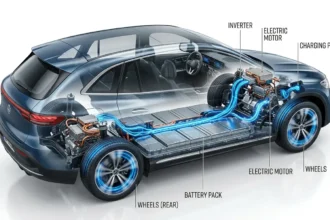
Modern EV batteries consist of many individual modules.
If only one module develops a fault, manufacturers often replace that module instead of installing a completely new battery pack.
This approach:
- Reduces repair costs
- Saves time
- Minimizes waste
- Returns the battery to proper operating condition
For owners, module replacement often means less downtime while still restoring battery performance.
What Isn’t Covered by an EV Battery Warranty?
Understanding the exclusions is just as important as knowing what’s included.
Most battery warranty electric car policies do not cover damage caused by misuse, accidents, or unauthorized modifications.
Common exclusions include:
- Collision damage
- Flood damage
- Fire damage
- Improper repairs
- Unauthorized battery modifications
- Racing or abusive driving if prohibited by the warranty
- Damage caused by aftermarket electrical modifications
- Neglecting manufacturer maintenance requirements
Normal Battery Aging
Every lithium-ion battery gradually loses capacity.
This happens regardless of manufacturer.
Factors affecting normal aging include:
- Time
- Charge cycles
- Climate
- Fast charging frequency
- Driving habits
- Long-term storage
Because this is expected behavior, gradual battery aging alone usually doesn’t qualify for warranty replacement.
Physical Damage
If the battery pack is damaged after striking road debris or during an accident, warranty coverage usually doesn’t apply.
Instead, repairs may be handled through vehicle insurance depending on the policy.
Unauthorized Repairs
Opening or modifying a high-voltage battery outside approved repair procedures can void warranty coverage.
Because EV batteries operate at high voltage, repairs should always be performed by trained technicians using manufacturer-approved methods.
How Long Does an EV Battery Warranty Last?
Most major manufacturers provide similar warranty periods, although exact terms vary.
Typical coverage includes:
| Warranty Item | Typical Coverage |
|---|---|
| Battery Warranty | Around 8 years |
| Mileage Limit | Around 100,000 miles (160,000 km) or more |
| Coverage | Manufacturing defects and qualifying battery degradation |
Some manufacturers offer longer mileage limits or additional battery guarantees depending on the model and market.
Always verify the warranty for your specific vehicle because coverage differs between countries and model years.
Does Every EV Brand Offer the Same Warranty?
No.
Manufacturers set their own warranty conditions.
Factors that may differ include:
- Warranty duration
- Mileage limits
- Capacity retention guarantee
- Transferability to future owners
- Regional coverage
- Repair procedures
- Battery replacement policy
For example, some brands clearly specify a battery capacity retention threshold, while others focus primarily on manufacturing defects.
Reading the official warranty documentation remains the best way to understand your coverage.
What Is Battery Capacity Retention?
One of the most misunderstood parts of an EV battery warranty is battery capacity retention.
Unlike a gasoline engine, an EV battery slowly loses some of its maximum capacity as it ages. This process is known as battery degradation, and it happens in every lithium-ion battery.
Manufacturers know this is normal, so they don’t promise the battery will keep 100% of its original capacity forever.
Instead, many manufacturers specify a minimum battery capacity that should remain during the warranty period.
For example, if the battery capacity falls below the manufacturer’s warranty threshold because of a covered defect, it may qualify for repair or replacement. The exact threshold depends on the vehicle and the manufacturer’s warranty terms.
Always check your owner’s manual or official warranty documentation because these limits can vary by model and region.
What Is Battery State of Health (SOH)?
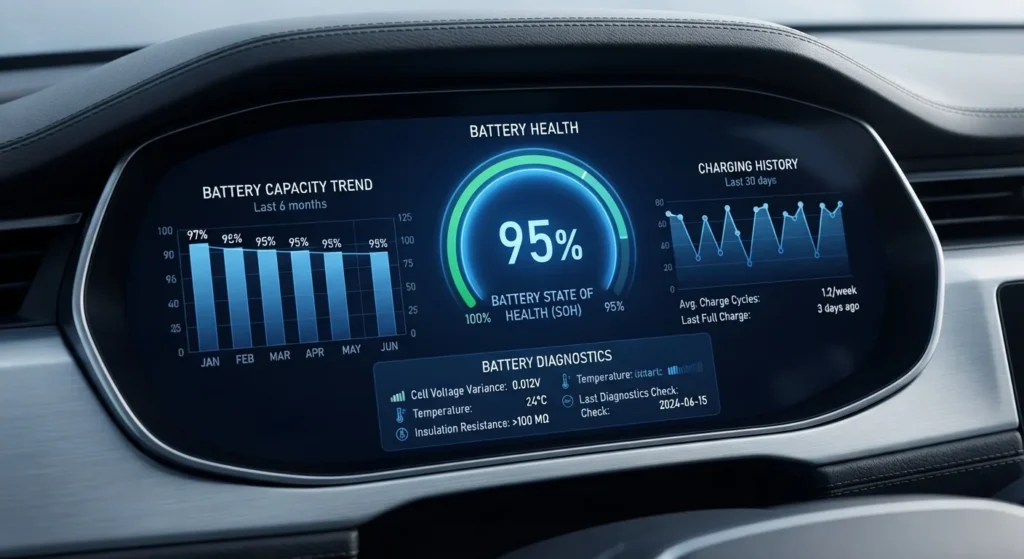
Battery State of Health (SOH) measures how much usable capacity remains compared to when the battery was new.
For example:
| Battery State of Health | What It Means |
|---|---|
| 100% SOH | Battery performs like new. |
| 95% SOH | Very little degradation. |
| 90% SOH | Normal after years of driving for many owners. |
| 80% SOH | Noticeable reduction in driving range. |
| Below manufacturer’s warranty threshold | May qualify for warranty evaluation if other warranty conditions are met. |
SOH is different from the charge level shown on your dashboard.
A battery can display 100% charge while having only 90% State of Health, meaning it still charges fully but stores less energy than when it was new.
What Causes EV Battery Degradation?
Battery degradation isn’t caused by one single factor. Instead, it’s the result of normal chemical aging combined with how the vehicle is used.
Common causes include:
- Thousands of charging and discharging cycles
- Very high temperatures
- Extremely cold climates
- Frequent DC fast charging
- Leaving the battery fully charged for long periods
- Frequently running the battery to nearly 0%
- Long-term storage without following manufacturer recommendations
Some degradation is completely normal and should be expected throughout the life of an EV.
LFP vs NMC Batteries: Which Lasts Longer?
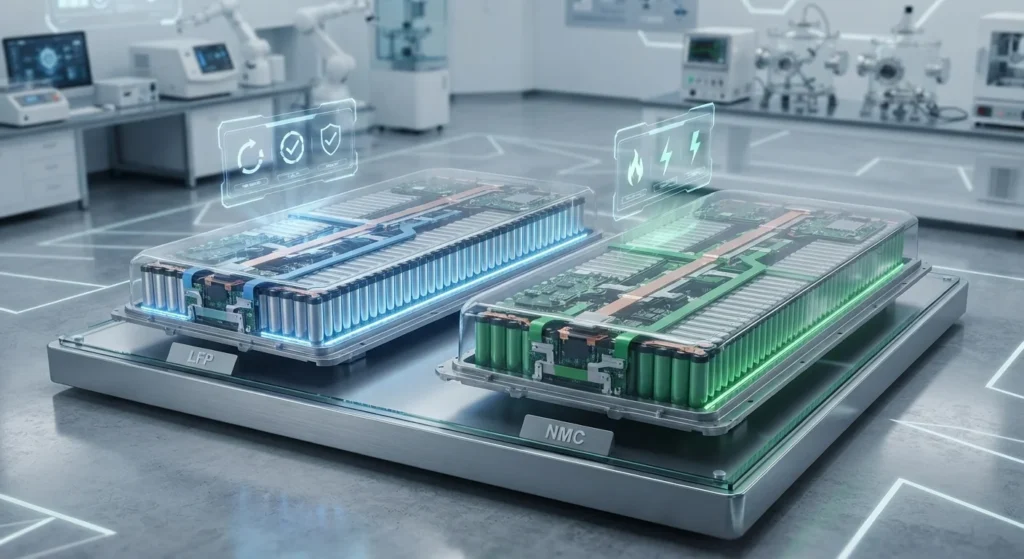
Battery chemistry plays a major role in lifespan.
The two most common EV battery chemistries today are LFP (Lithium Iron Phosphate) and NMC (Nickel Manganese Cobalt).
| Feature | LFP Battery | NMC Battery |
|---|---|---|
| Typical lifespan | Generally longer | Generally shorter than LFP |
| Energy density | Lower | Higher |
| Driving range | Usually lower | Usually higher |
| Daily charging | Often suitable for frequent full charging (follow manufacturer guidance) | Many manufacturers recommend limiting routine charging to around 80% for daily use |
| Cost | Usually lower | Usually higher |
| Cold-weather performance | Often less efficient | Generally better |
Neither chemistry is universally “better.”
If maximum range is your priority, an NMC battery may suit you better.
If long-term durability and lower cost matter more, an LFP battery can be an excellent choice.
Can an EV Battery Warranty Transfer to a New Owner?
In many cases, yes.
Many manufacturers allow the remaining electric vehicle battery warranty to transfer automatically to a new owner when the vehicle is sold.
This benefits both buyers and sellers because:
- Used EVs become more attractive.
- Buyers have greater confidence.
- Resale value may improve.
- The remaining warranty provides additional peace of mind.
However, transfer policies vary by manufacturer and country. Always verify the warranty status before purchasing a used EV.
What Happens If Your EV Battery Fails Under Warranty?
If you suspect a battery problem, don’t assume it needs a complete replacement.
Manufacturers typically follow a structured diagnostic process.
Step 1: Schedule a Battery Inspection
Take the vehicle to an authorized service center.
Technicians will run diagnostic tests to evaluate:
- Battery State of Health
- Error codes
- Battery management system
- Charging performance
- High-voltage components
Step 2: Determine Whether the Issue Is Covered
The technician checks whether the problem is caused by:
- A manufacturing defect
- An eligible battery fault
- Excessive capacity loss covered under warranty
If the issue resulted from an accident, water damage, or unauthorized modifications, warranty coverage may not apply.
Step 3: Repair or Replace
Depending on the diagnosis, the manufacturer may:
- Update battery software
- Replace one or more battery modules
- Repair the battery pack
- Replace the complete battery pack if necessary
A full battery replacement is generally considered a last resort rather than the first solution.
EV Battery Warranty Comparison (General Overview)
Warranty terms differ by manufacturer, model, and region. The table below summarizes the types of differences you’ll encounter rather than listing model-specific promises.
| Feature | Typical Industry Practice |
|---|---|
| Warranty duration | Around 8 years is common |
| Mileage limit | Often around 100,000 miles (160,000 km) or more |
| Manufacturing defects | Commonly covered |
| Excessive battery degradation | Often covered if it exceeds the manufacturer’s stated limit |
| Accident damage | Usually not covered |
| Water or flood damage | Usually not covered |
| Unauthorized repairs | Usually not covered |
| Warranty transfer | Available from many manufacturers, but policies vary |
Always consult the official warranty booklet for the exact terms that apply to your vehicle.
How to Protect Your EV Battery Warranty
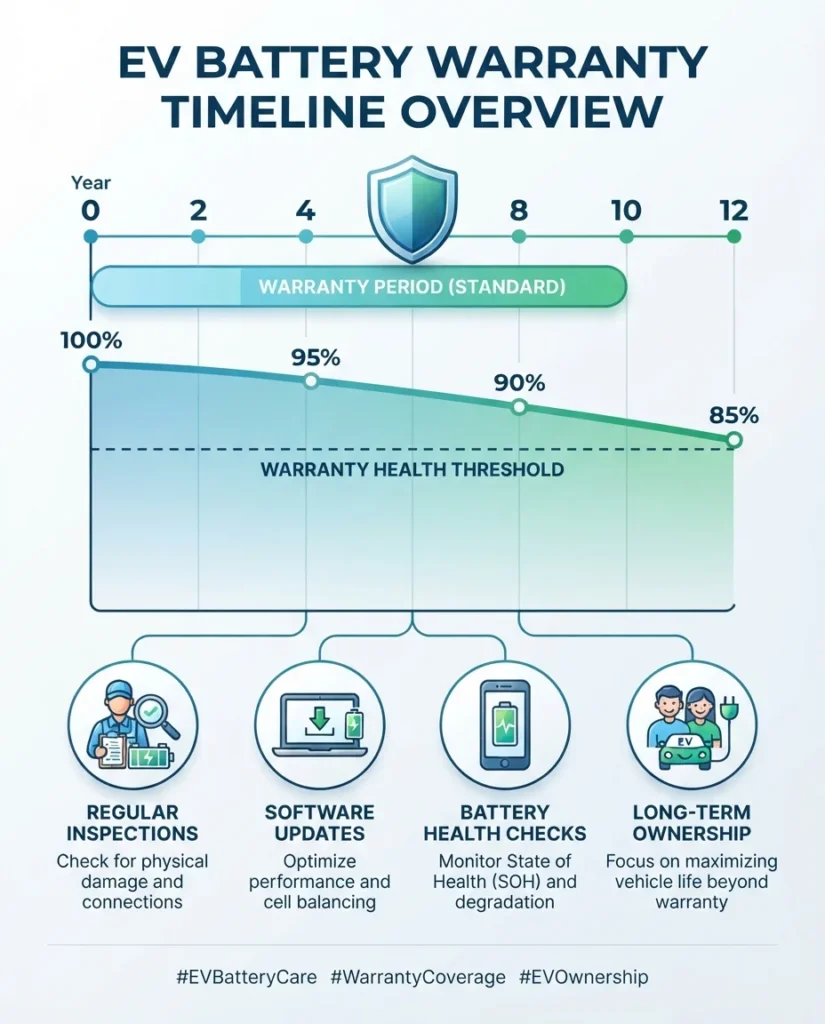
Having a long EV battery warranty doesn’t mean you can ignore battery care. While normal use won’t void your warranty, poor maintenance or unauthorized modifications could create problems if you ever need to make a claim.
Fortunately, protecting your battery is straightforward.
Follow the Manufacturer’s Charging Recommendations
Every EV manufacturer provides charging guidance for its battery chemistry.
For example:
- Use the recommended charging equipment.
- Follow daily charging recommendations for your battery type.
- Reserve DC fast charging for situations where it’s genuinely needed.
- Install software updates when they’re available.
- Best Electric Car Charger for Home
Following the owner’s manual helps keep the battery operating as intended.
Avoid Unapproved Battery Modifications
The high-voltage battery is the heart of an electric vehicle.
Avoid:
- Installing unofficial battery management software
- Opening the battery pack yourself
- Adding aftermarket battery modifications
- Allowing unqualified workshops to repair high-voltage components
Unauthorized work may affect warranty eligibility depending on the manufacturer’s policy.
Keep Service Records
Although EVs require less maintenance than gasoline vehicles, it’s still a good idea to keep records of:
- Battery inspections
- Software updates
- Scheduled maintenance
- Charging system repairs
- Warranty work
Good documentation can make future warranty claims much easier.
Monitor Battery Health
Many EVs allow owners to monitor battery information through the vehicle or the manufacturer’s mobile app.
Pay attention to:
- Unexpected drops in driving range
- Charging errors
- Warning messages
- Unusual charging behavior
If something doesn’t seem right, have the vehicle inspected rather than waiting for the problem to worsen.
Practical Ownership Considerations
A battery warranty is only one part of long-term EV ownership.
When comparing electric vehicles, consider:
Daily Driving Needs
If your daily commute is relatively short, small reductions in battery capacity over several years may have little practical impact.
Drivers who regularly travel long distances may notice degradation sooner because they rely on the vehicle’s maximum range more often.
Climate
Temperature affects battery performance.
Very hot regions can accelerate battery aging, while extremely cold weather may temporarily reduce available driving range until the battery warms up.
Most modern EVs include sophisticated thermal management systems to help protect the battery in different climates.
Charging Habits
Charging behavior also influences long-term battery health.
Good habits include:
- Using home charging whenever practical
- Following manufacturer recommendations for routine charging limits
- Avoiding unnecessary deep discharges
- Using DC fast charging when its speed is actually needed
These habits support long-term battery performance, although some degradation remains normal.
Buying a Used EV
If you’re purchasing a used electric vehicle, ask for:
- Remaining battery warranty information
- Service history
- Battery health report (if available)
- Confirmation that recall work has been completed
A transferable warranty can make a used EV significantly more attractive.
Practical Tips for Maximizing Battery Life
You can’t stop battery aging, but you can slow it.
Here are practical habits that may help maintain EV battery health over time:
- Follow the charging recommendations for your specific vehicle.
- Use DC fast charging only when it offers a real benefit.
- Park in shaded or covered areas during extreme heat when possible.
- Avoid leaving the battery at very high or very low charge levels for extended periods if the manufacturer advises against it.
- Keep vehicle software updated.
- Address warning lights promptly instead of delaying inspections.
- Use manufacturer-approved charging equipment.
Small improvements in daily habits can add up over years of ownership.
Common Mistakes to Avoid
Many battery concerns come from misunderstandings rather than real problems.
Avoid these common mistakes.
Assuming Any Capacity Loss Is Covered
Every battery loses some capacity with age.
Warranty coverage usually applies only when degradation exceeds the manufacturer’s specified threshold or another covered defect is present.
Ignoring Warning Messages
Battery warning lights should never be dismissed.
Early diagnosis often prevents larger problems later.
Believing Every EV Battery Needs Replacement After Eight Years
An eight-year warranty does not mean the battery will fail after eight years.
Many EV batteries continue operating well beyond the warranty period, although capacity gradually decreases with age and use.
Choosing an EV Based Only on Warranty Length
A longer warranty is valuable, but it shouldn’t be the only factor.
Also compare:
- Vehicle efficiency
- Charging network compatibility
- Battery chemistry
- Real-world driving range
- Overall reliability
- Service availability in your area
Frequently Asked Questions
Does an EV battery warranty cover battery degradation?
Usually, only excessive degradation that exceeds the manufacturer’s stated warranty limit may qualify for repair or replacement. Normal battery aging is expected and generally isn’t covered on its own.
How long does an EV battery warranty usually last?
Many manufacturers offer coverage for around 8 years or approximately 100,000 miles (160,000 km), although the exact terms vary by model and market.
Will my EV battery need replacement after the warranty ends?
Not necessarily. Many electric vehicle batteries continue to perform well after the warranty expires. Actual lifespan depends on battery chemistry, climate, charging habits, and overall vehicle use.
Can I transfer my EV battery warranty to the next owner?
Many manufacturers allow the remaining warranty to transfer with the vehicle, but policies differ. Check the official warranty documentation for your specific model.
Does fast charging void the battery warranty?
No. Using DC fast charging normally does not void the warranty when used as intended. However, following the manufacturer’s charging recommendations helps maintain long-term battery health.
Is battery replacement always required if something goes wrong?
No. Many issues can be resolved by replacing individual battery modules or repairing related components. A complete battery pack replacement is usually considered only when necessary.
Conclusion
An EV battery warranty provides valuable protection against manufacturing defects and qualifying battery problems, helping reduce one of the biggest concerns many buyers have about owning an electric vehicle.
Understanding what’s covered, what isn’t, and how battery degradation is treated allows you to make more informed purchasing decisions and avoid unrealistic expectations. Most modern EV batteries are designed to deliver years of reliable service, and sensible charging habits can help preserve their performance even after the warranty period ends.
Before buying any electric vehicle, take a few minutes to read the official warranty documentation rather than relying on advertisements or assumptions. A clear understanding of the warranty today can save confusion and unexpected costs years down the road.