Introduction
EV charging has become one of the most important topics for electric vehicle owners and people considering switching from gasoline cars. Modern electric vehicles can travel farther, charge faster, and offer more convenient charging options than ever before, but understanding chargers, charging costs, and installation requirements is still confusing for many drivers.
In simple terms, EV charging is the process of transferring electricity from a power source to an electric vehicle’s battery. You can charge an EV at home using a private charger, or use public electric car charging stations when traveling. The best charging option depends on your driving habits, available electricity supply, vehicle type, and budget.
A typical EV owner does most charging at home overnight, while public fast chargers are mainly used for long trips or when quick charging is needed.
Quick answer: EV charging works by sending electricity from a charger to an EV battery. Home charging is usually the cheapest and most convenient option, while DC fast charging provides the quickest charging speeds at public stations.
This EV charging guide explains how charging works, different charger types, installation costs, charging times, connector standards, and practical advice for everyday EV ownership.
How Does Electric Car Charging Work?
To understand EV charging, it helps to know what happens when you plug in an electric vehicle.
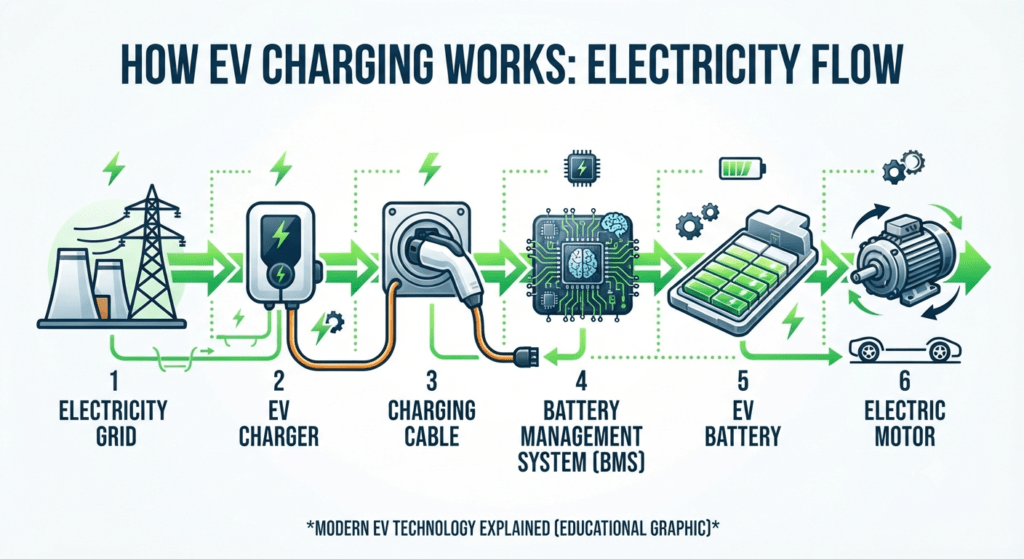
When you connect an EV to a charger:
- Electricity flows from the power source into the charging equipment.
- The charger manages the electricity flow and communicates with the vehicle.
- The vehicle’s onboard charging system converts electricity into a form the battery can store.
- The battery management system controls charging speed, temperature, and safety.
Unlike gasoline vehicles, EVs do not need fuel to be burned inside an engine. Instead, electricity is stored in a battery pack and used by an electric motor to move the vehicle.
The charging process depends on several factors:
- Battery size
- Current battery level
- Charger power output
- Vehicle charging capability
- Temperature conditions
- Charging technology used
For example, a small EV with a smaller battery may charge much faster than a large electric SUV with a bigger battery pack.
Understanding how does electric car charging work helps drivers choose the right charging method and avoid unnecessary charging costs.
EV Charging Levels Explained
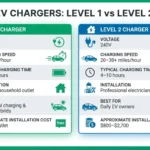
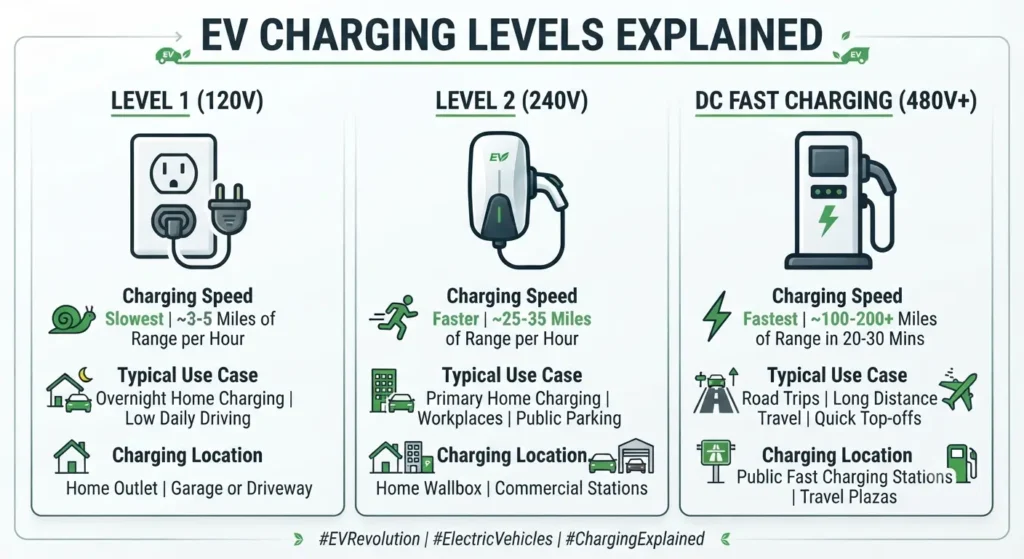
One of the most common questions from new EV owners is about EV charging levels. Charging levels describe how much power a charger can deliver and how quickly it can recharge an electric vehicle.
There are three main charging levels:
| Charging Type | Power Source | Typical Use | Charging Speed |
|---|---|---|---|
| Level 1 | Standard household outlet | Overnight home charging | Slow |
| Level 2 | Dedicated home or public charger | Daily EV charging | Medium |
| DC Fast Charging | High-power public stations | Long trips | Fast |
Level 1 EV Charging
Level 1 charging uses a standard household electrical outlet. It does not require special installation in most cases.
Advantages:
- Lowest installation cost
- Easy to use
- Works almost anywhere with a suitable outlet
Disadvantages:
- Slow charging speed
- May not add enough range quickly for high-mileage drivers
Level 1 charging is often suitable for:
- Drivers with short daily commutes
- Plug-in hybrid owners
- People who drive occasionally
For many full EV owners, Level 1 charging may feel too slow for daily use.
Level 2 EV Charging
Level 2 charging is the most common choice for home charging. It requires a dedicated electrical circuit and professional electric car charger installation.
A Level 2 charger can provide significantly more power than a standard outlet, making it practical for most EV owners.
Benefits include:
- Faster overnight charging
- More convenience for daily driving
- Better fit for larger EV batteries
Many homeowners install a Level 2 electric car charger for home because they can start each day with a charged vehicle without visiting public stations regularly.
Level 2 chargers are also widely used in:
- Workplaces
- Shopping centers
- Apartment buildings
- Public parking areas
Level 3 DC Fast Charging
Level 3 charging, commonly called DC fast charging, is designed for speed.
Instead of using the vehicle’s onboard charger to convert electricity, DC fast chargers deliver direct current electricity to the battery.
These chargers are commonly found at:
- Highway rest stops
- Public charging networks
- Travel locations
Advantages:
- Very fast charging
- Useful during long-distance trips
- Reduces waiting time compared with slower chargers
Disadvantages:
- Higher charging cost at many locations
- Not practical for home installation
- Frequent use may increase battery stress depending on vehicle design and charging habits
Most drivers do not need DC fast charging every day. It is mainly a convenience option for travel.
Electric Car Charging at Home: Is Home Charging Worth It?
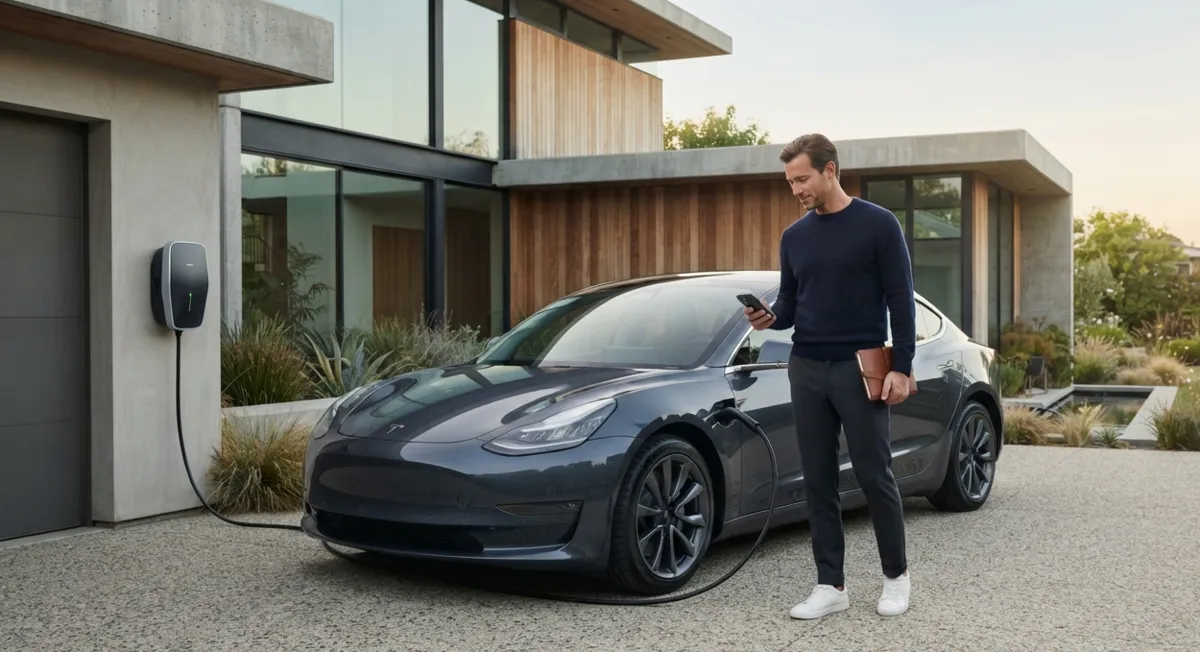
For most EV owners, electric car charging at home is the easiest and most affordable way to keep their vehicle ready.
Home charging allows drivers to plug in after returning from work and start the next day with a charged battery.
A typical home charging setup includes:
- Dedicated electrical circuit
- EV charger unit
- Proper wiring
- Professional installation when required
Before installing a charger, homeowners should check:
- Available electrical capacity
- Garage or parking location
- Distance from electrical panel
- Local electrical regulations
People living in apartments may have different challenges because they may not have private parking or access to electrical connections. In these cases, workplace charging or public charging networks may become more important.
For homeowners who drive daily, installing a home charger can improve convenience and reduce dependence on public charging stations.
Electric Car Charger Installation: Cost, Process & Requirements
Installing an EV charger at home is one of the biggest decisions new EV owners make. A proper electric car charger installation can make daily charging easier, but the cost and complexity depend on your home’s electrical system and the charger you choose.
A basic installation may be simple if your electrical panel is close to the parking area and has enough capacity. However, some homes may require additional electrical work.
The total cost can vary depending on:
- Charger type and power rating
- Electrical panel capacity
- Wiring distance
- Labor costs in your area
- Local permits and regulations
- Indoor or outdoor installation requirements
Before installation, an electrician may inspect:
- Your electrical panel
- Available circuit capacity
- Cable routing options
- Safety requirements
A professional installation is recommended because incorrect wiring can create safety risks and may affect your home’s electrical system.
Steps for Installing an EV Charger at Home
The general installation process includes:
1. Choose the Right Charger
Select a charger that matches:
- Your vehicle’s charging capability
- Your daily driving needs
- Your available electrical supply
A higher-power charger is not always necessary if you only drive short distances each day.
2. Check Your Electrical System
Your home must be able to support the additional electrical load.
Older homes may need upgrades before adding a Level 2 charger.
3. Install the Dedicated Circuit
Most Level 2 chargers require a dedicated circuit connected to your electrical panel.
The installation should follow local electrical codes and safety standards.
4. Mount and Connect the Charger
The charger is installed near your parking location and connected to the power supply.
Many modern chargers can be installed:
- Inside garages
- On exterior walls
- Near driveways
5. Test the System
After installation, the charger should be tested to confirm:
- Proper power delivery
- Safe operation
- Correct communication with the vehicle
How Much Does It Cost to Charge an Electric Car?
One of the most common questions from potential EV buyers is:
“How much does it cost to charge an electric car?”
The answer depends on electricity prices, vehicle efficiency, battery size, and charging location.
The main factors affecting EV charging cost include:
- Local electricity rates
- Charging method
- Time of charging
- Public charger pricing
- Vehicle battery capacity
Home charging is usually cheaper than public fast charging because you pay your normal electricity rate instead of network fees.
A simple way to estimate charging cost:
Battery size (kWh) × Electricity price per kWh = Approximate charging cost
For example, if an EV has a 60 kWh battery and electricity costs $0.15 per kWh:
60 × $0.15 = $9 for a full battery charge
Actual costs vary by location and vehicle efficiency.
EV Charging Cost: Home Charging vs Public Charging
| Charging Method | Typical Cost Level | Best For |
|---|---|---|
| Home Level 1 | Lowest | Occasional drivers |
| Home Level 2 | Low to moderate | Daily EV owners |
| Public Level 2 | Moderate | Shopping/work charging |
| DC Fast Charging | Higher | Long-distance travel |
Public charging prices vary widely. Some stations charge by:
- Energy used (kWh)
- Time connected
- Monthly membership plans
- Flat session fees
Before using a public charger regularly, check pricing through the charging network’s app.
How Long Does It Take to Charge an Electric Car?
Electric car charging time depends on several factors, including battery size, charger power, and vehicle charging limits.
The question “how long does it take to charge an electric car?” does not have one universal answer.
Typical charging ranges:
| Charger Type | Approximate Charging Time |
|---|---|
| Level 1 | Many hours to overnight |
| Level 2 | Several hours |
| DC Fast Charging | Often much faster, depending on vehicle |
A small EV battery may charge quickly, while a large electric SUV battery will usually take longer.
Charging speed also slows down when the battery reaches a high percentage level. Many EVs reduce charging power near full capacity to protect battery health.
EV Charging Connector Types Explained
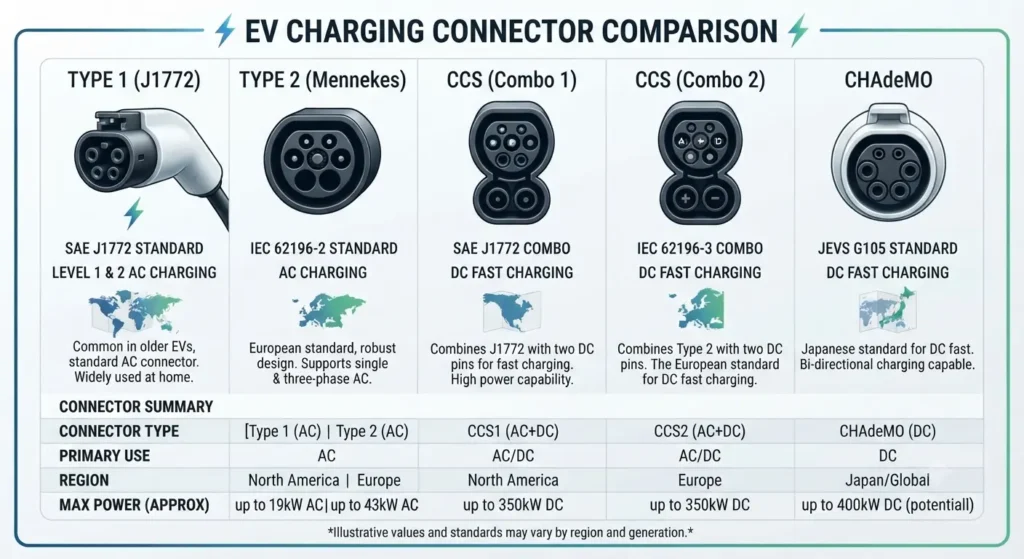
Different regions and manufacturers have used different charging standards. Understanding EV charging connector types helps drivers know which chargers work with their vehicles.
Common connectors include:
CCS (Combined Charging System)
CCS is widely used for many EVs in North America and Europe.
It supports:
- AC charging
- DC fast charging
Many manufacturers have used CCS for years.
NACS (North American Charging Standard)
NACS was developed by Tesla and has become increasingly adopted by other manufacturers in North America.
It is used with Tesla’s Supercharger network and is becoming an important charging standard in the region.
CHAdeMO
CHAdeMO was an early DC fast charging standard used by some EV manufacturers, especially in Japan.
Its usage has decreased in some markets as CCS and NACS have become more common.
Type 1 and Type 2 Connectors
Type 1 connectors are common in some North American vehicles.
Type 2 connectors are widely used in Europe and other markets.
The correct connector depends on your vehicle model and region.
Public Electric Car Charging Stations: What Drivers Should Know
Public electric car charging stations are expanding globally as EV adoption increases.
They are useful for:
- Road trips
- Apartment residents
- Emergency charging
- Drivers without home charging access
Public charging locations include:
- Shopping centers
- Parking garages
- Highway stations
- Workplaces
- Hotels
Popular charging networks vary by country. Examples include Tesla Supercharger, ChargePoint, and Electrify America in certain markets.
Availability, pricing, and compatibility depend on your location.
Are Electric Car Charging Stations Free?
Many people ask:
“Are electric car charging stations free?”
The answer is: sometimes, but usually not.
Some free charging options exist at:
- Shopping locations
- Workplaces
- Hotels
- Government-supported programs
However, many public chargers require payment.
Charging networks may charge users through:
- Mobile apps
- Membership accounts
- Credit card payments
Free charging availability changes frequently, so drivers should check current information before planning trips.
Practical Tips for Better EV Charging
1. Charge Mainly at Home If Possible
Home charging is usually the most convenient option because you can charge while sleeping.
2. Avoid Charging to 100% Every Day
Many EV owners do not need a full charge daily.
Keeping the battery within a practical range can help reduce unnecessary battery stress.
3. Plan Long Trips Ahead
Before traveling:
- Check charging locations
- Confirm connector compatibility
- Estimate charging stops
- Consider weather conditions
Apps and navigation systems can help plan charging routes.
4. Understand Your Vehicle’s Limits
A vehicle may support fast charging, but the charging speed depends on:
- Battery temperature
- Battery level
- Charger power
- Vehicle software
A powerful charger does not always mean maximum charging speed.
Common EV Charging Mistakes to Avoid
Installing the Wrong Charger
Some owners buy expensive chargers without considering their actual driving needs.
Choose a charger based on your vehicle and daily mileage.
Ignoring Electrical Capacity
Older homes may not support high-power charging without upgrades.
Always check your electrical system first.
Relying Only on Public Chargers
Public charging is improving, but home charging remains more convenient for many drivers.
Not Checking Connector Compatibility
Before using a public charger, confirm that the connector matches your vehicle.
Waiting Until the Battery Is Almost Empty
Running very low regularly can create unnecessary stress and inconvenience.
Frequently Asked Questions About EV Charging
How does electric car charging work?
Electric car charging works by transferring electricity from a power source to the vehicle’s battery. The charger controls the electricity flow, while the vehicle’s battery management system regulates charging speed, temperature, and safety. Charging speed depends on the charger type, battery size, and vehicle capability.
How to charge an electric car at home?
To charge an electric car at home, you need a compatible charger connected to your home electricity supply. Many owners use a Level 2 home charger because it provides faster charging than a standard household outlet.
The basic process is:
- Park your vehicle near the charger.
- Connect the charging cable to the vehicle.
- Start charging through the charger, vehicle system, or mobile app.
- Disconnect when charging is complete.
Before installing a dedicated charger, check your home’s electrical capacity and local requirements.
How much does it cost to charge an electric car?
The cost depends on electricity rates, battery size, vehicle efficiency, and where you charge. Home charging is usually less expensive than many public charging options because you pay your normal electricity rate.
A simple calculation is:
Battery capacity (kWh) × Electricity price per kWh = Charging cost
Public charging prices vary depending on the charging network and location.
How long does it take to charge an electric car?
Charging time depends on:
- Charger power
- Battery size
- Vehicle charging capability
- Current battery level
A Level 1 charger may take many hours, a Level 2 charger can often charge overnight, and DC fast charging can significantly reduce charging time during long trips.
Are electric car charging stations free?
Some electric car charging stations offer free charging, but many require payment. Free chargers are sometimes available at workplaces, hotels, shopping areas, or through limited-time programs.
Drivers should check the charging provider’s current pricing before relying on free charging.
Do all EVs use the same charging connector?
No. EVs use different connector standards depending on the vehicle brand and region. Common standards include CCS, NACS, CHAdeMO, Type 1, and Type 2.
Before using a public charger, always confirm that the connector is compatible with your EV.
Final Thoughts
EV charging has become simpler and more accessible as electric vehicles continue to improve. For most drivers, charging at home with a suitable charger provides the best balance of convenience and cost savings, while public electric car charging stations provide flexibility for longer journeys.
Understanding charging levels, installation requirements, charging costs, and connector types helps EV owners make better decisions and avoid common problems.
The right charging setup depends on your lifestyle. If you drive regularly and have access to private parking, investing in a reliable home charger is usually the most practical first step. For drivers who travel frequently, learning how to use public charging networks and planning charging stops can make EV ownership much easier.
With the right approach, EV charging can fit naturally into daily life and remove one of the biggest concerns new electric vehicle owners have.