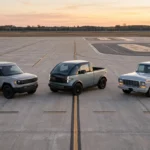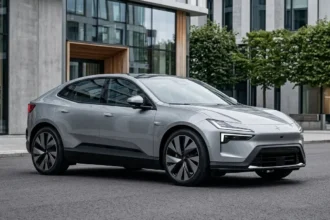

Ford’s electric truck story just executed the sharpest U-turn in the modern industry. The F-150 Lightning — the award-collecting, first-mover electric version of America’s best-selling vehicle — is dead. In its place: a $19.5 billion strategic pivot, a next-generation Lightning that carries a gasoline generator, and a quietly fascinating all-electric midsize truck built by ex-Tesla engineers for 2027. If you searched “Ford EV truck” expecting a simple lineup page, welcome to something much more interesting: a giant publicly changing its mind.
Ford discontinued the all-electric F-150 Lightning in late 2025, ending production with the 2026 model year after demand collapsed across the electric pickup segment. The nameplate returns as an EREV — an extended-range electric vehicle driven 100% by its electric motors but carrying an onboard gasoline generator, targeting over 700 miles of range and sub-5-second 0–60 times (price and date not yet announced). Ford’s remaining pure-EV truck plan is a midsize all-electric pickup arriving in 2027 on its new low-cost Universal EV Platform. The pivot cost Ford a $19.5 billion restructuring charge and cancelled its next-generation full-size EV truck (“T3”) outright.
This guide covers the full arc honestly: how the Lightning went from 200,000 reservations to discontinuation, what an EREV actually is (and isn’t — it’s not a hybrid), the 2027 midsize truck’s stakes, the clearance-market opportunity the Lightning’s death created for buyers right now, and what Ford’s reversal — echoed by Ram and validated by Scout’s reservation data — tells every truck shopper about where this segment is really going.
Ford’s Electric Truck Lineup: The Status Table
| Truck | What it is/was | Status (2026) |
|---|---|---|
| F-150 Lightning (BEV) | The original all-electric F-150 | Discontinued — production ended with 2026 MY; remaining inventory only |
| Next-gen F-150 Lightning (EREV) | Electric drive + onboard gas generator, 700+ mi target | Announced; no price or on-sale date yet |
| Midsize EV pickup | All-electric, all-new Universal EV Platform | Targeted 2027 — Ford’s remaining pure-EV truck |
| “T3” next-gen full-size EV | The clean-sheet Lightning successor | Cancelled in the pivot |
| E-Transit (van) | Electric commercial van | Continues (its planned successor was cancelled) |
| F-150 Hybrid | Conventional hybrid F-150 | Continues — Ford’s electrification volume play |
The one-sentence summary of that table: Ford didn’t quit electric trucks — it quit big battery-only trucks, splitting its bet between gasoline-backed electric range for full-size duty and a smaller, cheaper pure EV where the math still works.
The F-150 Lightning: A Complete Arc, 2021–2026

The Lightning deserves its history written properly, because it was genuinely consequential — and because its arc explains everything Ford is doing next.
The launch (2021–2022): revealed with a sub-$40,000 starting price, up to 300 miles of range, 10,000 lb towing, and the Pro Power Onboard system that could run a jobsite or a blacked-out house — the Lightning gathered roughly 200,000 reservations and beat GM’s electric trucks to market by two full years. Crucially, it was an electric truck that looked like a truck: the radical move disguised as the conservative one.
The peak (2023–2024): MotorTrend Truck of the Year, the North American Truck of the Year award, Kelley Blue Book’s top electric-truck pick — and real sales leadership in the nascent segment. At its best, the Lightning was the mainstream case for electric pickups made in metal.
The unraveling (2024–2025): the reservations never converted at scale. Price hikes pushed volume trims far above the launch promise; production paused repeatedly to bleed off inventory (a seven-week shutdown in late 2024 was the loudest signal); Ford’s EV division booked losses in the billions annually; and then the policy floor moved — the federal tax credit’s restriction and eventual cancellation removed the subsidy the segment’s economics quietly depended on. By Q1 2026, the Lightning’s sales had fallen 71% year-over-year — and it still outsold every rival except the Cybertruck, because the entire segment was collapsing together.
The end (December 2025): Ford announced the discontinuation as part of a company-wide EV restructuring — a $19.5 billion charge, including an $8.5 billion writedown of EV assets — that also killed the “T3” clean-sheet successor truck and the next-generation electric van. Jim Farley’s early hedge (“it’s the first inning of a maybe nine-inning game”) turned out to be the operative sentence of the whole era.
The honest epitaph: the Lightning didn’t fail as a truck — it won nearly every comparison it entered. It failed as a business, in a segment whose true demand turned out to be a fraction of everyone’s projections. That distinction matters enormously for what Ford built next.
Why Ford Killed It: The Four-Cause Autopsy
Demand physics. The people who buy F-150s in volume — rural drivers, heavy towers, fleet operators covering huge distances — are precisely the users battery-electric trucks serve worst. Farley had named this exact mismatch years earlier; the sales data eventually agreed. The reservation list measured curiosity; the duty cycle measured reality.
Cost structure. Ford lost money on every Lightning even at peak volume — the Model e division’s multi-billion-dollar annual losses were public record — and the company’s stated new rule (no EV launches unless profitable within a year) is the Lightning lesson written as policy.
Policy whiplash. The segment was engineered around a $7,500 federal credit that first tightened, then died. Few products anywhere had their economics more directly tied to a single policy line — and few felt its removal faster.
Towing truth-telling. The unfixable one: physics cuts any EV’s range 40–50% under heavy trailers, turning a 300-mile truck into a 150-mile tow rig with 45-minute fuel stops. For the truck buyer the F-150 franchise actually serves, that’s disqualifying — and it’s the specific problem the EREV exists to solve.
The Next Lightning: What an EREV Actually Is

The successor deserves careful explanation, because “they put a gas engine in it” — the reflexive summary — gets the architecture exactly wrong.
The EREV (extended-range electric vehicle) layout: the next Lightning is propelled 100% by its two electric motors, always — the wheels never touch gasoline power. The onboard gas engine is purely a generator: it exists to recharge the battery when needed, never to drive the truck. Think of it as an electric truck that carries its own fast-charging station. Ford’s targets: over 700 miles of combined range, 0–60 in under 5 seconds, full Pro Power capability for worksites and homes — and, in EV chief Doug Field’s phrase, towing “like a locomotive,” because electric torque does the pulling while the generator deletes the range anxiety.
EREV vs hybrid vs PHEV — the distinction that matters: a conventional hybrid is a gas car with electric assist; a PHEV is a gas car that can drive short distances electrically; an EREV is an electric car that can make its own electricity. Daily life happens on plug-in battery range with the generator silent — pure-EV commuting, home charging, instant torque. The gasoline only enters the story on the long tow, the cross-country run, the week the charger’s broken. It’s the architecture that keeps the EV experience and amputates its one truck-shaped weakness.
The honest unknowns: Ford has announced no price, no date, and no battery-size split — so the size of the pure-electric daily range (the number that determines how “electric” your actual life is) remains the spec to watch. And an EREV carries genuine trade-offs: two powertrains’ worth of complexity and maintenance (oil changes return), emissions hardware, and a gas tank in a vehicle its owner may have wanted to take fully electric. It’s a brilliant compromise — and it is a compromise.
The industry chorus makes it a movement, not a Ford quirk: Ram scrapped its all-electric pickup for the range-extended Ram 1500 REV; Scout’s reservation holders chose the EREV versions 85% of the time, per the data in our upcoming-trucks field guide. Three independent decisions, one conclusion: for full-size American trucks, the market has voted for electric drive with a gasoline safety net — at least for this decade.
The 2027 Midsize EV: Ford’s Quiet Second Act
Buried under the EREV headlines is the more strategically interesting truck: Ford remains committed to a midsize, all-electric pickup for 2027, and its pedigree is unusual.
It rides on the new Universal EV Platform — the product of a California skunkworks program led by Doug Field and Alan Clarke, both former senior Tesla engineers — designed from scratch for radical cost reduction: simplified manufacturing, fewer parts, structural batteries, the whole modern-platform playbook aimed at a genuinely affordable price point. This platform, not the EREV, is where Ford’s pure-EV future lives; it’s slated to underpin multiple future models beyond the truck.
The timing war it walks into: Slate begins production in late 2026 at a ~$25,000 target, Telo targets the same window, and Ford’s midsize arrives in 2027 into whatever market they’ve proven — with the Maverick’s runaway success as everyone’s shared evidence that small-and-cheap is where truck demand actually lives. Ford’s advantages are overwhelming on paper (dealers, service, brand, manufacturing scale); its risk is the one it just paid $19.5 billion to learn — launching into a segment whose demand it has projected wrongly before. Watch this truck: it’s simultaneously Ford’s most conservative bet (small, cheap, focused) and its most important one (the platform carries the company’s EV future).
The Clearance Opportunity: Buying a Lightning Right Now

Here’s the section for the practical reader, because a discontinued good truck is one of the market’s classic value setups.
New inventory: factory ordering is over, but 2026-model Lightnings remain in dealer stock — and discontinued models negotiate like discontinued models. Award-winning capability, Pro Power Onboard, and (on properly equipped versions) genuine truck utility at prices the 2022 reservation list would have considered fantasy. The checklist: confirm the NACS/Supercharger access situation for the specific build (Ford pioneered the adapter path our NACS guide details), verify battery-warranty transfer terms, and negotiate from the knowledge that the dealer’s next Lightning shipment is never coming.
Used market: Lightning depreciation was already steep; discontinuation adds ambiguity that cuts both ways — orphan-model discount now, potential scarcity respect later (the S/X pattern in miniature). The fundamentals favor buyers: the drivetrain is the proven, low-maintenance part; parts and service continue through Ford’s network (this is a discontinued model, not a dead company — the crucial difference from the startup graveyard); and software support follows Ford’s standard practice.
Who should pounce: anyone whose actual duty cycle fit the Lightning all along — home-charging commuters, contractors living on Pro Power, light-to-moderate towers — for whom the segment’s collapse was always about other people’s use cases. The truck didn’t get worse in December 2025; only its price did, in your favor.
Who should wait: heavy towers (that’s the EREV’s entire reason for existing) and anyone who needs their truck’s resale story fully written before buying the ending.
Ford vs the Field: The 2026 Electric Truck Map
| Ford (now) | Ford (next) | Tesla | GM | Ram | Startups | |
|---|---|---|---|---|---|---|
| Full-size BEV | Lightning (clearance only) | — (T3 cancelled) | Cybertruck | Silverado/Sierra EV | Cancelled | — |
| Full-size EREV | — | Next-gen Lightning, 700+ mi | — | — | Ram 1500 REV | Scout Terra (85% EREV picks) |
| Midsize/compact EV | — | 2027 Universal-platform truck | — | — | — | Slate, Telo (late 2026) |
Read the columns and the industry’s verdict is unmistakable: the full-size battery-only truck row is emptying (Ford out, Ram never in, Tesla’s leader underselling a Honda Ridgeline-sized segment), the EREV row is filling, and the small-cheap row is where the new energy lives. Ford is the only player with chips on both surviving squares — which is either hedged wisdom or strategic sprawl, and 2027 will say which.
What This Means If You’re Buying Any Electric Truck
The Ford pivot is the segment’s clearest signal yet — here’s the decision framework it implies:
If you tow heavy or drive rural distances: the EREV wave exists for you. Waiting for the next Lightning or Ram REV (or picking Scout’s extended-range option) matches the architecture to the duty cycle — the mismatch that broke the first generation.
If you commute, haul light, and charge at home: the battery-only truck was never your problem — and the clearance Lightning, discounted Cybertruck market, or Rivian’s lineup serve you better now than at any previous price point. The segment’s collapse is your negotiating leverage.
If you want small and cheap: your segment is being born — Slate and Telo in late 2026, Ford’s midsize in 2027 — and the smart play is the refundable-deposit-plus-patience strategy while the incumbents and startups fight it out.
If you’re just electrification-curious: the F-150 Hybrid — the unglamorous option Ford never stopped building — remains the no-compromise on-ramp, and the hybrid-reliability data keeps making its case.
The Lightning’s Real Legacy: Pro Power and the Truck-as-Generator Idea
Before the discontinuation swallows the whole narrative, one Lightning innovation deserves its permanent credit — because it outlives the truck and reshapes what every future pickup must offer.
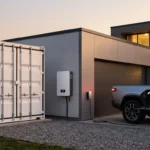
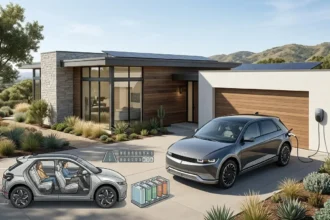
Pro Power Onboard — the Lightning’s exportable-power system, up to 9.6 kW through outlets in the bed, cab, and frunk — turned the truck into a rolling generator, and it stuck culturally in a way no spec-sheet number did. The images that defined the Lightning weren’t drag races; they were houses lit through ice-storm blackouts, jobsites running saws off the bed, and campsites with induction cooktops — the truck as infrastructure. Ford leaned in with home-integration hardware that let a Lightning back-feed a house for days, effectively bundling a whole-home backup battery into the vehicle purchase — a value proposition our [Megapack-and-home-power coverage] prices in the thousands as standalone equipment.
That legacy propagates three ways. Every serious electric or EREV truck since — Cybertruck’s bed outlets, the coming Lightning EREV’s confirmed worksite/home capability, Scout’s plans — treats exportable power as table stakes the Lightning set. The used-Lightning value case leans on it: a clearance Lightning is simultaneously a truck and a backup-power installation, which changes the household math in storm country. And it quietly previews the grid-services future (vehicle-to-home today, vehicle-to-grid tomorrow) where a driveway full of trucks becomes distributed infrastructure — the one Lightning bet that looks early rather than wrong.
What the $19.5 Billion Pivot Means Beyond Ford
Zoom out from the one company, because a writedown this size is an industry document — and three of its lessons transfer directly to readers’ decisions.
Lesson one: segment truth arrived, and it was smaller than everyone’s spreadsheets. Ford’s charge is the accounting form of the discovery the whole field made together: American full-size EV-truck demand, at current prices and charging reality, supports tens of thousands of annual sales, not the hundreds of thousands every business case assumed. When the market leader undersells a midsize gas pickup, and the fast-follower takes a $19.5B charge, the projection era is over — and every remaining truck program (and truck purchase) now gets to be priced against reality instead of hype.
Lesson two: the profitable-within-a-year rule is the industry’s new constitution. Ford’s stated launch discipline — no EV ships unless it profits within twelve months — is spreading in spirit across the industry, and it changes what buyers will be offered: fewer moonshot flagships, more cost-engineered platforms (the R2’s cost surgery, Ford’s Universal platform, Slate’s subtraction), and pricing that reflects costs rather than land-grab strategy. The upside for buyers is durability — products built to profit are products built to stay supported; the downside is the end of subsidized bargains that VC and corporate patience used to fund.
Lesson three: architecture pluralism won. The 2021-era assumption — one true path, battery-electric everything — has resolved into a portfolio: BEV where duty cycles fit, EREV where they don’t, hybrids carrying volume, each honestly matched to use. For a shopper, that’s liberation from ideology: the duty-cycle-first framework this site applies everywhere is now, officially, how the industry itself plans. Buy the architecture your miles actually need; the manufacturers finally are.
Practical Tips
- Lightning shoppers: negotiate like it’s discontinued, because it is. No future shipments means every unit on the lot is the dealer’s last chance; your leverage is structural.
- Verify the charging-access package on any Lightning build. Adapter inclusion and Supercharger activation vary by build date and market; confirm before assuming the full NACS map applies.
- EREV waiters: the spec to demand is pure-electric range, not total range. 700 miles is the headline; the battery-only miles determine whether your daily life is electric or gasoline. No number exists yet — don’t deposit until it does.
- Budget the EREV’s dual-powertrain maintenance honestly. Oil, emissions, and generator service return to the ownership ledger — smaller than a gas truck’s, larger than a BEV’s zero.
- Track the 2027 midsize by its platform milestones, not its renders. Universal-platform production tooling and pricing announcements are the real news; apply the same milestone discipline as with any unlaunched truck.
- If your need is now and your duty cycle is light, buy the collapse. Clearance Lightnings and a discounted segment are the rare case where bad industry news is directly good buyer news.
Common Mistakes to Avoid
Reading “discontinued” as “defective.” The Lightning won its comparisons to the end; it was killed by segment economics, not capability. The used-market fear discount is your opportunity, not your warning.
Calling the EREV Lightning “a hybrid.” Architecture matters: hybrids drive with gasoline; the EREV drives only with electrons and generates with gasoline. The distinction defines the entire ownership experience — and most coverage flattens it.
Assuming Ford abandoned EVs. It cancelled large battery-only products; the 2027 midsize EV and its platform are the company’s actual electric future, built by its most credible engineering team. The pivot is a re-aim, not a retreat.
Waiting for the EREV without a fallback. No price, no date, announced amid a $19.5B restructuring — treat it as a strong intention with the standard unlaunched-truck asterisk, and keep your current vehicle’s plans independent of it.
Extrapolating the US pivot globally. Electric pickups and vans follow different curves in other markets; Ford’s E-Transit continuing while its successor died shows even Ford segments the retreat carefully.
Forgetting the hybrid answer sitting in the showroom. For a huge share of “Ford EV truck” searchers, the F-150 Hybrid was always the honest match — electrified torque and efficiency, zero range drama, available today.
FAQs
Yes — Ford ended production of the all-electric Lightning with the 2026 model year, announced in December 2025 as part of a $19.5 billion EV restructuring. Remaining new inventory is sell-down only. The nameplate continues: the next-generation Lightning will be an EREV with an onboard gas generator targeting 700+ miles of range.
Four compounding causes: segment demand far below projections (the whole EV-pickup category collapsed together), multi-billion-dollar annual losses on the product, the federal tax credit’s cancellation removing the economics’ floor, and the towing-range physics that disqualified the truck for the heavy-duty users the F-150 franchise actually serves.
An extended-range electric vehicle: driven 100% by two electric motors at all times, with an onboard gasoline engine serving purely as a generator to recharge the battery. Ford targets over 700 miles of range, sub-5-second 0–60, full Pro Power capability, and locomotive-grade towing without charging stops. Price and on-sale date haven’t been announced.
No — the architecture is inverted. A hybrid is a gasoline car with electric assist; a PHEV is a gas car with short electric range; an EREV is an electric car that carries its own generator. The wheels never receive gasoline power, daily driving happens on plugged-in battery range, and the engine exists only as a range backstop.
Yes — a midsize all-electric pickup targeted for 2027, built on the new low-cost Universal EV Platform developed by a skunkworks team led by former Tesla executives. It’s Ford’s remaining pure-EV truck after the pivot cancelled the full-size “T3,” and it launches into the affordable-small-truck segment. Slate and Telo are opening in late 2026.
If your duty cycle fits — home charging, light-to-moderate towing, Pro Power utility — the discontinuation created a genuine value window: award-winning capability at clearance negotiating leverage, with parts and service continuing through Ford’s network. Heavy towers should wait for the EREV; everyone should verify charging-access equipment and warranty terms per build.
Cancelled outright in the December 2025 restructuring. The T3 was the clean-sheet, next-generation full-size electric truck meant to succeed the Lightning at Ford’s Tennessee complex; the pivot redirected that future to the EREV Lightning and the midsize Universal-platform EV instead. Ford’s planned next-gen electric van died in the same announcement, though the current E-Transit continues.
Directly — Ram cancelled its all-electric 1500 before launch and pivoted to the range-extended Ram 1500 REV, the same EREV architecture Ford chose. With Scout’s reservation holders also picking extended-range versions 85% of the time, the EREV full-size truck is shaping into the segment’s main event, with the Lightning EREV and Ram REV as its headline bout.
Yes — Pro Power Onboard (up to 9.6 kW of exportable power) and the home-integration hardware remain fully functional on every Lightning built, discontinued or not, letting properly equipped trucks back-feed a home for days during outages. For clearance buyers in storm-prone regions, that backup-power capability is a genuine part of the value math — effectively a whole-home battery bundled with the truck.
Ford hasn’t announced an on-sale date or price — only the architecture (electric drive, gasoline generator), the 700+ mile range target, sub-5-second acceleration, and full power-export capability. Given the announcement’s timing amid the December 2025 restructuring, treat availability as a strong intention pending the spec that matters most: its pure-electric daily range, which also remains unannounced.
Verdict: The Giant That Changed Its Mind — and Told the Whole Segment the Truth
Ford’s electric-truck reversal is the rare corporate pivot that clarifies more than it confuses: the first-generation thesis (electrify the big truck, demand will follow) met the duty-cycle facts and lost, publicly, with a $19.5 billion write-off. What replaced it is more honest — gasoline-backed electric range where trucks genuinely work, pure EV where size and price make it viable, and hybrids carrying the volume in between. The Lightning didn’t die a bad truck; it died the proof that the segment needed different architecture, and its successor is that architecture wearing its name.
The buyer’s synthesis: pounce on the clearance if the original always fit your life; demand the electric-range number before believing in the EREV; watch the 2027 midsize as the real test of Ford’s second act; and read the whole episode as this guide’s standing lesson — in trucks, the duty cycle always wins, and the companies that survive are the ones that eventually let it. Ford just did, expensively, in public. That candor is worth more to your next purchase than any spec sheet in the segment.