Owning an electric vehicle is different from owning a petrol or diesel car, and the maintenance routine is different too. One of the biggest questions new owners ask is how often an EV needs servicing and what should actually be checked. The good news is that an electric vehicle has far fewer moving parts, so routine maintenance is generally simpler. The key is knowing what still needs attention and when.
An electric car maintenance schedule focuses on inspections rather than frequent part replacements. Most EVs require regular checks of tires, brakes, suspension, cabin filters, charging equipment, software updates, and cooling systems where applicable. Following the manufacturer’s recommended service intervals helps improve reliability, efficiency, safety, and long-term resale value.
Many first-time EV buyers assume electric vehicles are almost maintenance-free. That’s understandable because you no longer need engine oil changes, spark plugs, timing belts, fuel filters, or exhaust repairs. However, fewer service items don’t mean you can ignore maintenance altogether.
From my experience testing different EVs over the years, the owners who enjoy the lowest running costs are usually the ones who stick to a simple maintenance routine instead of waiting until something goes wrong. Small inspections often prevent larger repair bills later.
This guide explains exactly what an electric car maintenance schedule looks like, how often different components should be inspected, and what you can safely check yourself between professional services.
Why Every Electric Car Needs a Maintenance Schedule

One of the biggest myths surrounding electric vehicles is that they never need servicing.
That’s simply not true.
The difference is that maintenance shifts away from engine components and focuses on safety, efficiency and long-term reliability.
An electric motor contains far fewer moving parts than a combustion engine. Without engine oil, pistons, injectors, spark plugs and exhaust systems, there are naturally fewer items that wear during normal driving.
However, several components still require regular inspection.
These include:
- Tires
- Braking system
- Suspension
- Steering
- Cabin air filter
- Windshield wipers
- Charging port
- Charging cable
- Software updates
- Battery cooling system (where applicable)
Ignoring these items doesn’t usually cause immediate breakdowns, but it can gradually reduce efficiency, increase operating costs and affect safety.
One thing that surprises many new EV owners is how much influence tires have on both maintenance costs and driving range.
An electric vehicle is generally heavier than a similar petrol model because of the battery pack. Combined with instant electric torque, tire wear can become one of the most important routine maintenance items.
That’s why nearly every manufacturer places tire inspections near the top of its EV maintenance schedule.
How an EV Maintenance Schedule Differs From a Petrol Car
If you’ve owned conventional cars for years, your service routine probably included regular oil changes and engine inspections.
Electric vehicles completely change that experience.
Here’s a simple comparison.
| Maintenance Item | Electric Vehicle | Petrol/Diesel Vehicle |
|---|---|---|
| Engine oil | Not required | Required |
| Oil filter | Not required | Required |
| Spark plugs | Not required | Required |
| Fuel filter | Not required | Required |
| Exhaust system | Not required | Required |
| Tire inspection | Required | Required |
| Brake inspection | Required | Required |
| Wheel alignment | Required | Required |
| Suspension check | Required | Required |
| Cabin air filter | Required | Required |
| Software updates | Common | Less common |
The result is fewer workshop visits focused on replacing engine parts.
Instead, technicians spend more time inspecting components that affect vehicle safety and efficiency.
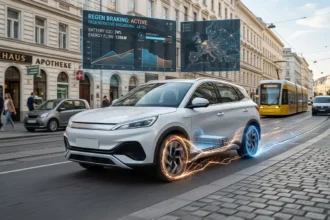
Another difference is regenerative braking.
Unlike traditional vehicles, most electric cars use the electric motor to slow the vehicle and recover energy. This reduces wear on brake pads, sometimes dramatically.
That’s excellent news for owners.
However, it also creates a maintenance issue many people don’t expect.
Because the friction brakes are used less frequently, brake discs can develop surface corrosion, particularly in wet climates or areas where roads are treated with salt during winter.
That’s why brake inspections remain an important part of every EV maintenance schedule even if brake pad wear is minimal.
Electric Car Maintenance Schedule at a Glance
Although every manufacturer publishes its own service schedule, most electric vehicles follow a broadly similar pattern.
The table below provides a practical overview.
| Service Interval | Recommended Maintenance |
|---|---|
| Monthly | Tire pressure, tire condition, washer fluid, charging cable inspection |
| Every 6 Months | Tire rotation, brake inspection, wheel alignment check if needed |
| Every 12 Months | Cabin air filter, suspension inspection, steering inspection, software updates |
| Long-Term Ownership | 12V battery inspection, cooling system inspection (where applicable), suspension components |
Always treat your owner’s manual as the final authority because service requirements differ between manufacturers and even between different models from the same brand.
Monthly EV Maintenance Checklist
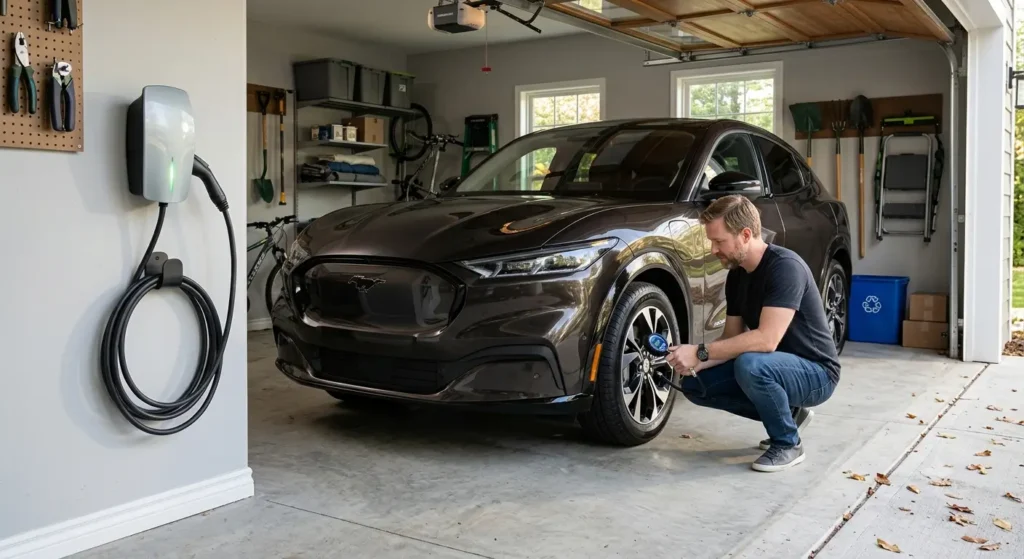
Monthly inspections usually take less than fifteen minutes.
They don’t require specialist tools and can prevent expensive repairs later.
Check Tire Pressure
If there’s one maintenance habit every EV owner should develop, it’s checking tire pressure regularly.
Correct tire pressure helps:
- Improve driving range
- Reduce tire wear
- Improve braking
- Maintain handling
Electric vehicles are generally heavier than petrol cars, making proper tire inflation even more important.
Don’t rely on how the tires look.
Use a quality pressure gauge and follow the manufacturer’s recommended pressures.
Inspect Tire Condition
Look carefully for:
- Uneven wear
- Cuts
- Cracks
- Embedded objects
- Sidewall damage
Uneven wear often indicates wheel alignment or suspension issues.
Finding these problems early usually costs far less than replacing an entire set of tires.
Inspect the Charging Cable
Many home charging cables remain outdoors throughout the year.
Spend a few moments checking for:
- Cracked insulation
- Bent connector pins
- Dirt
- Loose fittings
- Signs of overheating
Never continue using damaged charging equipment.
Replacing a charging cable is significantly cheaper than dealing with electrical damage later.
Check Washer Fluid
Good visibility matters in every vehicle.
Keep the washer reservoir topped up, especially before long journeys or during winter when road spray quickly reduces visibility.
Inspect Exterior Lighting
Walk around the vehicle and check:
- Headlights
- Brake lights
- Indicators
- Reverse lights
- Number plate lights
Modern vehicles often display dashboard warnings when bulbs fail, but a quick visual inspection remains worthwhile.
Why Tire Maintenance Matters More Than Most Owners Expect
After years of driving different electric vehicles, one maintenance pattern stands out more than any other.
Tires usually become the biggest routine running cost.
The reason is simple.
Electric motors deliver maximum torque instantly.
That immediate acceleration is enjoyable, but aggressive driving can significantly increase tire wear.
Battery packs also increase vehicle weight.
More weight combined with instant torque means tires work harder than many drivers realise.
Fortunately, simple habits make a noticeable difference.
Driving smoothly, rotating tires at recommended intervals and maintaining correct tire pressure can often extend tire life considerably.
Another benefit is improved efficiency.
Low tire pressure increases rolling resistance, forcing the electric motor to use more energy.
That means reduced driving range every single day.
It’s a small maintenance task with surprisingly large benefits
Every Six Months: Your EV Maintenance Schedule
Monthly inspections help catch small issues, but every six months it’s worth carrying out a more detailed inspection. Some of these tasks can be done at home, while others are best handled by a qualified EV technician.
Think of this as preventive maintenance rather than repair work. The goal is to identify wear before it becomes expensive.
Rotate Your Tires
Tire rotation is one of the easiest ways to increase tire life.
Because front and rear tires often wear differently, rotating them helps distribute wear more evenly.
Most manufacturers recommend rotating tires according to their maintenance schedule, although the exact interval varies by vehicle and driving conditions.
If you regularly experience:
- Heavy acceleration
- Long motorway journeys
- Mountain driving
- Frequent stop-start city traffic
your tires may wear differently than someone with a shorter suburban commute.
One thing I’ve noticed after driving several electric vehicles is that rear-wheel-drive EVs often wear their rear tires faster because that’s where all the torque is delivered.
Regular rotation helps avoid replacing only two tires much earlier than expected.
Inspect Brake Components
Many people hear that EV brake pads last much longer because of regenerative braking.
That’s true.
However, the brake system still deserves regular inspection.
A technician should inspect:
- Brake pads
- Brake discs
- Brake calipers
- Brake lines
- Brake fluid
Here’s something many first-time EV owners don’t expect.
Brake discs sometimes rust because they’re used less often.
Regenerative braking handles much of the slowing process, especially during normal commuting.
If friction brakes aren’t exercised occasionally, surface corrosion can develop.
Using the brake pedal firmly from time to time, where safe to do so, helps keep braking surfaces clean.
Check Wheel Alignment
Wheel alignment gradually changes as suspension components wear or after hitting potholes.
Common warning signs include:
- Vehicle pulling left or right
- Steering wheel no longer centred
- Uneven tire wear
- Increased road noise
Poor alignment doesn’t usually damage the vehicle immediately.
Instead, it slowly destroys expensive tires.
If you notice unusual tire wear patterns, checking alignment should be one of your first priorities.
Inspect Suspension Components
Electric vehicles carry significant battery weight underneath the floor.
That weight lowers the centre of gravity, improving handling.
It also means suspension components work continuously to support the vehicle.
Technicians normally inspect:
- Shock absorbers
- Springs
- Bushings
- Ball joints
- Steering linkage
- Anti-roll bar links
Drivers who regularly travel on rough roads should pay particular attention to suspension inspections.
Annual Electric Car Service Schedule
An annual service is where your electric vehicle receives its most detailed inspection.
Unlike petrol vehicles, technicians usually spend less time replacing fluids and more time evaluating the condition of major systems.
Annual servicing is also the ideal opportunity to install manufacturer software updates and perform diagnostic checks.
Replace the Cabin Air Filter
The cabin air filter keeps dust, pollen and airborne particles from entering the interior through the heating and air-conditioning system.
Over time it becomes clogged.
Signs that replacement may be needed include:
- Reduced airflow
- Unpleasant smells
- Windows fogging more frequently
- Poor heating or cooling performance
Fortunately, replacing a cabin filter is usually straightforward and relatively inexpensive.
Battery Health Diagnostic
One of the biggest concerns for new EV buyers is battery health.
Fortunately, modern battery management systems continuously monitor battery performance while you drive.
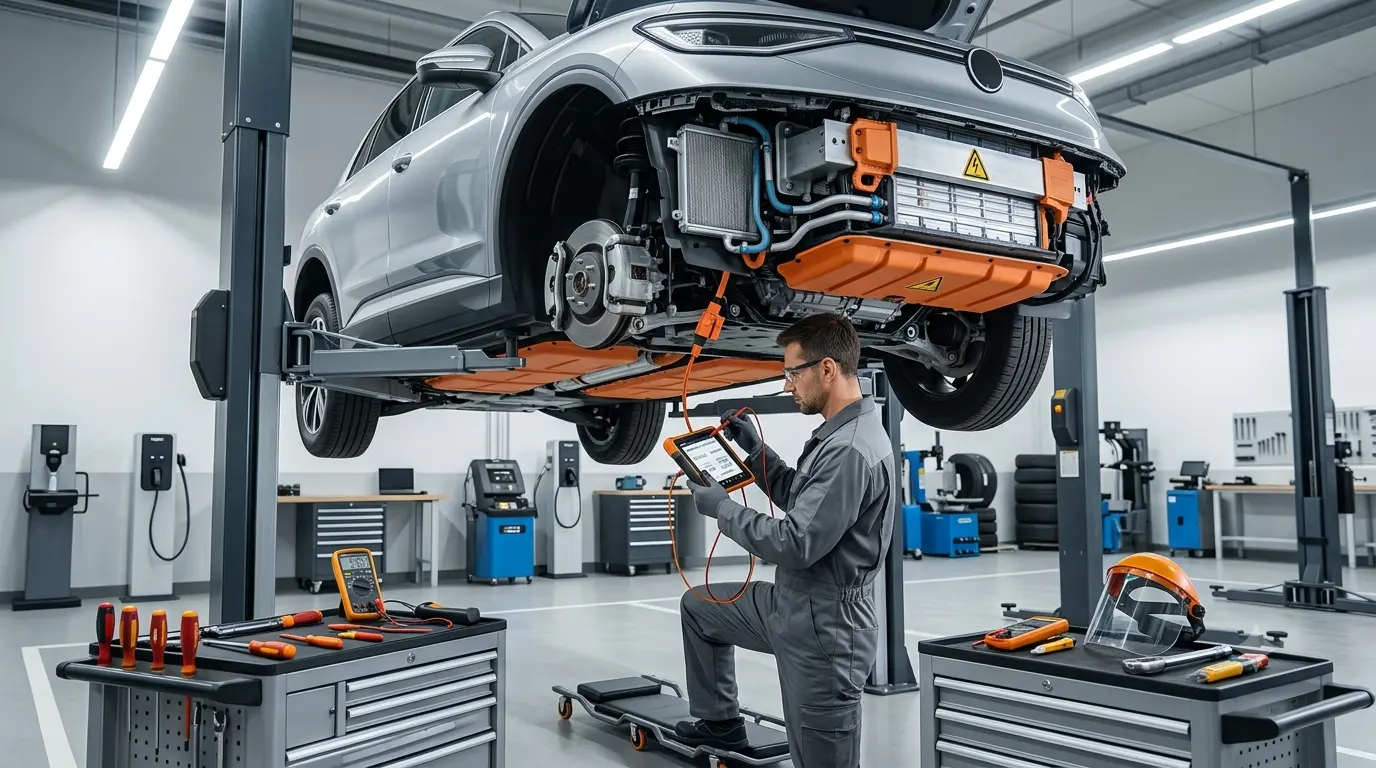
During annual servicing, technicians can use diagnostic equipment to check:
- Battery condition
- Charging performance
- Temperature management
- Stored fault codes
- High-voltage system status
This doesn’t usually involve dismantling the battery pack.
Instead, specialised diagnostic software communicates directly with the vehicle’s electronic control systems.
A healthy battery rarely needs physical maintenance.
Most inspections simply confirm everything is operating normally.
Install Software Updates
Software has become an important part of modern vehicle maintenance.
Manufacturers regularly release updates that may improve:
- Battery management
- Charging behaviour
- Energy efficiency
- Climate control
- Driver assistance systems
- Infotainment performance
Some vehicles receive updates over the air through Wi-Fi or mobile data.
Others require installation during a service appointment.
Ignoring updates means missing improvements that could enhance your ownership experience.
Steering Inspection
Steering components gradually wear through normal driving.
During annual servicing, technicians inspect:
- Steering rack
- Tie rods
- Steering joints
- Mounting points
If steering begins feeling loose or unusual, don’t wait until the next scheduled inspection.
Have it checked sooner.
Long-Term EV Maintenance
Electric vehicles generally require fewer major maintenance jobs than conventional cars.
Still, several components eventually require closer attention as mileage increases.
The 12-Volt Battery
Many people don’t realise that almost every electric vehicle still contains a conventional 12-volt battery.
It powers systems such as:
- Interior lighting
- Exterior lighting
- Infotainment
- Door locks
- Safety electronics
Like any lead-acid battery, it won’t last forever.
Manufacturers normally inspect it during scheduled servicing.
If performance begins declining, replacement is usually straightforward.
Cooling System Inspection
Many electric vehicles use liquid cooling to maintain battery temperature.
Unlike engine cooling systems, battery cooling systems generally require little routine maintenance.
However, technicians should inspect:
- Coolant level
- Hoses
- Pumps
- Connections
- Signs of leaks
Never attempt to service high-voltage battery cooling systems yourself.
These systems should only be handled by trained technicians.
Charging Port Inspection
The charging port is used almost every day.
Keeping it clean helps ensure reliable charging.
Look for:
- Dirt
- Moisture
- Corrosion
- Damaged pins
A clean connector reduces the chance of charging interruptions and unnecessary service visits.
Suspension Wear
After many years of driving, suspension components naturally wear.
Drivers may notice:
- Extra vibration
- Knocking noises
- Less comfortable ride
- Reduced steering precision
Replacing worn suspension components restores ride quality and handling.
Unlike engine repairs, these maintenance items affect every type of vehicle regardless of its powertrain.
Electric Vehicle Service Intervals by Mileage
Most manufacturers base their maintenance schedules on time, mileage or whichever comes first. The exact intervals vary by brand and model, so always check your owner’s manual before making servicing decisions.
The table below gives a practical overview that applies to many modern electric vehicles.
| Mileage | Typical Maintenance Items |
|---|---|
| 5,000 miles (8,000 km) | Tire inspection, tire pressure check, charging cable inspection |
| 10,000 miles (16,000 km) | Tire rotation, brake inspection, wheel alignment if needed |
| 20,000 miles (32,000 km) | Cabin air filter inspection, suspension inspection, software updates |
| 30,000 miles (48,000 km) | Steering inspection, brake fluid inspection, battery diagnostic |
| 50,000+ miles (80,000+ km) | Comprehensive vehicle inspection including suspension, cooling system where applicable and 12V battery |
Mileage alone shouldn’t determine maintenance.
A driver covering 8,000 miles every year in mild weather may experience very different wear compared with someone driving the same distance through snow, heavy rain or rough rural roads.
Driving conditions matter just as much as mileage.
Electric Vehicle Service Schedule by Time
Many owners don’t drive enough each year to reach mileage-based service intervals.
That’s why manufacturers also recommend inspections based on time.
Every Month
Spend ten to fifteen minutes checking:
- Tire pressure
- Tire condition
- Exterior lighting
- Washer fluid
- Charging cable
- Charging connector
These simple checks prevent many common ownership problems.
Every Six Months
Inspect or arrange inspection of:
- Tire rotation
- Brake components
- Wheel alignment
- Suspension
- Windshield wipers
If you regularly drive on poor road surfaces, suspension inspections become even more valuable.
Every Year
Annual servicing usually includes:
- Full diagnostic scan
- Cabin air filter replacement if required
- Steering inspection
- Suspension inspection
- Brake inspection
- Software updates
- Battery health assessment
Even if the vehicle feels perfectly normal, annual inspections often identify developing issues before they become expensive.
Every Two Years
Depending on the manufacturer, technicians may also inspect or replace certain fluids.
Examples include:
- Brake fluid
- Battery cooling system inspection where applicable
Always follow your vehicle manufacturer’s maintenance schedule rather than assuming every EV follows identical service intervals.
Climate Changes Your Maintenance Schedule More Than You Think
One topic that many maintenance guides barely mention is climate.
In practice, weather has a surprisingly large influence on electric vehicle maintenance.
Cold Weather
Winter affects more than driving range.
Cold temperatures can increase:
- Tire pressure fluctuations
- Brake corrosion
- Suspension wear from potholes
- Salt exposure underneath the vehicle
Owners living in northern regions should wash the underside of the vehicle regularly during winter to remove accumulated road salt.
This simple habit helps protect exposed metal components over the long term.
Hot Weather
High temperatures mainly affect battery temperature management.
Modern EVs automatically regulate battery temperature through sophisticated cooling systems.
However, there are still sensible habits worth following.
Whenever practical:
- Park in shaded areas.
- Use covered parking.
- Allow battery pre-conditioning when recommended by the manufacturer.
- Avoid unnecessary stress on the battery during extremely hot conditions.
The battery management system handles most of the work automatically.
Drivers simply need to avoid creating unnecessary heat whenever possible.
Coastal Areas
Drivers living near the coast often deal with salty air throughout the year.
Salt accelerates corrosion.
Although modern EV battery packs are well protected, exposed suspension components, brake discs and underbody hardware still benefit from regular washing.
This is one of those ownership habits that rarely appears on service schedules but can make a noticeable difference over many years.
Home Charging Equipment Also Needs Maintenance
One area often forgotten in EV maintenance schedules is the home charger itself.
While charging stations generally require very little attention, they shouldn’t be ignored completely.
Every few months, inspect:
- Charging cable
- Connector
- Wall mount
- Cable insulation
- Mounting hardware
Look for obvious damage or signs of overheating.
Charging connectors should remain clean and dry.
Never force a connector into the charging port if dirt or debris is visible.
Cleaning should always follow the equipment manufacturer’s instructions.
One thing I’ve learned from long-term EV ownership is that charging equipment usually lasts many years if treated carefully.
Most charging problems actually come from damaged connectors or cables rather than the charging unit itself.
Does Fast Charging Increase Maintenance?
This is one of the most common questions from new EV owners.
The simple answer is no.
Using DC fast charging doesn’t suddenly create additional maintenance items.
However, fast charging does generate more heat than slower AC charging.
Modern battery management systems automatically monitor battery temperature and adjust charging performance to protect the battery.
For most owners, occasional fast charging during long journeys isn’t something to worry about.
In fact, that’s exactly what DC fast charging is designed for.
For everyday charging, many drivers prefer home AC charging because it’s convenient, inexpensive and naturally fits overnight charging.
The key is balance rather than avoiding one charging method completely.
Signs Your Electric Vehicle Needs Servicing Earlier
Routine maintenance schedules work well for most drivers.
Sometimes, though, your vehicle tells you it needs attention sooner.
Don’t ignore warning signs such as:
- Dashboard warning lights
- Reduced charging performance
- Unusual noises
- Steering vibration
- Brake grinding
- Uneven tire wear
- Vehicle pulling to one side
- Reduced heating or cooling performance
Many small problems become expensive simply because owners continue driving while hoping they’ll disappear.
Professional inspections are always cheaper than replacing damaged components caused by delayed maintenance.
Dealer vs Independent EV Servicing
One decision every owner eventually faces is where to service the vehicle.
Both options have advantages.
Manufacturer Dealership
Advantages include:
- Factory-trained technicians
- Manufacturer software access
- Warranty support
- Official technical updates
Potential drawbacks include higher labour rates depending on your region.
Independent EV Specialists
Experienced independent workshops have become much more common over the past few years.
Many now invest in advanced diagnostic equipment and employ technicians who regularly work on electric vehicles.
A good independent specialist may provide excellent value while maintaining high service standards.
The important factor isn’t whether the workshop is a dealership.
It’s whether technicians genuinely understand modern electric vehicles.
Practical Tips for Following an EV Maintenance Schedule
Owning an electric vehicle doesn’t require mechanical expertise. In most cases, the best maintenance habits are simple and only take a few minutes each month. Small checks done consistently are usually more valuable than a major repair after something fails.
Here are the habits that experienced EV owners tend to develop.
Check Tire Pressure Every Month
This is probably the easiest maintenance task you can perform, and it’s one of the most valuable.
Proper tire pressure helps:
- Improve driving range
- Extend tire life
- Improve handling
- Reduce rolling resistance
Many new owners only check tire pressure before a long trip. That’s a mistake.
Temperature changes throughout the year naturally affect tire pressure, especially during winter.
Wash the Underside During Winter
If you live in the USA, Canada, the UK or parts of Europe where roads are treated with salt, don’t only wash the paintwork.
The underside deserves attention too.
Salt gradually builds up around:
- Suspension components
- Brake assemblies
- Metal fasteners
- Wheel wells
A simple underbody rinse every few weeks during winter helps reduce long-term corrosion.
It’s one of those ownership habits that rarely appears in a maintenance schedule but pays off over several years.
Don’t Ignore Small Vibrations
Drivers often become accustomed to small steering vibrations.
Unfortunately, those small vibrations can indicate:
- Tire imbalance
- Wheel alignment issues
- Tire damage
- Suspension wear
The sooner you investigate them, the cheaper they’re usually to fix.
Keep Charging Equipment Clean
Charging equipment is used almost every day.
Every few weeks:
- Wipe the charging connector.
- Check for moisture.
- Remove dirt carefully.
- Inspect cable insulation.
A clean charging connector provides a more reliable connection and helps avoid charging interruptions.
Install Software Updates
Modern electric vehicles are computers on wheels.
Software updates may improve:
- Charging performance
- Battery management
- Climate control
- Driver assistance systems
- Infotainment
One thing I’ve noticed during long-term testing is that manufacturers often improve the ownership experience without replacing a single physical component.
That’s something petrol vehicles rarely offer.
Keep Maintenance Records
Even if your EV requires very little servicing, maintain records of:
- Service visits
- Tire replacements
- Brake inspections
- Software updates
- Warranty repairs
When it comes time to sell the vehicle, documented maintenance helps build buyer confidence.
A well-maintained EV with complete service records is generally easier to sell than one with no maintenance history.
Common Electric Car Maintenance Mistakes
Many maintenance problems aren’t caused by complicated failures.
They’re caused by simple habits that owners overlook.
Avoiding these mistakes helps reduce ownership costs over the long term.
Mistake 1: Believing EVs Need No Maintenance
This is probably the biggest misconception.
Electric vehicles certainly require less maintenance than petrol cars.
They do not require zero maintenance.
Ignoring routine inspections eventually leads to unnecessary repairs.
Fix
Follow the manufacturer’s recommended electric vehicle maintenance schedule.
Mistake 2: Forgetting Tire Pressure
Low tire pressure affects:
- Efficiency
- Driving range
- Tire wear
- Braking
Many owners don’t realise how much range can be lost through underinflated tires.
Fix
Check pressures monthly using a reliable gauge.
Mistake 3: Ignoring Brake Inspections
Regenerative braking reduces pad wear.
It doesn’t eliminate brake maintenance.
Brake discs still need inspection because corrosion can develop.
Fix
Include brake inspections in every scheduled service.
Mistake 4: Skipping Wheel Alignment
A small alignment problem quickly becomes an expensive tire problem.
Many drivers don’t notice until the tires are already badly worn.
Fix
Inspect alignment whenever:
- Steering changes
- Tires wear unevenly
- The vehicle hits a significant pothole
Mistake 5: Using Damaged Charging Cables
A damaged charging cable isn’t something to postpone replacing.
Charging equipment operates at high electrical loads.
Fix
Replace damaged equipment immediately rather than attempting temporary repairs.
Mistake 6: Ignoring Dashboard Warnings
Modern EVs monitor hundreds of systems continuously.
Warning lights appear for a reason.
Waiting weeks before investigating can allow small problems to become larger repairs.
Fix
Arrange professional diagnostics whenever warning lights remain illuminated.
Does Following a Maintenance Schedule Improve Resale Value?
Absolutely.
Battery condition often receives the most attention when buying a used electric vehicle, but maintenance history matters almost as much.
A prospective buyer wants confidence that the vehicle has been looked after properly.
A documented maintenance history demonstrates that:
- Recommended inspections were completed.
- Software remained up to date.
- Suspension and brakes received regular attention.
- Tires were maintained correctly.
- Potential issues were addressed early.
In practice, buyers usually feel much more comfortable purchasing an EV with complete maintenance records than one with missing service history.
This becomes even more valuable once the original manufacturer warranty has expired.
Another often-overlooked point is battery confidence.
Although routine servicing doesn’t normally involve dismantling the battery pack, diagnostic inspections provide reassurance that the high-voltage system has remained healthy throughout ownership.
That reassurance can positively influence resale discussions.
Frequently Asked Questions
How often should an electric car be serviced?
Most electric vehicles should be inspected at least once a year or according to the manufacturer’s recommended mileage interval, whichever comes first. Regular monthly checks of tire pressure, charging equipment and exterior lighting are also worthwhile. Always follow the maintenance schedule provided for your specific vehicle because service intervals vary between manufacturers.
Do electric cars need regular oil changes?
No.
Electric vehicles don’t have an internal combustion engine, so they don’t require engine oil, oil filters or routine oil changes.
Instead, maintenance focuses on components like tires, brakes, suspension, steering, cabin air filters, software updates and battery system inspections where recommended.
How often should EV tires be rotated?
Most manufacturers recommend rotating tires during scheduled servicing or whenever uneven wear begins to appear.
The exact interval depends on driving style, road conditions and vehicle design.
Because electric vehicles are generally heavier and deliver instant torque, tire rotation plays a bigger role in extending tire life than many new owners expect.
Does regenerative braking eliminate brake maintenance?
No.
Regenerative braking significantly reduces brake pad wear, but the braking system still requires routine inspection.
Brake discs can develop corrosion if friction brakes aren’t used regularly, particularly in wet or cold climates.
Brake fluid, calipers and other brake components should also be inspected according to the manufacturer’s maintenance schedule.
How long does an EV battery last before it needs maintenance?
The high-voltage battery normally doesn’t require routine maintenance by the owner.
Instead, the battery management system continuously monitors battery health while you drive.
Manufacturers may include battery diagnostic checks during scheduled servicing, but everyday maintenance mainly involves sensible charging habits and following the recommended service schedule.
Can I maintain an electric car myself?
Yes, to a certain extent.
Owners can safely perform several routine checks including:
- Tire pressure
- Tire condition
- Windshield washer fluid
- Charging cable inspection
- Exterior lighting
- Windshield wipers
However, high-voltage components, battery systems and electrical repairs should only be handled by qualified EV technicians.
Conclusion
Following an electric car maintenance schedule doesn’t require complicated mechanical knowledge. In fact, maintaining an EV is usually simpler than maintaining a petrol or diesel vehicle because there are far fewer wear items to replace.
The biggest difference is understanding where your attention should go. Tires, brakes, suspension, charging equipment and software updates become the foundation of long-term EV ownership. Ignoring these items won’t usually cause immediate problems, but staying on top of them helps improve safety, efficiency and reliability throughout the vehicle’s life.
One lesson that becomes obvious after long-term EV ownership is that consistency beats complexity. Spending a few minutes each month checking tire pressure, inspecting charging equipment and paying attention to warning signs is far easier than dealing with avoidable repairs later.
Treat the manufacturer’s service schedule as your primary reference, keep accurate maintenance records and don’t delay inspections when something feels unusual. Those simple habits help protect your investment, improve resale value and make electric vehicle ownership more enjoyable for years to come.
Electric Car Maintenance Schedule by Driving Style
One thing many maintenance guides overlook is that not every EV is driven the same way. Two owners can have the same model with the same mileage, yet one may need tire replacement much sooner while the other hardly notices any wear.
Your driving habits have a direct impact on your maintenance schedule.
City Driving
City driving usually means:
- Frequent acceleration
- Frequent regenerative braking
- Stop-and-go traffic
- Lower average speeds
The good news is that regenerative braking does much of the slowing, so brake pads often last much longer.
The downside is that tires can wear faster because of constant acceleration.
If most of your driving is urban commuting, pay extra attention to:
- Tire pressure
- Tire rotation
- Wheel alignment
Highway Driving
Highway drivers experience different wear patterns.
Long motorway journeys generally mean:
- More consistent tire wear
- Fewer steering inputs
- Less suspension movement
- Higher average speeds
However, highway driving increases the importance of checking:
- Tire condition
- Tire balance
- Windshield condition
- Wiper blades
Long-distance drivers also tend to use DC fast chargers more frequently, making charging connector inspections worthwhile.
High-Mileage Drivers
Drivers covering more than 15,000 to 20,000 miles (24,000 to 32,000 km) every year should shorten inspection intervals.
More mileage means:
- Faster tire wear
- More suspension wear
- Increased steering component wear
- More frequent cabin filter replacement
Although electric motors require very little maintenance, the rest of the vehicle still experiences normal mechanical wear.
Cold Climate Owners
Winter changes more than driving range.
Cold temperatures affect:
- Tire pressure
- Brake corrosion
- Battery efficiency
- Suspension components
Owners living in northern USA, Canada, Northern Europe and mountainous regions should perform underbody washing regularly during winter to remove road salt.
This is one of the simplest ways to reduce corrosion over long-term ownership.
Hot Climate Owners
Drivers in Australia, Southern Europe, the Middle East and warmer US states face different challenges.
High temperatures increase the importance of:
- Parking in shade
- Checking coolant systems where applicable
- Keeping charging equipment clean
- Monitoring tire pressures
Modern battery thermal management systems do an excellent job automatically, but reducing unnecessary heat exposure always helps.
DIY EV Maintenance Checklist
Many owners like carrying out simple inspections themselves before visiting a workshop.
The following checklist takes less than twenty minutes.
Weekly
Walk around the vehicle.
Check for warning lights.
Inspect tires visually.
Verify charging connector condition.
Monthly
Measure tire pressure.
Check washer fluid.
Test exterior lighting.
Inspect windshield wipers.
Clean charging port.
Every Six Months
Rotate tires.
Inspect brakes.
Check wheel alignment if necessary.
Inspect suspension visually.
Annually
Replace cabin air filter if required.
Install software updates.
Perform diagnostic inspection.
Inspect steering components.
Check battery health through manufacturer diagnostics.
EV Maintenance Schedule for Long-Term Ownership
Many buyers plan to keep their electric vehicle for eight years or more.
That’s where preventive maintenance becomes even more valuable.
Long-term ownership isn’t about replacing lots of expensive parts.
Instead, it’s about preventing small problems from becoming major repairs.
After several years, owners should pay closer attention to:
- Suspension bushings
- Shock absorbers
- Steering components
- Wheel bearings
- 12V battery
- Cooling system inspections where applicable
These are normal wear items found on almost every modern vehicle, regardless of whether it uses petrol, diesel or electricity.
Final Expert Advice
If someone asked me for just three maintenance recommendations after years of driving and reviewing electric vehicles, they would be these:
First, check your tire pressure every month.
This simple habit improves efficiency, safety and tire life more than most owners realise.
Second, never ignore unusual steering feel or uneven tire wear.
Those small warning signs often point to alignment or suspension issues that are inexpensive to fix early.
Third, follow the manufacturer’s maintenance schedule instead of internet myths.
Every EV is different.
Tesla, Hyundai, Kia, BMW, Mercedes-Benz, Volkswagen, Ford, BYD, Volvo and other manufacturers all have slightly different service recommendations.
The owner’s manual remains the best source for your specific vehicle.