
2026 is the year electric cars finally got interesting at both ends of the price ladder. You can now buy a brand-new EV in the US for under $29,000, order a 400-mile family SUV from Volvo, or put a deposit on an electric Porsche Cayenne — all in the same month
The newest electric cars of 2026 include the reborn Chevrolet Bolt and third-generation Nissan Leaf (both around $30,000), the Rivian R2, Volvo EX60, and Porsche Cayenne Electric, plus Europe’s VW ID. Polo, Cupra Raval, and Renault Twingo. Still to come this year: the BMW iX3, Kia EV3, Slate Truck, and Jeep Recon.
This guide covers every significant new EV that’s launched so far in 2026, everything still arriving before December, what got delayed or cancelled, and how the picture changes depending on where you live. Prices and dates shift constantly in this market, so treat every figure here as a starting point and confirm with your local dealer before you sign anything.
Why 2026 Is a Strange, Great Year to Buy an EV
Two things happened at once, and they’re pulling the market in opposite directions.
The first is an affordability wave. After years of $50,000-plus launches, automakers are finally shipping the cheap EVs they’ve been promising. The Chevy Bolt is back under $30,000. The new Nissan Leaf starts just above it. Volkswagen Group started building its “Electric Urban Car Family” — the ID. Polo, Cupra Raval, and Skoda Epiq — at its Martorell plant in Spain this June, with the ID. Polo opening orders at €24,995. Renault’s sub-€20,000 Twingo arrives in Europe late this year, and Slate’s stripped-down electric pickup is due in the US for around $25,000 before fees.
The second is the incentive hangover. The US federal EV tax credit ended on September 30, 2025, so American buyers now pay sticker price with no $7,500 cushion. That’s reshaped which new EVs make financial sense — a $28,995 Bolt suddenly matters far more than another $70,000 luxury crossover. Canada’s federal iZEV rebate has also been paused since its funding ran out, and European and UK incentives keep changing, so verify what’s actually available in your area this month rather than relying on last year’s headlines.
The result is a market that’s simultaneously more affordable and more brutal. Honda cancelled its entire 0 Series program — the 0 SUV, 0 Saloon, and the related Acura RSX — in early 2026, citing the slowing US market. Toyota pushed its electric Highlander to 2027. Subaru delayed its three-row Getaway. The new EVs that did make it to market this year are, on the whole, the ones with a genuinely sharp price or a genuinely strong product.
One thing that surprises new shoppers: discounting has already started. Some US dealers were advertising the brand-new 2027 Bolt thousands below sticker within months of launch. In 2026, the MSRP on a new EV is the ceiling, not the floor — so negotiate like it.
The Newest Electric Cars You Can Buy Right Now
These are the headline models that have reached customers in 2026 (or very late 2025, close enough that they’re still “new” to most buyers). Availability varies by country, which we’ll get to later.
First, a quick decoder: “2026 model” vs. “launched in 2026”
Here’s a trap almost every article on this topic quietly steps around. In the US, “model year” and “calendar year” have drifted apart to the point of absurdity: the new Chevy Bolt is badged as a 2027 model but has been on sale since early 2026, while the “2026” Nissan Leaf reached showrooms in late 2025. Some carryover “2026 models” are essentially three-year-old cars with a new sticker. Europe mostly skips model-year theater and talks about order books and delivery windows instead, which is more honest but harder to compare.
So when you see lists of the newest electric cars, they’re usually mixing three different things: genuinely all-new vehicles (Rivian R2, BMW iX3), returning nameplates on new hardware (Bolt, Leaf), and light refreshes wearing next year’s badge. This article focuses on the first two categories — cars that are meaningfully new — and flags model-year quirks where they’d trip you up. When you’re shopping, ask one clarifying question at the dealer: “When did this generation actually start production?” It tells you more about the car’s maturity than the number on the window sticker ever will.
The affordable ones — finally

2027 Chevrolet Bolt (US). The Bolt’s comeback is the biggest budget-EV story of the year. It looks a lot like the old Bolt EUV, but underneath sits a 65 kWh lithium iron phosphate (LFP) battery, a 210-hp front motor, and — crucially — DC fast charging at up to 150 kW instead of the old model’s painfully slow rate. GM quotes a 10–80% charge in about 26 minutes and an EPA range of 262 miles. It’s the first Chevy with a native NACS port, so it plugs straight into Tesla Superchargers, and a heat pump comes standard. The LT trim lands at $28,995 including the destination fee, which makes it America’s cheapest new EV. In practice, most owners will treat it as a commuter that fast-charges acceptably on road trips — which is exactly what it’s built to be.
2026 Nissan Leaf (US, Europe, Australia). The third-generation Leaf ditched the old hatchback shape for a small crossover profile and, more importantly, ditched CHAdeMO. The S+ trim starts at $31,485 with destination in the US and delivers over 300 miles of EPA range — more than the Bolt, for a little more money. Its party trick is dual charge ports: NACS for DC fast charging and J1772 for AC, so you can use a Tesla Supercharger and your existing home charger without juggling adapters. The catch: the heat pump is reserved for the pricier SV+ ($35,725) and Platinum+ trims, which matters if you live somewhere with real winters.
Kia EV4 and EV2 (Europe, Australia, Korea). Kia’s EV4 sedan and hatch bring the brand’s angular design language to the compact class with 58.3 kWh or 81.4 kWh battery options. The smaller EV2 — Kia’s cheapest EV yet — started rolling out in the second quarter of 2026, aimed squarely at the BYD Dolphin and MG4 crowd. A US version of the EV4 has been discussed, but the confirmed American arrival for this year is the smaller EV3 (more on that below).
Fiat Topolino (US, quietly). A fun footnote: Fiat’s tiny Topolino quadricycle reached select US dealers in July 2026 at $13,995. With a 5.4 kWh battery, roughly 46 miles of range, and a top speed under 20 mph out of the box, it’s a low-speed vehicle for resorts and gated communities, not a car. But it’s technically one of the newest electric “cars” money can buy, and it’s cheaper than a golf cart habit.
Family SUVs and crossovers
Rivian R2 (US). Probably the most anticipated new EV of the year, and it actually shipped: first customer deliveries happened on June 9, 2026. The R2 is a midsize SUV with up to 656 hp, a 0–60 time as quick as 3.6 seconds, an EPA range of up to 330 miles, and 4,400 lbs of towing. Pricing runs from $45,000 to $57,990 — but here’s the insider reality every Rivian watcher already knows: the cheapest configuration doesn’t arrive until late 2027. Early production always skews toward loaded, expensive builds. If you want the $45,000 version, you’re joining a queue.
Volvo EX60 (US, Europe). Volvo’s answer to the electric midsize-luxury class is now open for orders in the US from $58,400 plus destination, with first deliveries following test drives that began this summer. The headline numbers are strong: up to 670 hp, 0–60 in 3.8 seconds, an estimated range of up to 400 miles, and the ability to add roughly 173 miles in 10 minutes on a suitably fast charger. It’s aimed directly at the new BMW iX3, and that head-to-head will define the premium mid-size segment for the next few years.
Mercedes GLC with EQ Technology (Europe now, US later in 2026). The GLC Electric replaces the old EQC on a new platform, charges at up to 330 kW, and should land in the mid-$60,000s in the US when it arrives in the second half of the year. Its enormous 39-inch dashboard display will either delight or exhaust you — sit in one before you commit.
Luxury and performance
Porsche Cayenne Electric (global). The electric Cayenne is the real deal: up to 844 hp in its most aggressive form, 0–60 in as little as 2.4 seconds, a 10–80% charge in around 16 minutes on an 800-volt system, and an EPA range near 325 miles. US deliveries started arriving in late summer from $109,000, with the sleeker Coupe versions running from $113,800 to $168,000. It drives like a Porsche that happens to be electric, which is precisely the point.
Tesla Model Y L (US, from late Q3). Tesla’s long-wheelbase, six-seat Model Y launched as a $61,990 Launch Edition with deliveries starting between September and October. It adds electrically reclining captain’s chairs, more headroom, and a 320-mile EPA rating. It’s Tesla’s answer to families who outgrew the standard Y but don’t want a Model X.
Genesis GV60 Magma and Hyundai Ioniq 6 N (US, mid-to-late 2026). Korea’s performance EVs arrived in force this year. Both pack 641 hp, hit 60 mph in the low-3-second range, and use simulated gearshifts to make the experience feel less like a silent slingshot. Expect roughly $75,000 for the Magma and around $70,000 for the Ioniq 6 N, the latter in limited numbers.
Upcoming Electric Cars Still Arriving in Late 2026
The second half of the year is stacked. If nothing above grabbed you, one of these might — and several are worth waiting a few months for.
BMW iX3 (US: September 25, 2026; Europe: on sale now). The first of BMW’s “Neue Klasse” generation is arguably the most important new EV of the year from a legacy automaker. It brings an 800-volt architecture, a 10–80% charge in about 21 minutes, up to 434 miles of EPA range, and a full-width windshield projection called Panoramic Vision in place of a traditional gauge cluster. US pricing starts at $61,500 before the $1,350 destination charge. On paper, it out-ranges almost everything near its price.
Kia EV3 (US: late 2026; already on sale in Europe and Australia). Kia’s small SUV finally crosses the Atlantic with 58.3 or 81.4 kWh batteries, up to a Kia-estimated 320 miles of range, a native NACS port, and a 10–80% charge in as little as 29 minutes. Kia hasn’t confirmed US pricing yet; anything meaningfully above $35,000 would blunt its appeal in a post-incentive market, and Kia knows it.
Slate Truck (US: Q4 2026). The most radical cheap EV of the decade. Slate’s single-cab pickup starts at $24,950 before a $1,450 destination fee and comes without paint, without power windows, and without a radio — you add what you want, up to and including a kit that converts it into a five-seat SUV. Around 205 miles of projected range and a 201-hp rear motor keep expectations honest. It’s built in Warsaw, Indiana, and it’s the closest thing to a bare-metal, fix-it-yourself vehicle the EV era has produced.
Jeep Recon (US: second half of 2026). A properly off-road-focused electric Jeep with 650 hp, a 100 kWh battery, available 33-inch tires, and Wrangler-adjacent geometry. The trade-off is stark: an EPA range of just 222 miles, at a starting price expected around $65,000. It’s for buyers who want trail capability with instant torque, not efficiency bragging rights.
Mercedes GLB Electric (US: this fall). The seven-seat-available successor to the EQB, expected around $50,000. If you need three rows without SUV-flagship money, this and the Kia EV9 are the conversation.
Lexus TZ (US: end of 2026). Lexus’s first three-row EV, with up to 300 miles of range on select grades, NACS charging, and an expected starting price around $65,000. Its Toyota Highlander EV cousin slipped to 2027, which leaves the TZ carrying the family banner alone for now.
The quieter arrivals. Not everything gets headlines. Mitsubishi returns to the US EV market in the second half of the year with the Eclipse Sportback EV — a rebodied version of the new Nissan Leaf expected around $30,000, with roughly 300 miles of range and V2L power output. Audi’s facelifted Q4 e-tron reaches US dealers later this year with faster 185 kW charging and a redesigned cabin. And Mercedes plans to preview its VLE electric luxury van for the US before year’s end, though deliveries wait until 2027. None of these will trend on social media; all of them will quietly end up in a lot of driveways.
The money-no-object tier. Late 2026 brings a parade of six-figure debuts: the Genesis GV90 flagship SUV (debuting September 9), the Jaguar Type 01 grand tourer with more than 986 hp and an 850-volt system, the Range Rover Electric and Range Rover Sport Electric, BMW’s iX5 (orders open in October from $79,800, with a 144 kWh battery targeting 435 miles), the facelifted Mercedes EQS chasing a 575-mile WLTP figure, and the all-electric Mercedes-AMG GT 4-Door with up to 1,153 hp and a claimed 10–80% charge in 11 minutes. Tesla, for its part, has started slow-ramp production of the two-seat Cybercab robotaxi and is expected to finally show the next-generation Roadster in August — though Roadster production isn’t due until 2027.
And the ones that didn’t make it. Set your expectations now: Honda’s 0 SUV, 0 Saloon, and the Acura RSX were cancelled outright in early 2026. The Toyota Highlander EV and Subaru Getaway slid to early 2027. Lucid’s sub-$50,000 Cosmos midsize SUV starts production in Saudi Arabia late this year but won’t reach US customers until 2027. The VW ID. Buzz skipped the 2026 model year entirely in the US and returns for 2027. If a model you’ve been waiting for isn’t listed as shipping, search for its status this week — 2026 has been unusually heavy on schedule changes.
New EVs 2026 by Region: What’s Actually Available Where You Live
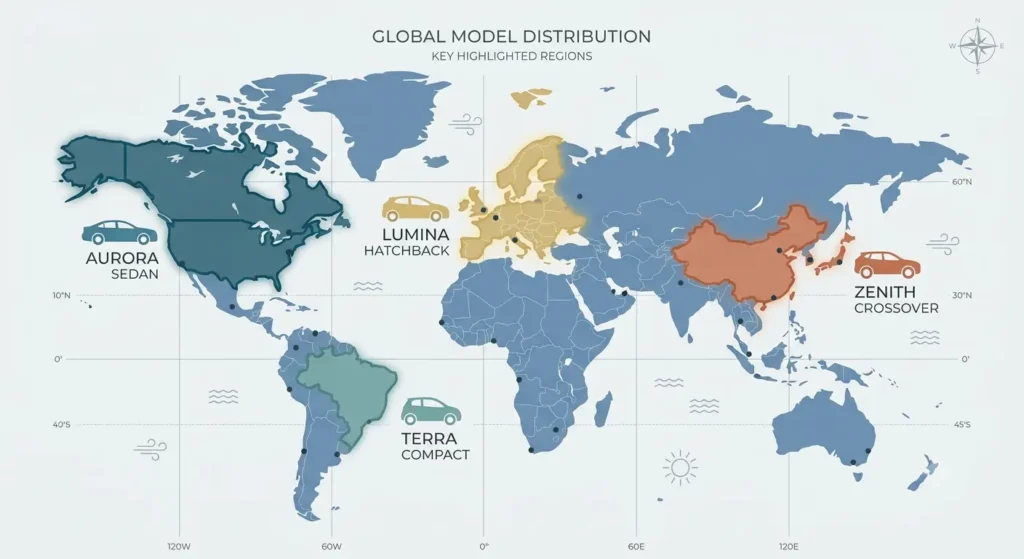
One of the most confusing things about reading EV coverage online is that “new for 2026” means completely different things in Detroit, Munich, and Sydney. Here’s the honest regional split.
United States
The US story is affordability plus NACS. The Bolt, Leaf, and (soon) Kia EV3 anchor the budget end; the R2, EX60, and iX3 fight for the $45,000–$65,000 heart of the market. Nearly every new 2026 launch has a native NACS port or ships with an adapter, which means Tesla’s Supercharger network is now effectively the national fast-charging backbone. The absence of the federal tax credit stings, but it’s also forced honest pricing — and early discounting — in a way the subsidy era never did.
UK and Europe
Europe’s 2026 is all about small cars. The VW ID. Polo (from €24,995) and Cupra Raval (from around €26,000, on sale in the UK from February from just under £30,000) entered production in June and reach customers through the summer and autumn. The Skoda Epiq small SUV was revealed in May, the ID. Cross follows, and Renault’s Twingo E-Tech lands late this year under €20,000, joining the Renault 5, Renault 4, Citroën ë-C3, and the new Nissan Micra in a suddenly crowded budget class. Hyundai’s Ioniq 3 compact has joined the fray too. Higher up, the BMW i3 — a fully electric 3 Series equivalent revealed in March — goes on sale in the autumn, and the first electric Mercedes C-Class arrived over the summer. Even Bentley is due to show its first EV before the year is out. UK buyers should check the current state of the Electric Car Grant before ordering, since eligibility rules and funding levels have moved around since it launched.
Canada
Canada broadly mirrors the US lineup a step behind: the new Leaf and Bolt-class models, Kia’s EV range (Canada actually got the EV5 before the US did), and the same NACS transition. The wrinkle is incentives — the federal iZEV program has been paused since its funding ran out, and provincial rebates have come and gone, so the out-the-door math genuinely changes by province and by month. Tariffs also keep Chinese-built EVs like BYD out of the market, which limits the budget end compared with Europe or Australia.
Australia
Australia might be the most competitive EV market on Earth right now, and 2026 is the proof. Kia alone is launching six electric models this year — the EV4 sedan and hatch, the facelifted EV6 and EV6 GT, the 374 kW EV9 GT, the entry-level EV2, and the PV5 people mover — a rollout openly driven by the New Vehicle Efficiency Standard, which rewards brands for selling low-emission vehicles. BYD, which already sells Australia’s cheapest electric SUV in the Atto 2, adds the M9 people mover, the Ti7 SUV, and an updated Atto 3 in the second half of the year. Add Jaecoo, Geely, and the rest of the Chinese contenders, and Australian buyers arguably have more sub-A$45,000 electric choice than Americans do at any price.
The Tech Inside 2026’s Newest EVs (And What Actually Matters)
Spec sheets this year are full of numbers that sound impressive but affect your life unevenly. Here’s how to read them.
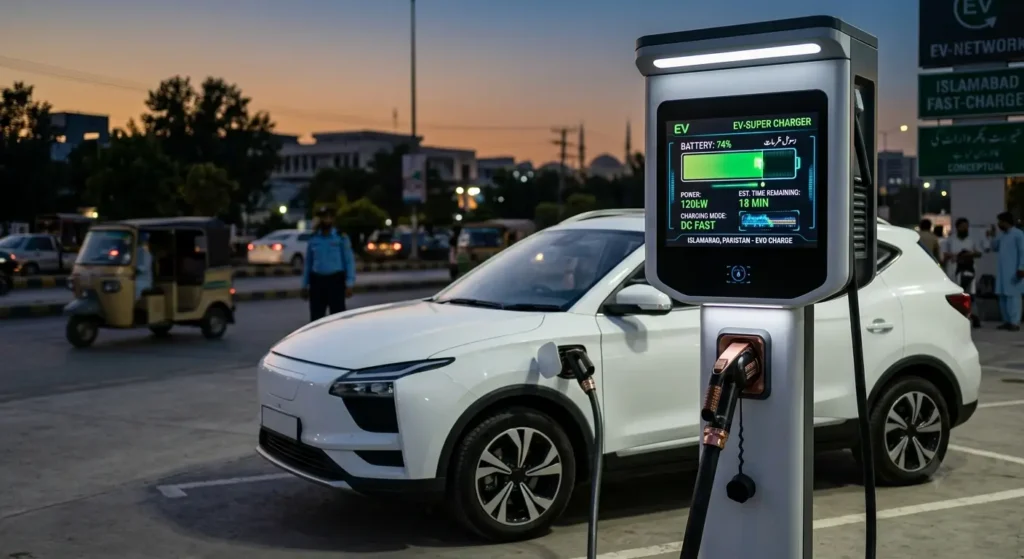
800-volt charging is spreading — but only helps on the right chargers. The BMW iX3, Porsche Cayenne Electric, Jaguar Type 01, and Range Rover Electric all run high-voltage architectures that enable 10–80% charges in the 16–21 minute range. The catch: you only see those speeds on high-power chargers that can deliver them. Plug an 800-volt car into an older 150 kW station and it charges much like everything else. If your road trips run through areas with older infrastructure, a car’s charging curve at 150 kW matters more than its lab-condition peak. Our guide to Level 2 vs DC Fast Charging breaks down why the middle of the curve matters more than the headline number.
LFP batteries are how the cheap EVs got cheap. The Bolt’s 65 kWh lithium iron phosphate pack is the main reason it costs under $29,000. LFP chemistry costs less, tolerates daily 100% charging better than nickel-based packs, and generally degrades slowly — the trade-offs are somewhat lower energy density and weaker cold-weather charging performance. For a commuter car, that’s a good trade. If you’re curious about the chemistry behind it, see How EV Batteries Work.
NACS is now the default in North America. The Bolt is the first Chevy with a native NACS port, the Leaf carries both NACS and J1772, and the Kia EV3, Lexus TZ, and new BMWs follow suit. Within a year or two, adapters will feel like a transition-era relic. In Europe, nothing changes: CCS and Type 2 remain the standard, so ignore NACS chatter entirely if you’re buying in the EU or UK.
Heat pumps are quietly becoming the feature to check. Standard on the Bolt, optional-by-trim on the Leaf. In cold climates, a heat pump can meaningfully reduce winter range loss compared with resistive heating. It’s a one-line spec that matters more than a tenth of a second of acceleration.
Battery warranties haven’t changed — and that’s reassuring. Nearly every new 2026 EV still carries battery coverage in the region of eight years or 100,000 miles (often longer in some markets), typically guaranteeing around 70% capacity retention. Combined with what we now know about real-world degradation — modern packs generally lose range slowly and gradually rather than falling off a cliff — battery fear belongs to a previous decade. The thing to check instead is whether the warranty transfers to a second owner, because that quietly affects your resale value.
Software is the new differentiator — and the new annoyance. GM’s newest EVs, including the Bolt, skip Apple CarPlay and Android Auto in favor of built-in Google software. Some buyers won’t care; some will find it a dealbreaker. Meanwhile, vehicle-to-load (V2L) and vehicle-to-home (V2H) features — the Bolt can back-feed a house during an outage — are turning cars into backup power sources. Test the software in person the way you’d test the seats. In practice, most owners interact with their EV’s screen far more than its throttle.
2026’s Headline New EVs at a Glance
Prices below are approximate starting points in each model’s home market, before local taxes, fees, and options, and several are manufacturer estimates rather than final figures. Ranges mix EPA, WLTP, and manufacturer estimates — WLTP figures (used in Europe) typically run 15–20% more optimistic than EPA numbers, so don’t compare them directly across regions.
| Model | Segment | Approx. starting price | Range (claimed/est.) | Status |
|---|---|---|---|---|
| Chevrolet Bolt (2027) | Compact crossover | $28,995 (US, incl. dest.) | 262 mi EPA | On sale now |
| Nissan Leaf | Compact crossover | $31,485 (US, incl. dest.) | 300+ mi EPA | On sale now |
| VW ID. Polo | Small hatch | €24,995 (EU) | ~280 mi WLTP class | Deliveries from summer 2026 |
| Cupra Raval | Small hatch | ~€26,000 / under £30k | ~250 mi WLTP | On sale (UK/EU) |
| Rivian R2 | Midsize SUV | $45,000–$57,990 (US) | Up to 330 mi EPA | Delivering since June 2026 |
| Volvo EX60 | Midsize luxury SUV | $58,400 (US) | Up to ~400 mi (est.) | Orders open; deliveries late 2026 |
| BMW iX3 | Midsize luxury SUV | $61,500 (US) | Up to 434 mi EPA | US sales from Sept 25, 2026 |
| Kia EV3 | Small SUV | TBC (likely ~$35k US) | Up to ~320 mi (Kia est.) | US late 2026; EU/AU on sale |
| Slate Truck | Compact pickup | $24,950 + fees (US) | ~205 mi (projected) | Deliveries from Q4 2026 |
| Jeep Recon | Off-road SUV | ~$65,000 (US, est.) | 222 mi EPA | Second half of 2026 |
| Porsche Cayenne Electric | Luxury performance SUV | $109,000 (US) | ~325 mi EPA | Delivering now |
| Renault Twingo E-Tech | City car | Under €20,000 (EU) | City-focused | Europe late 2026 |
Buy Now or Wait? How to Time a 2026 EV Purchase
The honest answer depends on which car you want and how you feel about being an early adopter.
Buy now if the car you want is shipping and the price works without mental gymnastics. The Bolt and Leaf are mature concepts in new packaging — low-risk buys. The used and outgoing-model market is also soft right now, because every new launch pushes yesterday’s models down in price. That’s painful for current owners and great for you.
Wait a few months if you’re eyeing a first-year, first-of-its-kind model. The R2, iX3, and EX60 are all brand-new platforms with brand-new software. Over-the-air updates fix more than they used to, but they don’t fix everything — early builds of complex new EVs have historically shipped with software rough edges, feature delays, and occasional hardware teething issues. Letting other buyers spend six months as unpaid beta testers is a legitimate strategy, and it usually costs you nothing but patience.
Wait for 2027 if your ideal car is on next year’s list: the Toyota Highlander EV, Subaru Getaway, Lucid Cosmos, VW’s ~€20,000 ID. EVERY1, or the cheapest Rivian R2 configuration. Just know that “2027” in a press release has a habit of meaning “late 2027,” and this year’s cancellations are a reminder that announced cars aren’t guaranteed cars.
One more depreciation note, because it’s the hidden cost nobody prices in: when this many new models flood a segment at once, resale values on the losers fall fast. Buying an EV from a segment leader with strong demand — or simply buying cheap in the first place — is the best insulation you have. Before you commit either way, run through our Used Electric Car Buying so nothing catches you off guard at the dealer.
Practical Tips Before You Buy a New 2026 EV
- Sort your home charging before the car arrives, not after. Get a quote for a Level 2 installation early — electrician lead times can run weeks, and panel upgrades add cost. Our Best Home EV Chargers guide covers what actually matters (spoiler: it’s mostly cable length and reliability, not app features).
- Check the port and the adapter situation for your exact trim. In North America, confirm whether the car has native NACS, ships with an adapter, or needs one purchased separately. It changes your first road trip more than any other spec.
- Confirm the heat pump, not just the range number. If winter temperatures where you live regularly sit below freezing, a heat pump is worth paying a trim level for. Ask directly; it’s often buried in the spec sheet.
- Test the software like you’d test the driving position. Pair your phone, use the native navigation to plan a fake road trip with charging stops, and see if it annoys you. If the car skips CarPlay/Android Auto, make sure you can live with that every single day.
- Negotiate — even on brand-new models. With incentives gone in the US and competition fierce everywhere, real transaction prices are already sliding below sticker on several 2026 launches. Get quotes from multiple dealers in writing.
- Get an insurance quote before you sign. New EV models sometimes carry surprisingly high premiums until insurers build claims data. A five-minute quote can save you an unpleasant month-two discovery.
Common Mistakes to Avoid
Comparing WLTP range to EPA range. A “478-mile” European figure and a “375-mile” US figure can describe the same car. Always compare within one test standard, and mentally discount WLTP by roughly a fifth. The fix: check the EPA figure (or a trusted independent real-world test) for any car you’re cross-shopping internationally.
Buying on peak charging speed instead of the charging curve. A car that holds 150 kW from 10% to 60% often out-charges one that touches 320 kW for ninety seconds. The fix: look for 10–80% time claims, then look for independent tests confirming them — and remember cold batteries charge slower unless the car preconditions on the way to the charger.
Assuming the advertised base price is orderable. Several 2026 launches — the R2 is the clearest example — list a base price whose actual build slot is a year or more away. The fix: ask the dealer or configurator what’s genuinely deliverable this quarter, and price that.
Ignoring the total incentive picture where you live. Americans lost the federal credit, but some states still offer rebates; UK, EU, Canadian, and Australian programs all differ and change mid-year. The fix: spend twenty minutes on your local government’s current program page the same week you buy. Not last year’s news article — the official page.
Skipping the winter question entirely. Range loss in cold weather is normal physics, not a defect, but it hits harder on cars without heat pumps and on LFP packs. The fix: if you live somewhere cold, size your range needs assuming a 20–30% winter haircut, and read up on preconditioning. Our EV Maintenance Guide covers the small habits that protect range and battery health long-term.
Treating an announced car as a sure thing. Ask anyone who spent two years waiting for a Honda 0 SUV. The fix: make buying decisions on cars you can order today, and treat future models as pleasant surprises rather than plans.
FAQs
In the US, it’s the 2027 Chevrolet Bolt at $28,995 including destination, with the Slate Truck due below that before fees in Q4. In Europe, the Citroën ë-C3 and Renault Twingo E-Tech anchor the budget end under €20,000 in some markets, and in Australia it’s BYD’s small models around A$30,000. Local taxes and incentives shift these rankings, so check current pricing where you live.
The US federal EV tax credit ended on September 30, 2025, though some state and utility incentives remain. Canada’s federal iZEV rebate is paused. The UK’s Electric Car Grant and various EU national schemes still exist but change frequently in scope and funding. Always verify the current rules on an official government site before ordering — programs have started and stopped mid-year.
Among 2026 arrivals, the BMW iX3 leads mainstream models with up to 434 miles of EPA-estimated range, while the Volvo EX60 targets around 400 miles. The facelifted Mercedes EQS is chasing roughly 575 miles on Europe’s more generous WLTP cycle. Real-world highway range at speed will be lower for all of them, especially in winter.
In North America, largely yes. The new Bolt, Leaf, Kia EV3, Lexus TZ, and BMW’s latest models ship with native NACS ports or dual-port setups, opening Tesla’s Supercharger network without adapters. Europe is unaffected — CCS and Type 2 remain standard there — and older public chargers in the US still serve CCS cars, so the transition is smooth rather than sudden.
It varies enormously by country and electricity tariff, but home charging almost always beats public fast charging on price — often by half or more per mile, and by even more against gasoline. An efficient compact like the Bolt or Leaf typically uses roughly 25–30 kWh per 100 miles; multiply that by your home rate (ideally an off-peak overnight tariff) for a realistic number.
There’s real, but manageable, risk. New platforms like the Rivian R2 or BMW iX3 can launch with software quirks and early-build issues that over-the-air updates take months to polish. If you’re risk-averse, wait two to three quarters after launch, or choose a redesigned known quantity like the Bolt or Leaf instead of an all-new nameplate.
The Bottom Line
The newest electric cars of 2026 tell one clear story: the market grew up. Prices finally came down at the entry level, range and charging finally got good in the middle, and the weakest projects got cancelled instead of limping to market. Whether that makes this the right year for you comes down to matching a real, orderable car to your budget, your climate, and your charging situation — not to a press release.
If you take one action from this article, make it this: pick the two or three models above that fit your life, confirm what’s actually deliverable and what incentives genuinely apply in your region this month, and drive them back to back. In a year with this much genuinely new metal, the best EV for you probably didn’t exist twelve months ago.