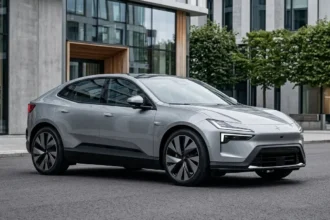
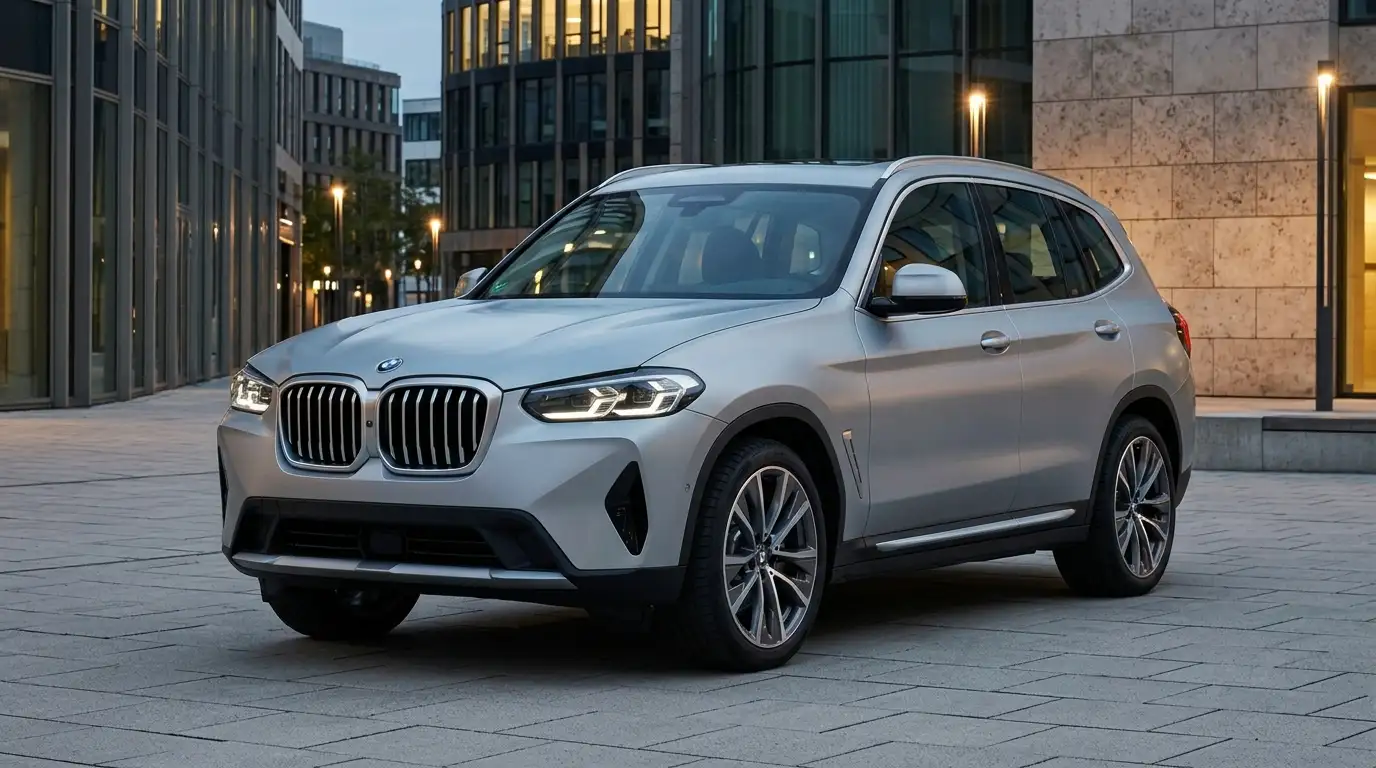
Key Takeaways
The BMW iX3 is one of BMW’s most important electric vehicles because it isn’t simply another battery-powered X3-sized SUV. It’s the first series-production model built on BMW’s Neue Klasse architecture, introducing a new generation of electric motors, batteries, electronics, software and charging technology. BMW says the U.S.-market iX3 50 xDrive starts at $61,500 before the $1,350 destination and handling charge and reaches up to 434 miles of EPA-estimated range with the qualifying 20-inch summer-tire configuration.
In the UK, BMW currently lists the iX3 50 xDrive from £60,655, with VAT included and delivery costs excluded on the comparison/build pages. BMW’s UK specification information gives the new iX3 a WLTP range band of roughly 421 to 500 miles, depending on configuration.
Germany lists the iX3 50 xDrive from €70,900 including 19% VAT, excluding delivery, while BMW Australia’s current listings show iX3 vehicles with drive-away prices above A$100,000; those Australian listings vary by vehicle and specification, so they shouldn’t be treated as one national headline MSRP without further configuration verification.
The iX3’s other major story is charging. It uses an 800-volt architecture with a maximum DC charging rate of 400 kW. BMW says the U.S. iX3 can add an estimated 185 miles of range in 10 minutes and charge from 10% to 80% in 21 minutes under the relevant high-power charging conditions.
So the real question isn’t whether the new iX3 is technically impressive. It is.
The more useful question is whether BMW’s new electric platform gives buyers enough range, charging speed, interior technology and driving-focused hardware to make the iX3 one of the strongest luxury electric SUVs in its class.
What Is the BMW iX3?
The BMW iX3 is BMW’s next-generation fully electric SUV and the first production vehicle based on the company’s Neue Klasse platform.
That makes the 2026/2027 iX3 substantially different from simply putting another electric drivetrain into an existing BMW X3 architecture.
BMW describes the iX3 as the first series-production Neue Klasse model and says the technology introduced here will spread across almost 40 new models and model updates by 2027.
That’s why the BMW iX3 matters beyond its individual sales figures.
It is effectively BMW’s showcase for its next generation of:
- Electric motors
- Battery technology
- Vehicle electronics
- Software
- Charging architecture
- Driver assistance
- Interior displays
- Vehicle operating systems
- Energy efficiency
The first U.S. version is the BMW iX3 50 xDrive, a dual-motor all-wheel-drive model.
BMW says it produces 469 hp in the current specification and accelerates from 0 to 62 mph in 4.9 seconds on UK technical data.
The vehicle is built at BMW Group’s new plant in Debrecen, Hungary.
Why Is the Neue Klasse Important?
The term “Neue Klasse” means much more than a styling exercise.
BMW has redesigned the underlying electric architecture around the requirements of a modern EV rather than treating electrification as an adaptation of an older platform.
That includes BMW’s sixth-generation eDrive system and a much more centralized electrical and software architecture.
BMW says its sixth-generation eDrive reduces energy losses by up to 40% compared with the previous generation, while also reducing weight by 10% and manufacturing costs by 20%.
That matters because EV efficiency isn’t determined solely by battery size.
A more efficient drivetrain can help a vehicle travel farther without simply carrying more battery.
How Much Does the BMW iX3 Cost?
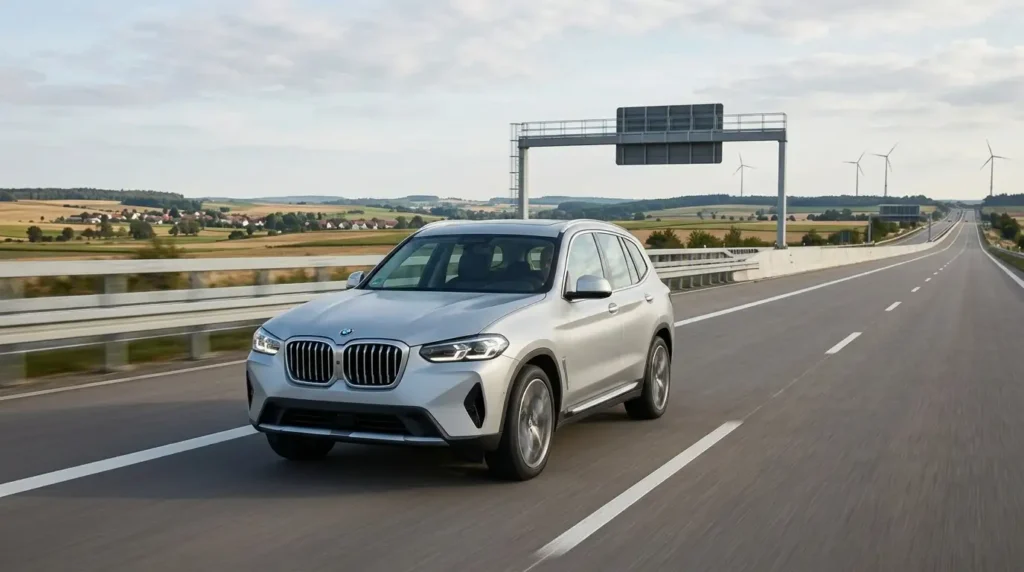
The BMW iX3 price depends on the market and configuration.
In the United States, BMW officially announced a starting MSRP of $61,500 for the 2027 BMW iX3 50 xDrive, plus $1,350 destination and handling, for a listed starting total of $62,850 before other applicable costs. BMW said the U.S. market launch is scheduled for September 25, 2026.
That price makes the iX3 particularly interesting.
It puts a premium BMW electric SUV with up to 434 EPA-estimated miles within a starting-price range that is competitive with several large mainstream and premium EVs.
But the headline price doesn’t include every option.
BMW’s U.S. announcement lists packages and standalone equipment such as:
- Comfort Package — $1,500
- Driving Assistance Professional Package — $2,500
- M Sport Package — $2,500
- M Sport Professional Package — $4,000
- Parking Assistant Package — $750
- Technology Package — $1,900 when ordered separately
- Certain wheel upgrades
- Leather
- Metallic paint
- Trailer hitch
- Premium audio
That means a configured iX3 can cost substantially more than the advertised base MSRP.
BMW iX3 Price by Market
| Market | Current verified example | Price basis |
|---|---|---|
| U.S. | BMW iX3 50 xDrive | $61,500 + $1,350 destination |
| UK | BMW iX3 50 xDrive | £60,655 |
| Germany | BMW iX3 50 xDrive | €70,900 |
| Australia | Current BMW listings show examples from A$101,830+ | Drive-away listing; exact national MSRP requires configuration verification |
U.S. source: BMW Group USA. UK source: BMW UK. Germany source: BMW Germany. Australia source: BMW Australia’s current vehicle listings.
These figures should not be converted directly between currencies and presented as equivalent prices.
A German customer isn’t buying the same pricing structure as a U.S. customer, and a UK vehicle’s displayed price includes different taxes and charges from the U.S. MSRP structure.
What Is the BMW iX3 Range?
The BMW iX3 range is one of its biggest strengths.
BMW’s official U.S. data gives the 2027 iX3 50 xDrive up to 434 miles of EPA-estimated range when equipped with 20-inch summer tires. The same BMW data lists lower U.S. range figures for other wheel and tire combinations:
| U.S. configuration | BMW-listed range |
| 20-inch summer tires | 434 miles |
| 20-inch all-season tires | 383 miles |
| 21-inch summer tires | 398 miles |
| 21-inch all-season tires | 399 miles |
| 22-inch summer tires | 392 miles |
This is an extremely important detail.
Someone searching “BMW iX3 range” may see 434 miles and assume that every iX3 configuration gets that figure.
It doesn’t.
Wheel and tire configuration can have a substantial effect on the official range rating.
The difference between 434 miles and 383 miles is 51 miles.
That’s large enough to matter to someone who regularly drives long distances.
What Is the BMW iX3 Range in Europe?
European figures use the WLTP system rather than EPA.
BMW UK currently describes the iX3 model range as having a WLTP range of approximately 421 to 500 miles, depending on model configuration, while BMW Germany’s technical and market information provides WLTP figures for the iX3 50 xDrive.
BMW’s global data also shows a 678–805 km WLTP range band for the iX3 50 xDrive in the specification associated with its 2026 World Car awards information.
Don’t convert the 500-mile WLTP number into a supposed 500-mile EPA rating.
EPA and WLTP are different test systems.
For Go Electric Hub readers in the U.S., use the EPA number.
For UK/EU readers, use the applicable WLTP number.
The supplied Go Electric Hub framework specifically requires EPA and WLTP to be identified separately and prohibits treating different testing systems as interchangeable.
What Battery Does the BMW iX3 Use?
The new iX3 uses BMW’s sixth-generation eDrive technology and a new high-voltage battery using cylindrical cells.
BMW says the battery technology is more energy dense than the previous generation and works with the new 800-volt electrical architecture.
The engineering objective is clear: increase energy efficiency while reducing charging time and making the vehicle lighter and more efficient.
BMW’s U.S. technical figures also show that different wheel and tire combinations materially change energy consumption and range.
That tells us something important about EV design.
A big battery can help range, but vehicle efficiency remains crucial.
The iX3’s range story is therefore based on several systems working together:
Battery + motors + aerodynamics + software + tires + thermal management + charging architecture.
That’s more useful than judging the vehicle simply by kilowatt-hours.
How Fast Is the BMW iX3?
The BMW iX3 50 xDrive produces 469 hp in the current UK-market specification and accelerates from 0 to 62 mph in 4.9 seconds.
For a relatively large electric SUV focused on efficiency, that’s quick.
But BMW isn’t only trying to make the iX3 accelerate hard in a straight line.
The company has put considerable emphasis on its new Heart of Joy system.
BMW describes Heart of Joy as a central technology for drivetrain and driving-dynamics management.
Instead of handling propulsion and dynamics through more isolated electronic systems, BMW is moving greater control into a highly centralized architecture.
The intended outcome is more precise control of:
- Drive torque
- Regenerative braking
- Vehicle dynamics
- Stability
- Acceleration
- Braking response
That’s an important part of the BMW identity.
The iX3 isn’t supposed to compete only on range.
It’s supposed to retain the driving character buyers expect from a BMW.
What Is BMW Heart of Joy?
Heart of Joy is BMW’s new central computing and drivetrain management system for the Neue Klasse.
The simplest way to understand it is this:
BMW is trying to make the vehicle’s propulsion and dynamic systems behave more like one integrated system.
That includes acceleration and regenerative braking.
BMW says Heart of Joy helps the iX3 deliver greater poise, assurance and precision.
This matters because regenerative braking can make or break how natural an EV feels.
A poorly calibrated system can create an inconsistent transition between accelerator lift-off, regeneration and friction braking.
A well-integrated system can make the entire vehicle feel more predictable.
That’s one area where BMW’s traditional driving-dynamics expertise could matter.
How Fast Does the BMW iX3 Charge?
The BMW iX3 uses an 800-volt architecture and supports up to 400 kW DC fast charging.
BMW says the U.S. iX3 can:
- Add an estimated 185 miles in 10 minutes
- Charge from 10% to 80% in about 21 minutes
when connected to a suitable 800-volt DC fast charger.
This is one of the iX3’s biggest technical advantages.
The important word is suitable.
A vehicle capable of 400 kW doesn’t mean every public charger will deliver 400 kW.
Actual charging depends on:
- Charger capability
- Battery temperature
- State of charge
- Charging station conditions
- Vehicle configuration
- Grid/network limitations
So 400 kW is a maximum capability, not a guarantee at every stop.
Why 800 Volts Matters
Higher-voltage architectures can transfer high power with less current for a given power level.
That can support faster charging while managing electrical losses.
In simple terms:
Higher voltage + suitable charging hardware = more potential charging power.
The iX3 is therefore designed around fast road-trip charging rather than treating charging as an afterthought.
BMW says the iX3’s standard U.S. charging interface is NACS, which is particularly relevant to North American buyers.
For UK and European readers, charging standards and local infrastructure should be discussed according to the regional vehicle configuration rather than importing the U.S. connector description.
The Go Electric Hub framework requires exactly this market separation.
Does the BMW iX3 Have NACS?
For the U.S. model, BMW lists a standard NACS port on the iX3 50 xDrive and identifies its 400-kW charging capability through that interface.
That is significant for American buyers because NACS has become an important part of the North American charging landscape.
The U.S. buyer should still check the actual charging network and station capability rather than assuming that every NACS location is a 400-kW charger.
In the UK and EU, use the connector and charging information applicable to the local-market iX3.
Do not mix U.S. NACS terminology into European charging instructions without market context.
What Is BMW Panoramic iDrive?

One of the most visible changes in the iX3 is the BMW Panoramic iDrive system.
It is part of the new digital architecture introduced with Neue Klasse.
Rather than relying on one conventional central display, BMW has built a broader driver-information and infotainment concept around a panoramic display arrangement.
BMW says the system works with BMW Operating System X and is designed around a more intuitive user experience.
The iX3 also introduces an updated BMW Intelligent Personal Assistant, including AI-enhanced capabilities developed with Amazon Alexa+ according to BMW’s CES 2026 announcement.
The important point isn’t simply that BMW has more screens.
The company is attempting to make the software architecture itself part of the vehicle’s identity.
That’s a major change from traditional BMW generations.
Does the BMW iX3 Have Apple CarPlay?
Yes.
BMW’s U.S. iX3 50 xDrive equipment list includes Apple CarPlay and Android Auto capability as standard equipment.
That is important given the strong consumer interest in smartphone integration.
It also gives Go Electric Hub readers a useful distinction from some competing EVs that limit smartphone mirroring or use proprietary infotainment approaches.
The BMW solution combines its own Panoramic iDrive interface with mainstream smartphone integration.
That means buyers don’t necessarily have to choose between BMW’s native system and their familiar phone ecosystem.
How Big Is the BMW iX3?
The new iX3 measures approximately:
- 188.3 inches long
- 74.6 inches wide
- 64.4 inches tall
- 114.1-inch wheelbase
according to BMW’s U.S. technical information.
That gives it a substantial SUV footprint without becoming a huge three-row vehicle.
The iX3 is a five-seat SUV.
BMW’s UK material confirms five seats, which is important when comparing it with larger three-row EVs such as the Lucid Gravity, Hyundai Ioniq 9 or Rivian R1S.
That means the BMW’s interior proposition is different.
It’s focused on premium five-seat usability rather than maximum passenger count.
BMW iX3 Cargo Space
BMW UK currently lists up to 1,750 litres of boot capacity, with an additional 58 litres of storage beneath the bonnet, depending on measurement/configuration.
That is useful for:
- Family luggage
- Shopping
- Sports equipment
- Weekend travel
- Work gear
It also reinforces the point that the iX3 is more of a premium five-seat utility vehicle than a people-moving three-row SUV.
Is the BMW iX3 a Good Family EV?
For a five-seat family, yes, the iX3 has a strong argument.
Its combination of:
- Long range
- Large cargo space
- Fast charging
- Five seats
- AWD
- Strong acceleration
- Premium cabin technology
makes it well suited to road trips and daily family use.
The limitation is simple:
There are only five seats.
Families that regularly need seven seats should look elsewhere.
That isn’t a weakness of the iX3 as much as a reminder to match the vehicle to the intended use.
The BMW iX3 isn’t trying to replace every large electric SUV.
It’s targeting the premium five-seat segment.
BMW iX3 vs BMW X3
The new iX3 is closely related in name and market position to the X3, but it should not be treated as simply the battery-powered version of exactly the same architecture.
BMW says the new iX3 was created specifically around an EV architecture within Neue Klasse.
The conventional X3 continues to offer gasoline, diesel and plug-in hybrid powertrains in different markets.
The iX3 is fully electric.
For buyers choosing between them, the biggest differences are therefore about powertrain and operating model.
Choose the iX3 if you want:
- Fully electric driving
- Long EV range
- Very fast charging
- Lower tailpipe emissions
- BMW’s newest EV technology
- NACS in the U.S.
- Neue Klasse design and software
Choose the X3 if you need:
- Internal-combustion flexibility
- Faster refueling without charging
- A broader range of powertrains
- Market-specific options not offered on the EV
The choice is therefore not simply “newer vs older.”
They’re different powertrain strategies.
BMW iX3 vs Tesla Model Y
The Tesla Model Y is one of the obvious alternatives for a premium electric crossover buyer.
The BMW’s strongest differentiators are:
- Traditional BMW driving focus
- Luxury-oriented interior
- Panoramic iDrive
- Apple CarPlay and Android Auto
- 800V/400-kW charging capability
- Conventional dealer/retail support structure in relevant markets
- Distinctive Neue Klasse technology
Tesla’s strengths are different and include its established charging ecosystem, software experience and familiarity.
For a buyer who wants the most interesting new BMW EV technology, the iX3 is particularly compelling.
For someone who wants the Tesla ecosystem, the Model Y remains relevant.
The correct comparison should therefore include price, range, charging and software, rather than simply horsepower.
BMW iX3 vs Lucid Gravity
This is a very different comparison.
The Lucid Gravity is substantially larger and can offer three rows, while the BMW iX3 seats five.
Go Electric Hub already has:
and:
Those pages should be used as the internal comparison cluster.
The iX3 makes more sense for someone who wants:
- Five seats
- BMW’s driving character
- A premium midsize-ish SUV footprint
- Neue Klasse technology
- Very high charging capability
The Gravity makes more sense for someone who needs:
- More passenger space
- Three rows
- A larger luxury SUV
- Maximum configuration flexibility
That is a genuine difference in search intent and buyer need.
BMW iX3 Specs at a Glance
| Specification | BMW iX3 50 xDrive |
| Vehicle type | Fully electric SUV |
| Seats | 5 |
| Drivetrain | Dual-motor AWD |
| Power | 469 hp |
| 0–62 mph | 4.9 sec |
| U.S. starting MSRP | $61,500 |
| U.S. destination | $1,350 |
| Max U.S. EPA range | 434 miles |
| Peak DC charging | 400 kW |
| Architecture | 800V |
| 10–80% DC charging | About 21 min under suitable conditions |
| 10-minute range addition | Estimated 185 miles |
| Length | 188.3 in |
| Wheelbase | 114.1 in |
| Cargo capacity | Up to 1,750 L in UK measurement |
| Production | Debrecen, Hungary |
| Platform | Neue Klasse |
Sources: BMW official U.S., UK and Germany information.
What Makes the BMW iX3 Different?
Three things stand out.
1. The Platform
The iX3 is the first series-production Neue Klasse vehicle.
This makes it more important to BMW than another model-year update.
2. The Charging Architecture
A maximum 400-kW charging rate and 800V system put the iX3 among the more charging-focused premium EVs.
3. The Efficiency Strategy
BMW isn’t trying to win only through battery size.
It is combining a more efficient drivetrain, improved electronics, new batteries and software.
That’s why the iX3’s range story is one of its strongest characteristics.
BMW iX3 Range: What the Wheel Sizes Tell Us
One of the most useful pieces of data in BMW’s official U.S. specification is the effect of wheels and tires.
The same iX3 50 xDrive can have official U.S. range figures from 383 miles to 434 miles depending on wheel and tire configuration.
That is a range difference of:
434 − 383 = 51 miles
That’s a simple comparison, but it reveals something important for buyers.
The visually attractive larger wheel option may reduce your maximum certified range.
That’s not unique to BMW, but the iX3 makes the difference unusually easy to see because BMW publishes the data by wheel/tire combination.
Practical recommendation
If your main priority is range:
Choose the configuration that delivers the strongest official range rating.
If style or handling is more important:
A larger wheel setup may be acceptable.
That’s a buyer decision rather than a technical flaw.
Does the BMW iX3 Have Vehicle-to-Home or Vehicle-to-Grid?
BMW’s Neue Klasse architecture is designed around bidirectional charging capability, and the U.S. equipment list includes bidirectional charging and a multifunction charger.
That opens the door to use cases beyond simply driving.
Depending on local hardware, software and regulations, bidirectional charging can support concepts such as:
- Vehicle-to-home
- Vehicle-to-load
- Vehicle-to-grid
But don’t assume that simply owning the iX3 means every one of these functions is immediately available in every country.
The charging hardware, utility rules, software and market support all matter.
That distinction is particularly important for UK, EU and Australian buyers because local electricity regulations and hardware availability differ.
What Are the Biggest BMW iX3 Advantages?
Very Long Official Range
Up to 434 EPA-estimated miles in the U.S. is excellent.
The UK/EU WLTP range is also very strong.
Extremely Fast Charging Potential
The 400-kW maximum DC rate and 800V architecture give the iX3 strong road-trip credentials.
New BMW Technology
Panoramic iDrive, Operating System X, Heart of Joy and the Neue Klasse architecture make this one of BMW’s most technologically significant new models.
Strong Performance
469 hp and a 4.9-second 0–62 mph time give the iX3 enough performance to feel like a BMW rather than a slow efficiency special.
Five-Seat Practicality
The iX3 is large enough for family use without moving into three-row SUV dimensions.
NACS in the U.S.
The U.S. iX3 includes a standard NACS port.
What Are the BMW iX3 Drawbacks?
It’s Not a Seven-Seater
Families needing three rows should consider other EVs.
Bigger Wheels Can Reduce Range
BMW’s own U.S. range data shows this clearly.
Options Can Increase the Price
The $61,500 starting MSRP is not the price of a fully loaded iX3.
The New Interface May Take Adjustment
Panoramic iDrive represents a major departure from older BMW interiors.
Real-World Range Will Vary
EPA and WLTP are test-cycle measurements, not guarantees of exactly how many miles or kilometres an owner will drive.
High-Power Charging Requires the Right Charger
The 400-kW headline only matters when the charging station can provide comparable power and the vehicle’s battery is in the appropriate condition.
BMW iX3 Buying Advice
Before ordering, check these five things.
Check the Wheel/Tire Setup
This can meaningfully change your official range.
Check the Option Packages
The base vehicle has substantial standard equipment, but premium features can raise the price.
Check Your Charging Network
U.S. buyers should confirm local NACS fast-charging availability.
UK/EU/Australia buyers should confirm their local connector and charging network configuration.
Check the Exact Market Price
Don’t use a U.S. MSRP for a UK or Australian buying decision.
Check Whether You Need Five or Seven Seats
The iX3 has five seats.
If you need seven, this isn’t the right BMW for the job.
BMW iX3 Review: Is It Worth Buying?
The BMW iX3 is one of the more strategically important electric SUVs to arrive in 2026.
It’s not simply another BMW with a battery.
It’s the first production example of the Neue Klasse era.
The technical package is impressive: up to 434 miles of EPA-estimated range in the U.S., an 800V architecture, up to 400-kW DC charging, 469 horsepower and a new software/electronics architecture.
The U.S. starting price is also competitive for a premium BMW EV at $61,500, although options and destination raise the actual cost.
The UK and Germany pricing shows how differently the vehicle is positioned across markets.
BMW UK currently lists the iX3 50 xDrive from £60,655, while Germany lists it from €70,900.
The bigger question is whether buyers like BMW’s new digital direction.
Panoramic iDrive is dramatically different from the interiors of previous BMWs.
The advantage is a cleaner, more software-centric interface.
The possible downside is that some drivers may prefer conventional controls.
There is also a configuration issue.
The 434-mile U.S. maximum isn’t available across every wheel and tire setup.
That makes it essential to choose the specification carefully.
For a buyer who wants a premium five-seat EV with very long range, rapid charging and modern BMW driving dynamics, the iX3 is a particularly strong proposition.
For a family that needs seven seats, look at a larger SUV instead.
Meanwhile, owners who prefer traditional BMW controls and a conventional powertrain may find the X3 lineup more comfortable.
But for anyone interested in where BMW’s electric technology is heading, the iX3 is one of the most important BMWs to watch.
BMW iX3 FAQ
The 2027 BMW iX3 50 xDrive starts at $61,500 in the U.S., plus a $1,350 destination and handling charge. BMW UK lists the iX3 50 xDrive from £60,655, while BMW Germany lists it from €70,900 including 19% VAT and excluding delivery.
The U.S. iX3 50 xDrive reaches up to 434 miles of EPA-estimated range with the qualifying 20-inch summer-tire configuration. Other U.S. wheel and tire combinations receive lower official ratings. European versions use WLTP, with BMW UK listing up to 500 miles depending on configuration.
No. The new BMW iX3 is a five-seat electric SUV. Buyers who need three rows should consider larger electric SUVs instead.
The iX3 uses an 800V system with up to 400 kW of DC charging capability. BMW says the U.S. model can add an estimated 185 miles in 10 minutes or charge from 10% to 80% in about 21 minutes at an appropriate 800V DC charger.
The U.S. BMW iX3 50 xDrive includes a standard NACS port. Check European and other international-market charging configurations against the applicable local specification.
Neue Klasse is BMW’s next-generation vehicle architecture and technology program. The iX3 is the first series-production Neue Klasse model, introducing new electric motors, batteries, electronics, software, and BMW’s Heart of Joy and Panoramic iDrive systems.
There’s no universal winner. The iX3’s strengths include premium BMW design, very long range, 800V/400-kW charging, traditional smartphone integration and Neue Klasse technology. The Model Y has a different software and charging ecosystem. The better choice depends on price, charging access, interior preferences, and driving priorities.
The iX3 is particularly compelling for buyers who want a five-seat premium EV with long range, fast charging and BMW driving dynamics. Its biggest limitations are its five-seat layout, option-driven pricing and the fact that the highest range depends on a specific wheel and tire configuration.
BMW iX3: Final Verdict
The BMW iX3 is much more important than its name suggests.
It’s the first production Neue Klasse vehicle, and BMW has used it to introduce a new electric architecture that reaches into nearly every part of the vehicle.
The range is excellent.
The charging system is excellent.
The performance is strong.
The technology is new.
And the U.S. starting price of $61,500 makes the iX3 considerably more interesting than a premium EV that starts deep into six figures.
The most impressive specification is arguably not the 469 hp.
It’s the combination of up to 434 EPA-estimated miles and 400-kW charging capability.
That pairing makes long-distance EV travel much easier to plan.
But buyers need to pay attention to configuration.
The 434-mile rating isn’t universal.
The 20-inch all-season setup is rated at 383 miles in BMW’s U.S. data, while 21- and 22-inch combinations also reduce the maximum.
That means the specification you choose is part of the vehicle’s range story.
The iX3 also isn’t a three-row SUV.
It’s a five-seat premium electric crossover/SAV.
For families who need seven seats, other models make more sense.
For buyers who want a modern BMW that happens to be electric, however, the iX3 is a much stronger proposition.
Our assessment: The BMW iX3 is a highly compelling premium EV for buyers who value range, charging speed, technology and driving dynamics more than maximum seating capacity.
It isn’t BMW’s answer to every electric SUV.
It is BMW’s first major statement about what its next generation of electric vehicles will be.